
The drive sprocket of a combine harvester is installed at the output end of the gearbox. Through its tooth profile, it engages with the track and converts engine power into tractive force for travel. Whether the harvester can move forward, turn, and climb slopes in muddy paddy fields depends entirely on the drive sprocket. Why do drive sprockets fail? Is it poor material? Inadequate manufacturing? Or problems with use and maintenance? Let’s take a comprehensive look with Maikeyier at the working environment, common faults, diagnosis methods, and maintenance of drive sprockets.
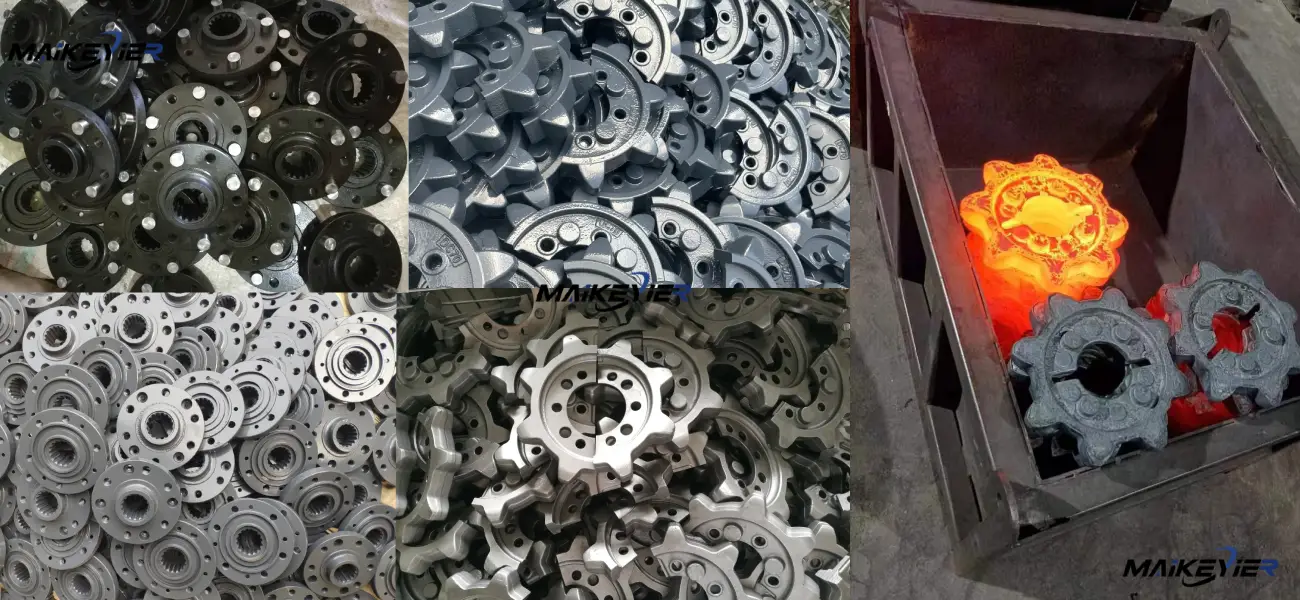
Working Environment of Harvester Drive Sprockets
The drive sprocket is directly exposed to mud, water, sand, and stones, making it a common harvester wear part in the undercarriage system.
| Working Environment | Impact on the Drive Sprocket |
| Muddy paddy fields | Mud and water intrude into the tooth surfaces, accelerating wear and corrosion |
| Sandy soil | Sand particles act like abrasive, continuously wearing the tooth surfaces and splines |
| Stones and hard soil ridges | Instant impact loads may cause broken teeth or cracks |
| Continuous high-load operation | Prolonged operation causes tooth surface fatigue and spline wear |
| Frequent turning | Differential rotation of left and right drive sprockets intensifies wear on one side |
| Straw and weed entanglement | Increases travel resistance, indirectly increasing the load on the drive sprocket |
Common Problems and Solutions for Harvester Drive Sprockets
| Common Problem | Main Cause | Solution |
| Tooth surface wear | Continuous engagement with track links/rubber tracks; sand abrasion | Choose forged steel or alloy steel drive sprockets with hardened tooth surfaces; regularly check tooth thickness |
| Broken teeth | Excessive impact load (stones, hard soil, overload) | Use materials with good toughness (40Cr, 42CrMo), medium-frequency hardened tooth surfaces, and a tough core |
| Tooth surface spalling/cracking | Improper heat treatment; poor bonding between hardened layer and base metal | Choose a reputable manufacturer; request magnetic particle inspection; avoid through hardening that makes the entire part brittle |
| Spline wear/looseness | Improper installation, insufficient lubrication, long-term alternating loads | Regularly check spline fit clearance; apply grease during installation; replace promptly if severely worn |
| Corrosion | Failure to clean promptly after paddy field operation; poor anti-corrosion treatment | Choose powder coating; rinse off mud after operation; apply anti-rust oil |
| Deformation/wobbling | Overload, uneven mounting surface, bearing damage | Check mounting surface and bearings; replace deformed drive sprockets |
How to Determine If a Drive Sprocket Needs Replacement
We recommend inspecting the drive sprocket before and after each season. Early detection of minor wear allows you to stock replacements in advance and avoid downtime during peak farming season.
| Judgement Standard | Specific Manifestation | Potential Risk | Recommended Action |
| Tooth surface wear exceeds 1/3 of original tooth thickness | Teeth become pointed and thin; poor engagement | Easy tooth skipping, slipping, weak travel | Replace as soon as possible |
| Broken teeth or obvious cracks | One or more teeth broken, or visible cracks | Uneven load, accelerated damage to remaining teeth, possible full-circle tooth breakage | Replace immediately |
| Large-area tooth surface spalling | Flaking or peeling of tooth surface | Indicates heat treatment or material problems; continued use will cause full-circle tooth breakage | Replace immediately |
| Excessive spline fit clearance | Noticeable play or abnormal noise during rotation | Severe spline wear may lead to transmission failure | Inspect spline; replace if severe |
| Obvious wobbling during rotation | Visible wobble or runout during rotation | Possible deformation or bearing damage; may damage track and gearbox | Stop machine, inspect, replace deformed parts |
| Severe surface corrosion and flaking | Large-area corrosion, brittle material flaking | Reduced strength; may fail at any time | Replace |
| Frequent tooth skipping or deviation during travel | Occurs even after eliminating track tension issues | Most likely drive sprocket wear, affecting operational efficiency | Check drive sprocket wear |
Maintenance and Care of Harvester Drive Sprockets
The service life of a harvester drive sprocket is 30% dependent on material and workmanship, and 70% dependent on daily maintenance. To extend the service life of our parts, they should be cleaned and maintained promptly before and after use.
| Maintenance Item | Specific Operation | Purpose and Effect |
| Clean promptly after operation | After paddy field operation, rinse mud, straw, and weeds off the drive sprocket with clean water | Prevent dried mud from accelerating wear and corrosion |
| Regularly check tooth surface wear | Check tooth surface every 50-100 hours; measure tooth thickness with calipers and record wear trend | Detect wear early; prevent teeth from becoming excessively pointed and thin |
| Check track tension | Adjust tension according to manual standards | Too tight increases load on drive sprocket; too loose causes tooth skipping and derailment |
| Adjust promptly if deviation occurs | Check left and right track tension and drive sprocket wear promptly | Harvester deviation causes increased wear on one side’s drive sprocket |
| Keep splines and bearings lubricated | Apply grease according to maintenance requirements | Prevent dry spline friction and bearing seizure |
| Protect against rust during storage | For long-term storage, apply anti-rust oil to tooth surfaces and splines; store in a dry, ventilated place away from rain | Prevent corrosion; maintain tooth surface strength |
| Avoid overload and improper operation | Avoid high-speed sharp turns on hard ground and forcing through large stones | Reduce impact loads; prevent broken teeth and cracks |
| Use matching tracks | Ensure model consistency when replacing tracks | Mismatched track specifications accelerate drive sprocket wear |
How to Choose a Harvester Drive Sprocket Supplier
Drive sprocket quality varies greatly. Price alone should not be the only criterion when choosing a supplier. Supplier strength, service, and after-sales support are all important evaluation factors.
| Evaluation Dimension | Key Points to Look For |
| Material coverage | Does the supplier offer ductile iron, forged steel, and alloy steel? Can they recommend based on working conditions? |
| Process capability | Casting or die forging? Do they have heat treatment lines? |
| Quality control | Do they perform spectrographic verification, hardness testing, magnetic particle inspection, and full dimensional inspection? |
| Compatibility range | Do they cover mainstream brands such as Kubota, Yanmar, Lovol, and World? |
| Supply capability | Do they support mixed orders, sample orders, and full-container exports? Is delivery stable? |
Maikeyier Drive Sprocket Products and Services
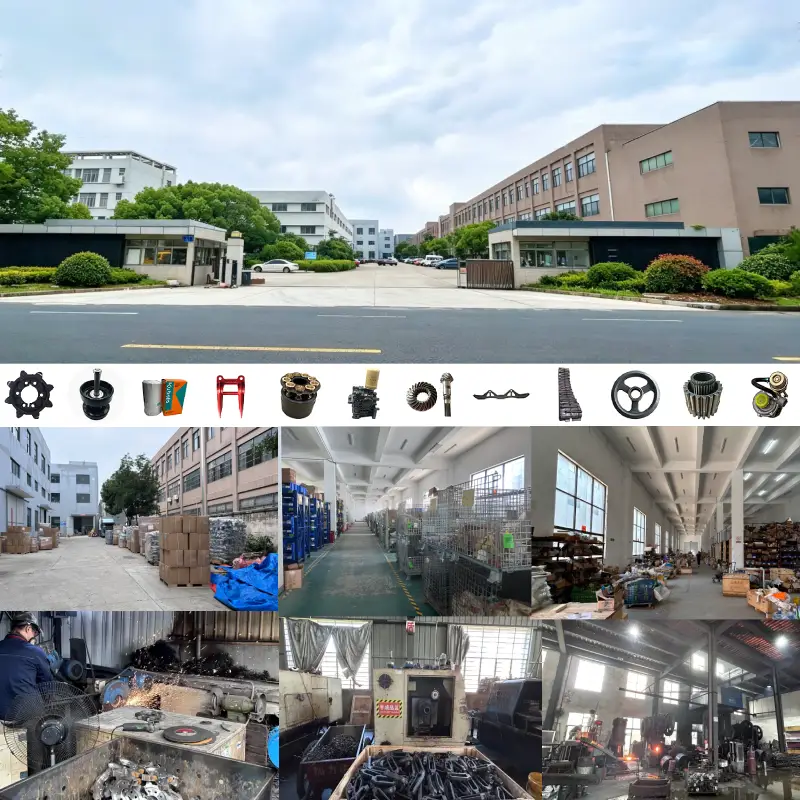
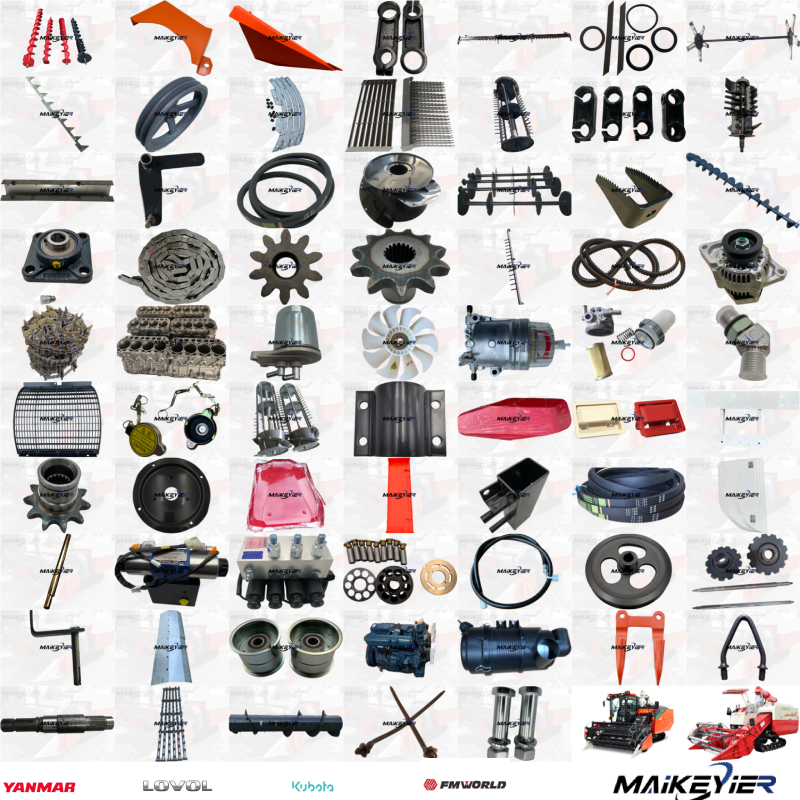
Maikeyier is an agricultural parts supplier with forging manufacturing capability at its core. We produce forged drive sprockets ourselves and also have a stable supply chain to provide ductile iron and alloy steel drive sprocket products.
Products
| Quality Grade | Material | Process | Applicable Scenario |
| C Grade · Economical | Ductile iron QT450-10 / QT500-7 | Casting + overall hardening | Standard conditions, spare parts |
| B Grade · Mainstream Wear-Resistant | Forged steel 45# / 40Cr | Die forging + medium-frequency tooth surface hardening | Heavy-load operations, long service life required |
| A Grade · High-End Heavy-Duty | Alloy steel 35CrMo / 42CrMo / 34CrNiMo | Die forging + medium-frequency tooth surface hardening + finishing | Heavy-duty continuous operations, high-end markets |
Advantages
In-house forging factory: Forged steel drive sprockets are produced in-house, with full control over material and heat treatment.
Dual process routes: Casting + die forging, covering all quality grades.
Strict quality inspection: Spectrographic material verification, hardness sampling, magnetic particle inspection; each batch comes with an inspection report.
One-stop supply: Drive sprockets, track rollers, guide wheels, track guides, tracks, and other undercarriage parts available in one stop.
Compatible with mainstream brands: Full series of tracked harvesters from Kubota, Yanmar, Lovol, and World.

Whether you are an agricultural parts dealer, repair shop, or importer needing bulk procurement, Maikeyier can recommend the right drive sprocket material and process solution based on your working conditions and budget. If you are looking for a reliable harvester drive sprocket supplier, tell us your machine model, working conditions, and required quantity, and we will help you match the most suitable drive sprocket solution.