
In the harvester parts market, the same type of part can reach the end user through three completely different routes: OEM parts, aftermarket parts, and modified parts. For dealers, importers, and repair shops, choosing the right route is just as important as choosing the right part. We have previously compared OEM parts and aftermarket parts. Today, let’s get to know harvester modified parts.
OEM Parts and Aftermarket Parts
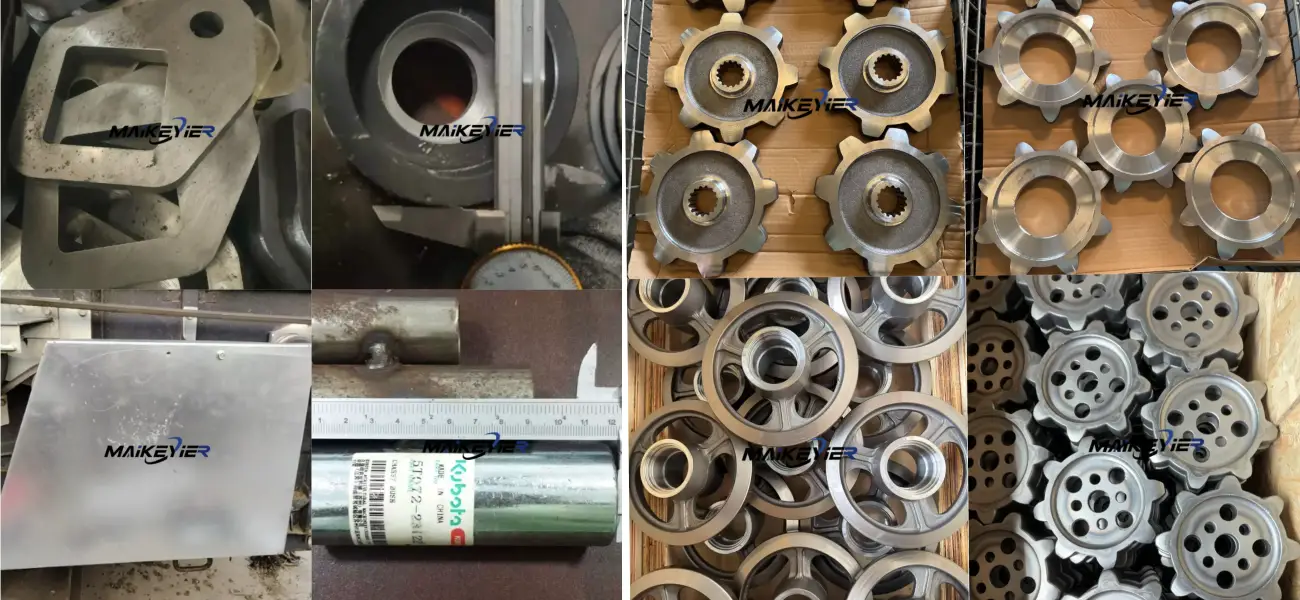
OEM (Original Equipment Manufacturer) parts are the parts installed on a harvester when it leaves the factory, capable of restoring the machine to its original condition. Aftermarket parts are replacement parts manufactured to engineering standards, with the goal of restoring original condition at a better price. These are the two most common forms of harvester and tractor parts.
| Comparison Item | OEM Parts | Aftermarket Parts |
| Manufacturer | Original equipment manufacturer or designated supplier | Independent supplier |
| Standard / Design Basis | Fully according to OEM drawings and technical specifications | Reverse-engineered from OEM drawings, samples, or part numbers |
| Branding | OEM brand, original packaging | Supplier’s own brand or neutral packaging |
| Price | Highest, includes brand premium | Typically 30%–60% lower than OEM |
| Supply | Limited by OEM scheduling and authorization system | Flexible MOQ, fast delivery |
| Warranty | Covered by OEM warranty terms | Properly installed and meeting OEM specifications, generally does not affect OEM warranty |
Modified / Upgraded Parts
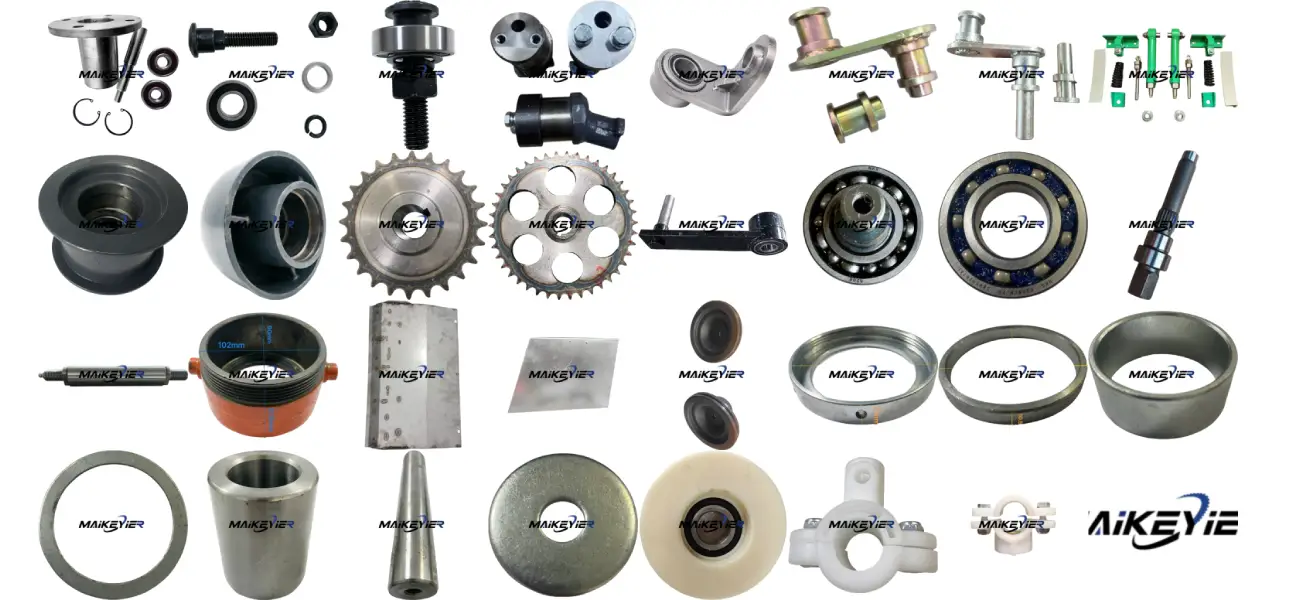
Modified parts, also called upgrade parts, are components improved upon OEM or aftermarket parts for specific working conditions, crop types, or usage requirements. Their main purpose is to change machine performance and solve problems that OEM parts cannot solve.
Features
- Highly targeted – solves shortcomings of OEM parts under certain working conditions
- Material or process upgrades – may use higher-grade materials or enhanced processes
- Compatibility may be expanded – e.g., cross-model compatibility
- Requires supplier R&D and customization capabilities
- Price is usually higher than standard aftermarket parts but lower than OEM high-performance parts
Common Modification Directions
- Widened or specialized track systems: Replacing standard narrow tracks with wider, lower ground pressure tracks to handle deep-mud paddy fields or soft soil — one of the most common modifications in Southeast and South Asian markets.
- Header modification kits: Changing to headers of different cutting widths, or converting a rice header to a wheat header, allowing one machine to harvest multiple crops during a cross-regional operation season.
- Extended unloading auger: Lengthening the OEM unloading auger or replacing it with a longer tube to suit higher grain carts or wider trailer positions, reducing grain spillage during unloading.
- Reinforced reel and auger: For lodged crops or high-yield fields, replacing the reel and feed auger with stronger teeth, larger diameters, or hardened surfaces to handle greater loads.
- Cab comfort upgrades: Adding air conditioning, heating, sound insulation, and upgraded seats to low-spec machine cabs — a high-frequency demand in tropical export markets.
- Engine cooling and intake enhancement: Enlarging or re-routing radiators, oil coolers, and intake systems to handle high-temperature or dusty conditions.
- High-throughput threshing system upgrades: Reinforcing threshing drums, modifying concaves, and strengthening straw walkers to handle higher feed rates or more difficult-to-thresh crop conditions.
OEM Parts vs. Aftermarket Parts vs. Modified Parts
| Comparison Dimension | OEM Parts | Aftermarket Parts | Modified Parts |
| Manufacturer | OEM / designated supplier | Independent manufacturer | Independent manufacturer / modification shop |
| Standard | OEM standard | OEM specification or compatible specification | Improved design standard |
| Branding | OEM brand | Supplier brand / neutral | Supplier brand / custom |
| Price | High | Medium-low | Medium-high |
| Fit | Highest | High (quality suppliers) | Depends on design |
| Supply flexibility | Limited by authorization system | Flexible | Flexible, customizable |
| Applicable scenarios | Warranty period, precision parts | Routine maintenance, wear parts | Special working conditions, upgrade needs |
Who Buys Modified Parts?
| Buyer Type | Demand Characteristics | Purchase Volume |
| Professional contractors | Pursuing operational efficiency and machine utilization | Medium, project-based |
| Cross-regional operation fleets | Need one machine for multiple uses, adapting to different crops | Medium, bulk purchases |
| Large farms | Customizing machines for local conditions | Relatively large, long-term cooperation |
| Exporters | Customizing machines for specific regions or crop conditions | Project-based, higher profit |
| High-end dealers | Using modified parts to serve customers with special needs | Small batches, high margin |
Procurement Recommendations: How to Choose?
By Part Category
| Part Category | Recommended Route | Reason |
| Core precision parts (common rail injectors, ECU, etc.) | OEM parts preferred | Extremely high technical requirements; aftermarket parts difficult to fully replace |
| High-frequency wear parts (cutter bars, belts, filters, etc.) | Quality aftermarket parts | High replacement frequency; clear cost-performance advantage |
| Areas where OEM part life is insufficient | Consider modified parts | Extend life through material or structural upgrades |
By Equipment Status
| Equipment Status | Recommended Route |
| Under warranty | OEM parts, to avoid affecting warranty |
| Out of warranty | Aftermarket parts or modified parts |
| Older models | Aftermarket parts are often the only choice |
Why Are Aftermarket Parts and Modified Parts Often Confused?
In many markets, these two terms are used interchangeably, but they describe different products. Aftermarket parts are sold as “functional equivalents”; modified parts are sold as “performance changes.” Remember this so you can screen for satisfactory products during procurement!
- Price: OEM parts have the highest unit price but the lowest commercial risk; aftermarket parts offer the best cost-performance; modified parts are priced per project and include engineering development costs.
- Warranty: OEM parts preserve the machine’s original warranty; aftermarket parts generally do not affect the warranty if properly installed and meeting OEM specifications; modified parts may affect the machine’s warranty terms and must be disclosed to the buyer before sale.
- Compliance and Regulations: Some regions have mandatory regulatory requirements for modifications involving safety devices, lighting, emissions, or operator protection. Before export, verify the agricultural machinery compliance requirements of the destination market.
How Maikeyier Supports All Three Routes
Whether you need standard replacement parts, OEM-equivalent parts, or modified parts for specific working conditions, Maikeyier can provide a one-stop solution from manufacturing to supply.
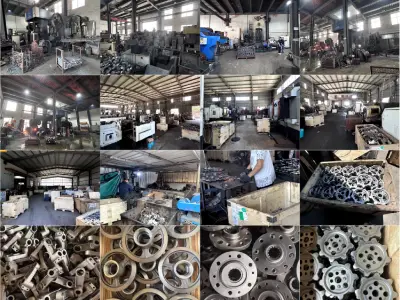
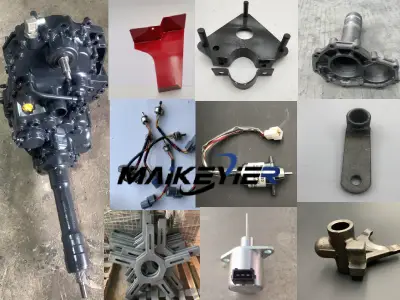
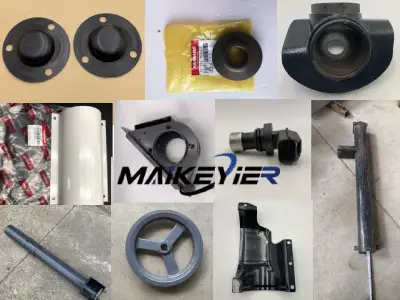
- OEM customization: Production according to customer drawings, samples, or OEM numbers; private label packaging supported; covering Kubota, Yanmar, Lovol, World, and other tracked harvester brands.
- Multi-grade aftermarket product lines: The same agricultural part is available in economy, standard, and premium grades (e.g., C / B / A), covering both price-sensitive and quality-oriented customers.
- Modification and upgrade capability: In-house forging, casting, sheet metal, and machining capabilities enable engineered production of reinforced or modified parts — from widened tracks to reinforced threshing components.
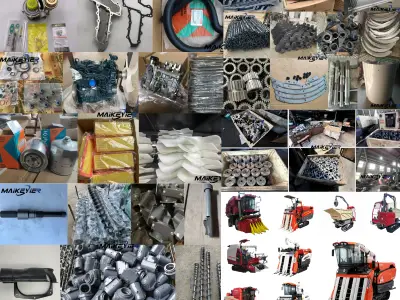
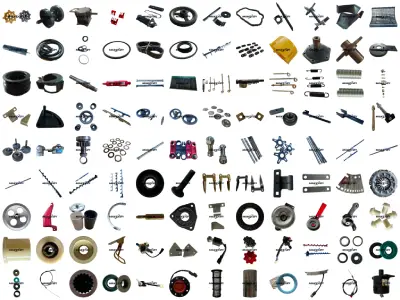
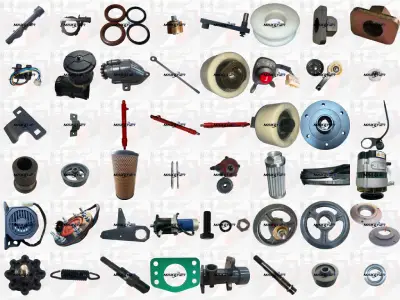
- One-stop multi-category supply: Idler wheel assemblies, track rollers, drive sprockets, threshing parts, sheet metal parts, and wear parts can be mixed in one container, simplifying your procurement and logistics.
Frequently Asked Questions (FAQ)
OEM, aftermarket, or modified? Send us your machine model, part number, or working condition requirements, and we will help you match the most suitable parts solution.