
The idler wheel of a combine harvester is installed at the front end of the track running system (opposite the drive sprocket). By guiding the track chain, maintaining track tension, controlling deviation, and bearing a considerable portion of the machine’s weight, it is one of the important harvester undercarriage parts and also a common wear part. It determines whether the harvester can smoothly move forward, turn, and climb slopes in muddy paddy fields. Today, let’s learn more about idler wheels with Maikeyier, so that we can carry out better repair and maintenance.
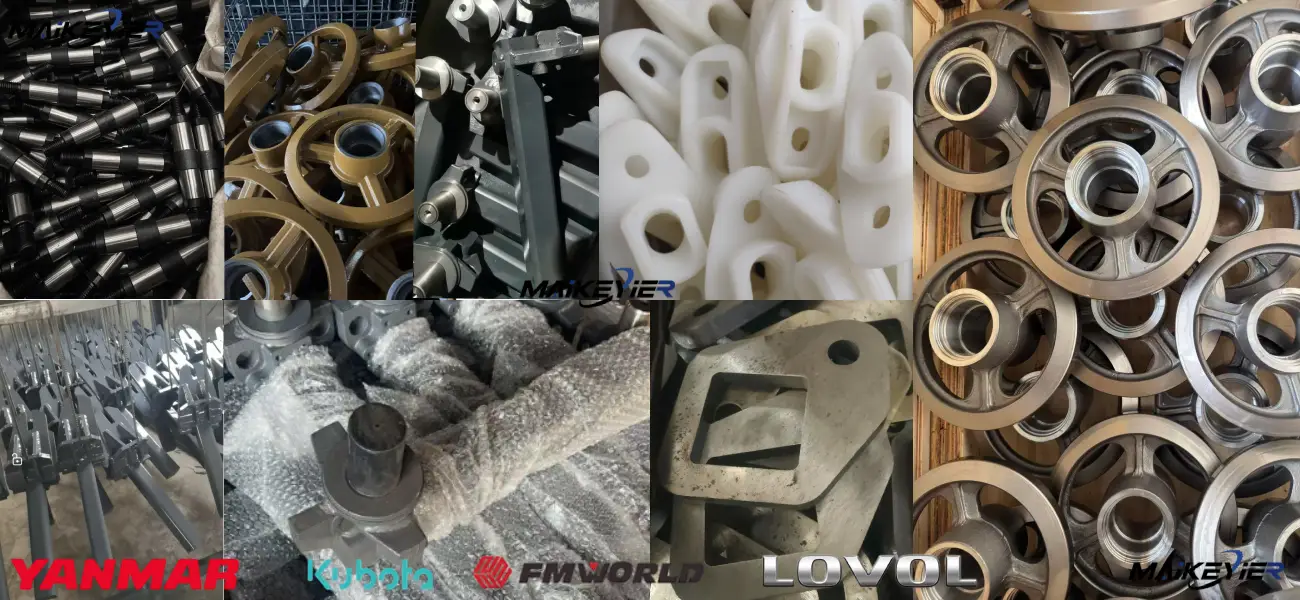
Working Environment of Harvester Idler Wheels
The harvester idler wheel is directly exposed to mud, water, sand, and stones, making it a common wear part in the undercarriage system.
| Working Environment | Impact on the Idler Wheel |
| Muddy paddy fields | Mud and water intrude into the rim and bearings, accelerating wear and corrosion |
| Sandy soil | Sand particles act like abrasive, continuously wearing the rim and shaft journals |
| Stones and hard soil ridges | Instant impact loads may cause rim cracking or bearing damage |
| Continuous high-load operation | Prolonged operation causes rim fatigue and bearing wear |
| Frequent turning | Uneven forces on left and right idler wheels intensify wear on one side |
| Straw and weed entanglement | Increases travel resistance, indirectly increasing the load on the idler wheel |
Common Problems and Solutions for Harvester Idler Wheels
| Common Problem | Main Cause | Solution |
| Rim wear | Continuous contact with track chain; sand abrasion | Choose forged steel or alloy steel idler wheels with hardened rims; regularly check rim thickness |
| Bearing damage | Insufficient lubrication, mud/water ingress, long-term alternating loads | Regularly apply grease; use sealed bearings; replace promptly if abnormal noise is detected |
| Oil seal leakage | Aging, wear, or improper installation of oil seals | Replace with high-quality oil seals; pay attention to orientation during installation; maintain lubrication |
| Shaft bending/deformation | Excessive impact load, overload | Use materials with good toughness (40Cr, 42CrMo); avoid forcing through large stones |
| Bracket cracking/deformation | Welding defects, fatigue stress, overload | Choose a reputable manufacturer and request flaw detection; avoid overload operation |
| Corrosion | Failure to clean promptly after paddy field operation; poor anti-corrosion treatment | Choose powder coating; rinse off mud after operation; apply anti-rust oil |
| Tensioning failure | Wear or sticking of the tensioning device | Regularly inspect the tensioning mechanism; replace worn parts |
How to Determine If an Idler Wheel Needs Replacement
We recommend inspecting the idler wheel before and after each season. Early detection of minor wear allows you to stock replacements in advance and avoid downtime during peak farming season.
| Judgement Standard | Specific Manifestation | Potential Risk | Recommended Action |
| Rim wear exceeds 1/3 of original thickness | Rim becomes thin or develops grooves | Track deviation, derailment | Replace as soon as possible |
| Abnormal bearing noise, sticking | Obvious noise or resistance during rotation | Bearing seizure, damage to shaft and bracket | Replace bearing or assembly immediately |
| Oil seal leakage | Oil traces at the hub | Lubrication failure, accelerated wear | Replace oil seal, replenish grease |
| Shaft bending or obvious wobbling | Visible wobble or runout during rotation | Damage to track and bracket | Stop machine, inspect, replace deformed parts |
| Bracket cracking or deformation | Visible cracks or deformation | Idler wheel detachment, causing accidents | Replace immediately |
| Severe surface corrosion and flaking | Large-area corrosion, brittle material | Reduced strength, may fail at any time | Replace |
| Frequent track deviation or derailment | Occurs even after eliminating tensioning issues | Most likely idler wheel wear or deformation | Check idler wheel wear |
Maintenance and Care of Harvester Idler Wheels
The service life of a harvester idler wheel is 30% dependent on material and workmanship, and 70% dependent on daily maintenance. To extend the service life of the parts, they should be cleaned and maintained promptly before and after use.
| Maintenance Item | Specific Operation | Purpose and Effect |
| Clean promptly after operation | After paddy field operation, rinse mud, straw, and weeds off the idler wheel with clean water | Prevent dried mud from accelerating wear and corrosion |
| Regularly check rim wear | Check the rim every 50–100 hours; measure thickness with calipers and record the wear trend | Detect wear early; prevent the rim from becoming excessively thin |
| Check bearings and oil seals | Regularly check bearing clearance and whether oil seals are leaking | Prevent bearing seizure and lubrication failure |
| Maintain lubrication | Apply grease according to maintenance requirements | Prevent dry bearing friction and shaft journal wear |
| Check track tension | Adjust tension according to manual standards | Too tight increases load on the idler wheel; too loose causes tooth skipping and derailment |
| Adjust promptly if deviation occurs | Check left and right track tension and idler wheel wear promptly | Harvester deviation causes increased wear on one side’s idler wheel |
| Protect against rust during storage | For long-term storage, apply anti-rust oil to the rim and shaft ends; store in a dry, ventilated place | Prevent corrosion; maintain rim strength |
| Avoid overload and improper operation | Avoid high-speed sharp turns on hard ground and forcing through large stones | Reduce impact loads; prevent rim cracking and bearing damage |
| Use matching tracks | Ensure model consistency when replacing tracks | Mismatched track specifications accelerate idler wheel wear |
Maikeyier Idler Wheel Products and Services
Maikeyier is an agricultural machinery parts supplier with forging manufacturing capability at its core, focusing on harvester parts and tractor parts. We produce forged idler wheels ourselves and also have a stable supply chain to provide ductile iron and alloy steel idler wheel products.
| Quality Grade | Material | Process | Applicable Scenario |
| C Grade · Economical | Ductile iron QT450-10 / QT500-7 | Casting + overall hardening | Standard working conditions, spare parts |
| B Grade · Mainstream Wear-Resistant | Forged steel 45# / 40Cr | Die forging + medium-frequency rim hardening | Heavy-load operations, long service life required |
| A Grade · High-End Heavy-Duty | Alloy steel 35CrMo / 42CrMo / 34CrNiMo | Die forging + medium-frequency rim hardening + finishing | Heavy-duty continuous operations, high-end markets |
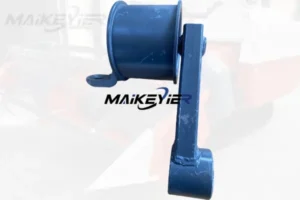
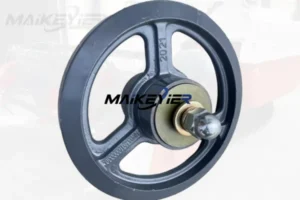
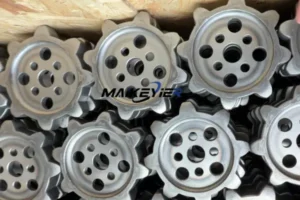
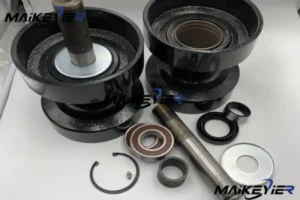
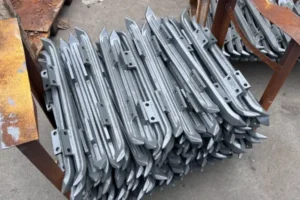
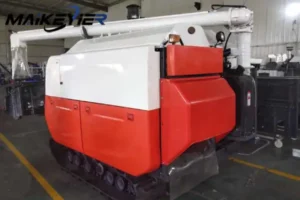
Maikeyier – Professional Combine Harvester Idler Wheel Manufacturer and Supplier. Leave us a message with your working conditions and budget, or your machine model and required quantity, and we can recommend the right idler wheel material and process solution for you.