
The Combine Harvester Gap Bridge Assembly (also commonly referred to as the feeder house or conveying bridge) = Housing + Chain Rake Conveyor + Tensioning Mechanism + Sprocket/Pulley Drive End + Drive Roller. Located in the center of the machine, it connects to the header at the top (moving up and down along with the header) and links to the feed inlet of the threshing drum at the bottom. The performance of the gap bridge assembly directly determines the operational smoothness of the entire machine.
What Does the Gap Bridge Assembly Do?
The gap bridge assembly is the “conveying bridge” connecting the front end, and its design directly determines the uniformity of the crop entering the drum.
| Function | Description |
| Continuous Conveying | Continuously and rhythmically conveys the crop gathered by the header feed auger up the incline and into the threshing drum. |
| Even Feeding | Utilizes the forced grabbing action of the chain rakes to organize the crop into an even mat, which is the key to ensuring threshing quality. |
| Buffering & Floating | Connects to the header, absorbing impacts caused by terrain undulations to prevent damage to the front-end machinery. |
| Safety Protection | The sturdy housing and shields completely enclose the high-speed chain rakes and drive chains to prevent personnel from being caught. |
Main Components of the Gap Bridge Assembly
Taking a tracked combine harvester as an example, the gap bridge assembly is located between the combine harvester feeding system parts and the threshing system parts. It is typically divided into the housing and shield system, chain rake conveyor, tension adjustment mechanism, and sprockets, pulleys, and drive rollers.

Housing Exterior and Tension Wheels
Main Parts: Gap bridge rear cover weldment, shield weldment, deep labyrinth shield, internal housing side cover, tension wheel safety cover weldment, dust cover.
Function: The labyrinth shield design is specifically used to guide splashing mud and water to “turn corners,” preventing direct erosion of the sealing surfaces.
Tensioning and Adjustment Mechanism
Main Parts: Idler wheel weldment, tension wheel weldment, tension bolt assembly, connecting plate, spline sleeve, bracket weldment.
Function: Includes nylon protective sleeves 20-2, plain washers 20-2, large square head bolts (M16x32, etc.), Type 1 hexagon nuts (10 pcs), and various hexagon flange bolts. Chains inevitably elongate after use, and this mechanism is essential to maintain proper engagement.
Drive End and Lubrication/Breather
Main Parts: Drive sprocket (1 pc), tension pulley, tension sprocket, breather pipe assembly, oil slinger, adjustment shims.
Function: Includes 13/14-tooth tension sprockets (2 pcs), dust pipe clamps, fixed pipe clamps, straight grease nipples (2 pcs), seal rings, bushings (10 pcs), and hexagon socket head bolt positioning plates. The oil slinger is responsible for slinging oil to lubricate the bearing areas, while the adjustment shims are used to precisely adjust the drive clearance.
Chain Rake Conveyor
Main Parts: Chain rakes (2 sets), bracket weldments, bracket bases (2 pcs).
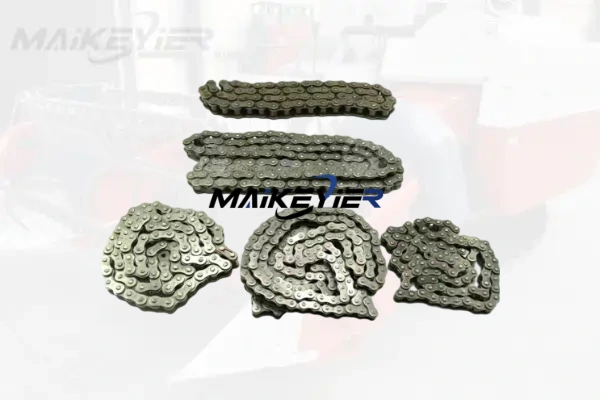
Function: Multiple parallel chains transversely (corresponding to the “Feed chain assembly 16PCS” in the catalog), with nylon support plates (4 pcs) installed at intervals. Includes hexagon flange bolts (56 pcs), spring washers, hexagon flange nuts (56+10 pcs), plain washers (12 pcs), slotted countersunk head screws (4 pcs), and slotted cylindrical head screws (8 pcs). It is the chain system with the heaviest load and the worst working conditions on the entire machine.
Drive End Rollers
Main Parts: Drive wheel weldment, drive roller weldment, hinge rod weldment.
Function: The guiding and supporting interface at the bottom of the gap bridge, bearing the tension of the chain rotation and ground impact. Includes retaining rings (paired with 6205 bearings, 2 pcs), large washers (4 pcs), hexagon head bolts with holes (M12x35, etc., 6 pcs), and Type 1 hexagon nuts (4 pcs).
Common Faults and Replacement Signals
| Fault Symptom | Possible Cause | Components to Check |
| Intermittent feeding, drum fluctuating fast/slow | Chain rake slipping (tension failure or chain elongation) | Tensioning mechanism / Chain rake |
| Regular abnormal noise inside gap bridge | Loose chain rake support plate, chain scraping against housing | Chain rake / Nylon support plate |
| Frequent chain breakage on chain rake | Uneven elongation of parallel chains, single chain overloaded | Chain rake (replace entire set recommended) |
| Gap bridge end overheating | Bearing lacking oil, seal failure allowing mud/water ingress | Drive end / Shield |
| Frequent feed inlet blockage | Missing chain rake teeth, feed rate exceeding limit, crop too wet | Chain rake / Operating technique |
How to Choose the Right Gap Bridge Assembly Replacement Parts
Confirm Model and Assembly Number
- Harvester brand and model (e.g., Kubota DC10570, Yanmar AW82, Lovol RG50).
- OEM number of the gap bridge assembly (e.g., Lovol RGV3108120000K).
Confirm Replacement Scope
- Complete Assembly: Full set of five major modules.
- Wear Part Kit: Complete chain rake set (including parallel chains + nylon support plates + bolts), tension wheel assembly, bearing retaining ring set.
- Individual Parts: Shields, nylon support plates, single chains, etc.
Confirm Material and Process
- Housing: Usually welded from Q235 or Q355 steel plates; focus on weld fullness and geometric tolerances.
- Chain Rake: Focus on chain tensile strength and nylon support plate material.
- Drive Sprockets: Maikeyier’s own forging factory can produce high-strength harvester drive sprockets, gears, and shafts, with surface hardening for wear and impact resistance.
Why Choose Maikeyier for Gap Bridge Assemblies and Parts?
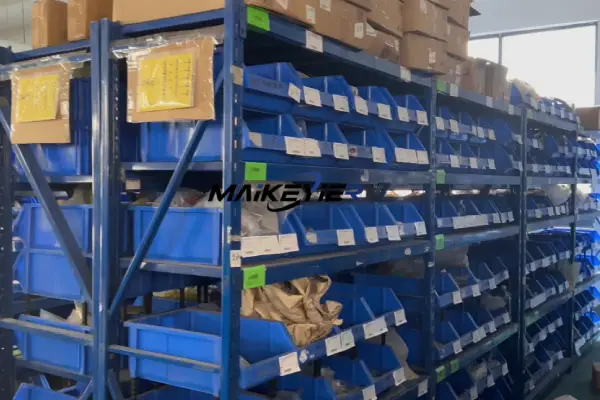
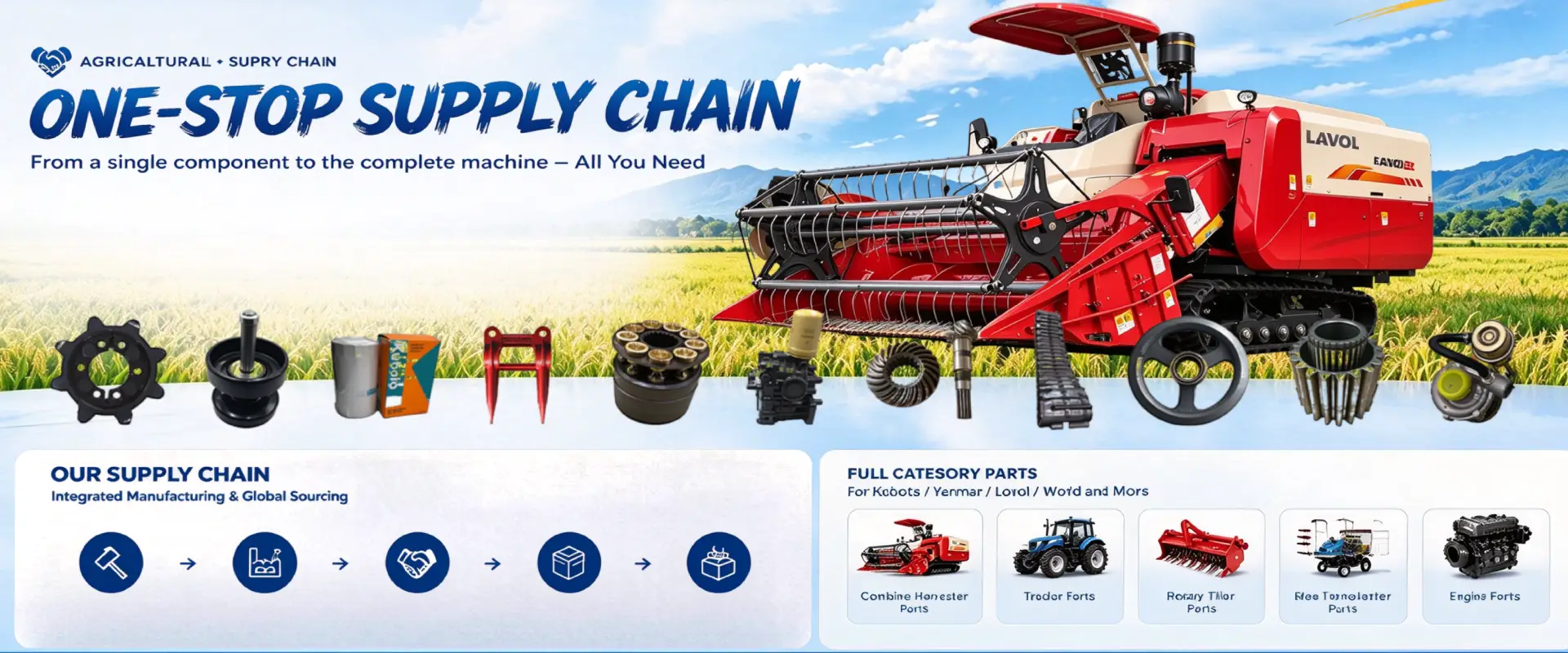
Maikeyier specializes in supplying harvester gap bridge assemblies and a full range of related parts, covering mainstream brands such as Kubota, Yanmar, Lovol, and World. Our gap bridge parts are strictly matched by original part numbers, from chain rakes to bearings, solving core pain points like feeding blockages and chain breakage.
| Procurement Pain Point | Maikeyier’s Response |
| Chain rakes break easily, short lifespan | Produced by partner factories to Maikeyier standards; chain tensile strength strictly meets requirements; stocked by “sets” to avoid single chain overload caused by mixing old and new chains. |
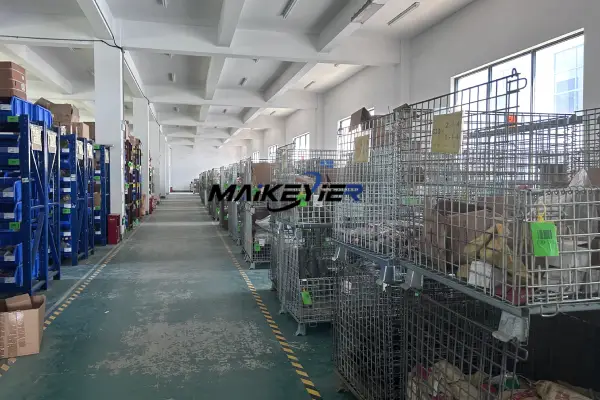
| Incomplete supply from a single factory | Gap bridge parts span multiple categories: chains, weldments, nylon parts, and bearings. We unify procurement, quality inspection, and container consolidation, completing the full set in one order. |
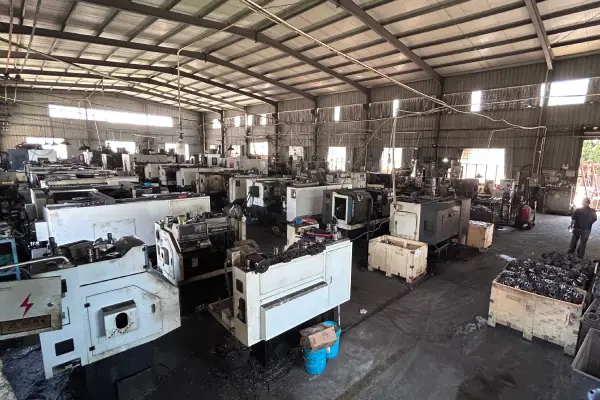
| Drive parts wear out quickly | Core forged parts like matching sprockets and drive shafts are produced in Maikeyier’s own factory, with full control over materials and heat treatment. |
| High freight costs | Heavy goods like chain rakes and housings can be mixed with light goods like self-produced forgings and filters in one container, maximizing container utilization. |
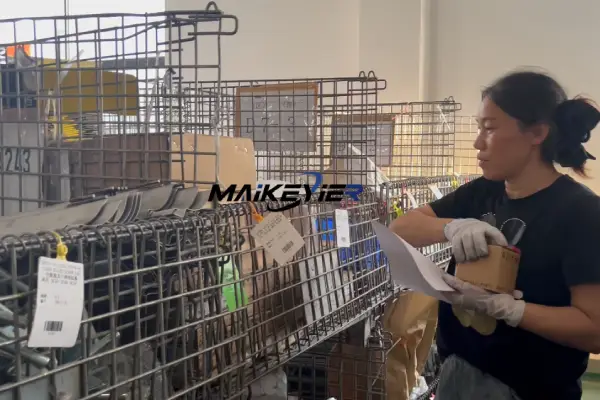
Maikeyier’s factory mainly produces forged parts such as sprockets, gear blanks, and drive shafts for the gap bridge drive end. Chain rakes, shields, and nylon support plates are supply chain integration products produced by partner factories, with our company responsible for incoming quality control. Please send us your harvester model, OEM part number, or requirement list, and we will provide an accurately matched quotation within 24 hours!