
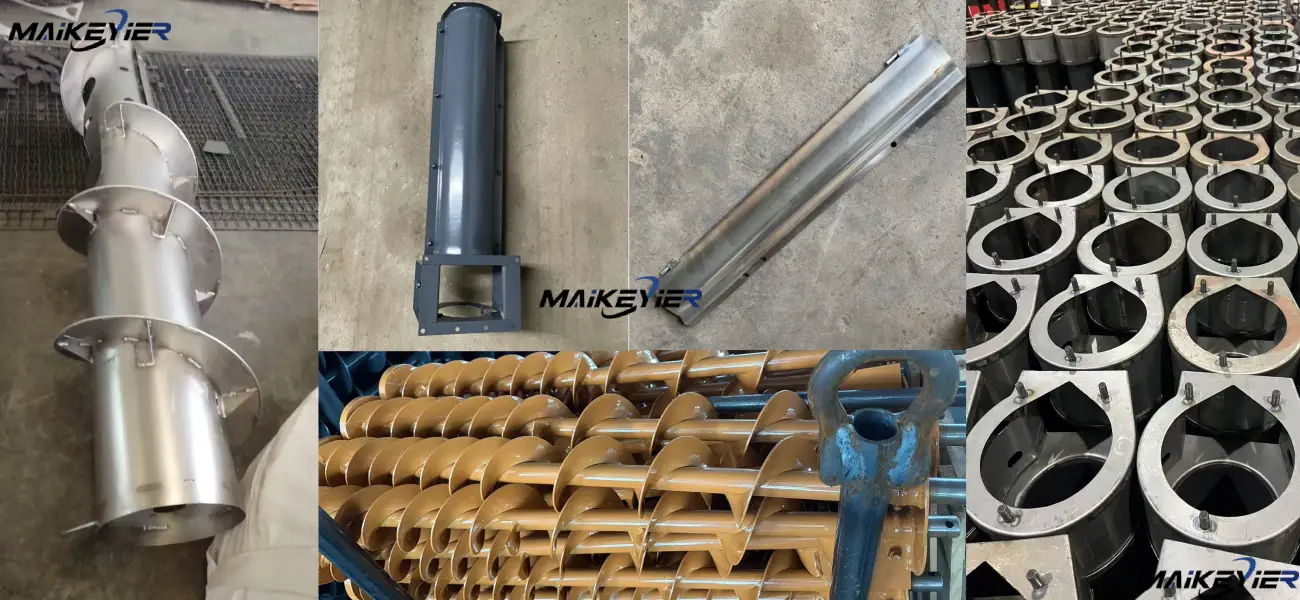
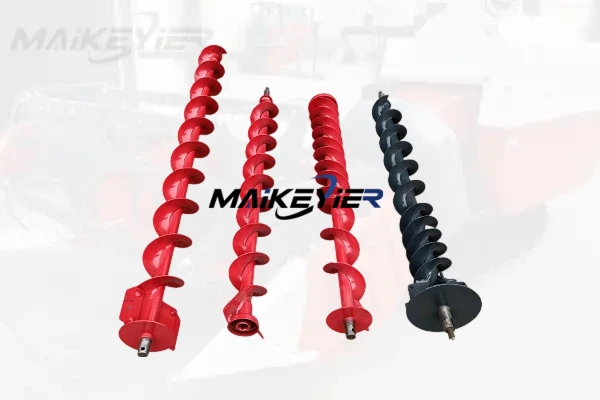
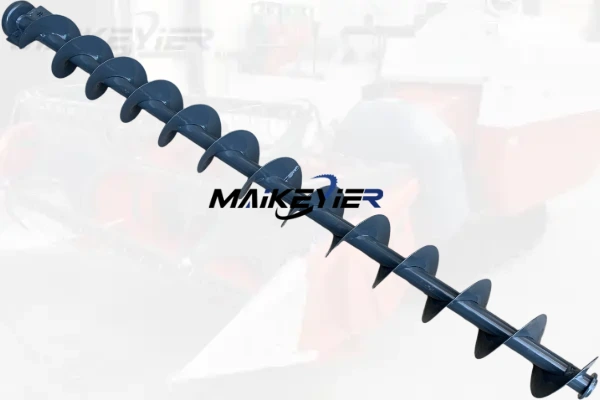
A combine harvester auger (Auger / Conveyor Auger) is a spiral conveying device consisting of a shaft with spiral flights. When the harvester is operating, the shaft rotates → the spiral flights push grain, crop material, or other materials → the material moves in a transverse or longitudinal direction to different working stages. Because augers handle abrasive materials at high speeds, they are among the most severely worn components on a harvester.
What Does a Harvester Auger Do?
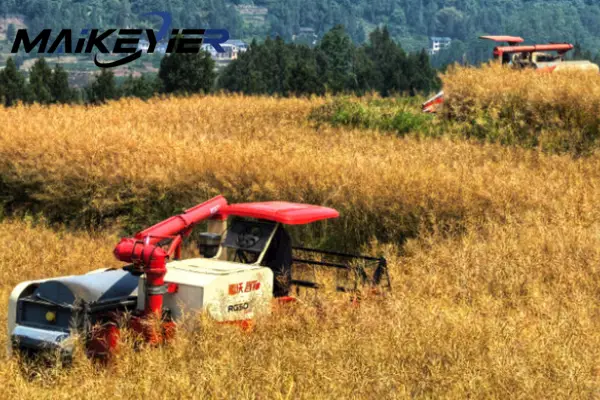
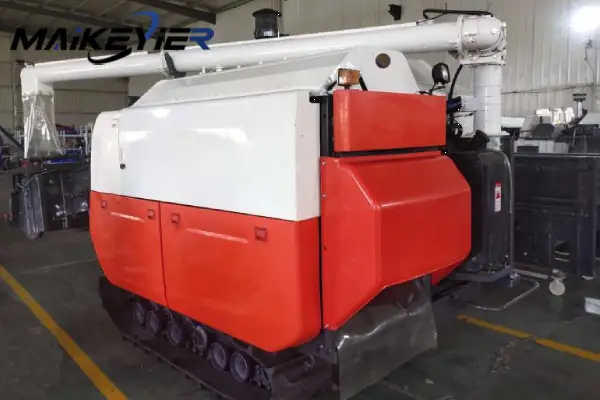
Augers are found throughout the machine – from the header that feeds the crop, to the unloading system that delivers the grain out. Harvester augers perform the critical tasks of conveying and gathering at multiple stages: cutting → conveying → threshing → separation → cleaning → grain collection → unloading.
| Function | Description |
| Material conveying | Moves material from one working area to another |
| Grain gathering | Concentrates scattered grain from the sides toward the center |
| Feeding supply | Delivers material to the next working component (e.g., threshing system) at a steady rate |
Common Types of Augers on a Combine Harvester
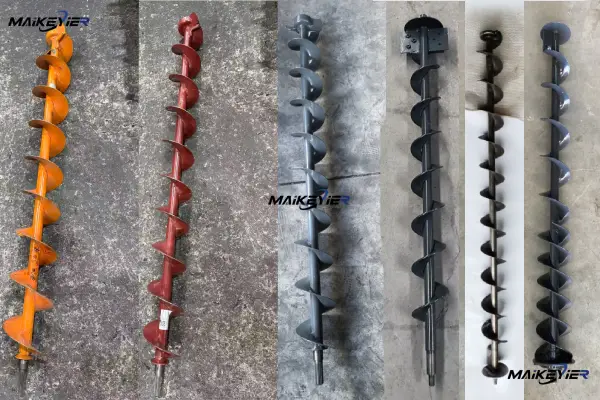
Each harvester typically has four augers. Each type has a specific purpose, size, and wear pattern. When performing inspection and maintenance, knowing which type you need is the first step to a correct replacement.
Header Auger (Conveyor Auger)
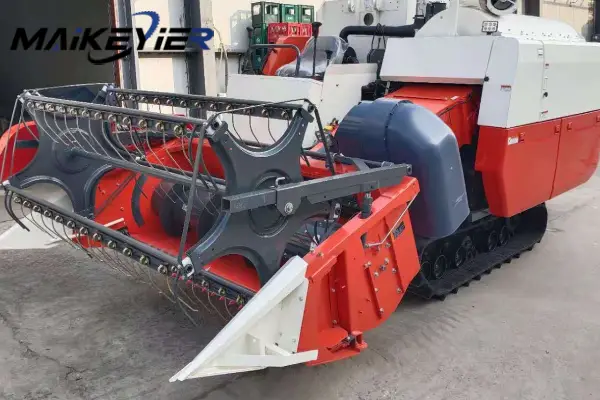
Located behind the cutter bar on the header, it gathers the cut crop and pushes it toward the center, where it is fed into the machine by the conveyor chain. Its flights are wide and open, often with retractable fingers to grasp the crop.
Clean Grain Auger (Horizontal and Vertical)
The clean grain auger collects grain that falls through the sieves and lifts it into the grain tank. Most models use a combination of a horizontal auger at the bottom of the cleaning chamber and a vertical elevator auger. These two augers run continuously and handle the full harvest throughput of the machine.
Tailings Auger (Horizontal and Vertical)
Unthreshed heads and heavier tailings are collected at the rear of the cleaning system and returned by the tailings auger to the threshing mechanism for re-threshing.
Unloading Auger (Vertical and Horizontal Unloading)
The unloading auger discharges grain from the grain tank into a truck or grain cart. It typically consists of a vertical auger inside the tank and a horizontal tube that can swing out from the machine body. Folding unloading augers have drive couplings and carry the heaviest loads of all augers.
Other Material Conveying Augers
Large or specialized harvesters may also have additional augers for straw spreading, chopping, or in-machine grain transfer. These have the same structure as described above, scaled up according to workload.
Summary of Auger Types
| Auger Type | Main Function | Typical Wear Points |
| Header Auger | Delivers cut crop into the conveyor | Flight edge wear; retractable finger wear |
| Clean Grain Horizontal Auger | Collects clean grain from sieves and delivers to elevator | Flight and trough wear from continuous grain flow |
| Clean Grain Vertical Auger | Lifts grain into the grain tank | Flight wear; bearing and shaft wear |
| Tailings Auger | Returns tailings for re-threshing | Flight wear from abrasive return material |
| Unloading Auger | Discharges grain into truck or grain cart | Heaviest load: flight, spline, coupling wear; bending |
What Does an Auger Assembly Consist Of?
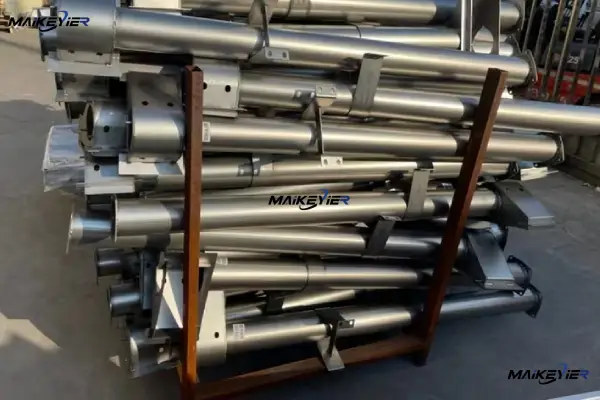
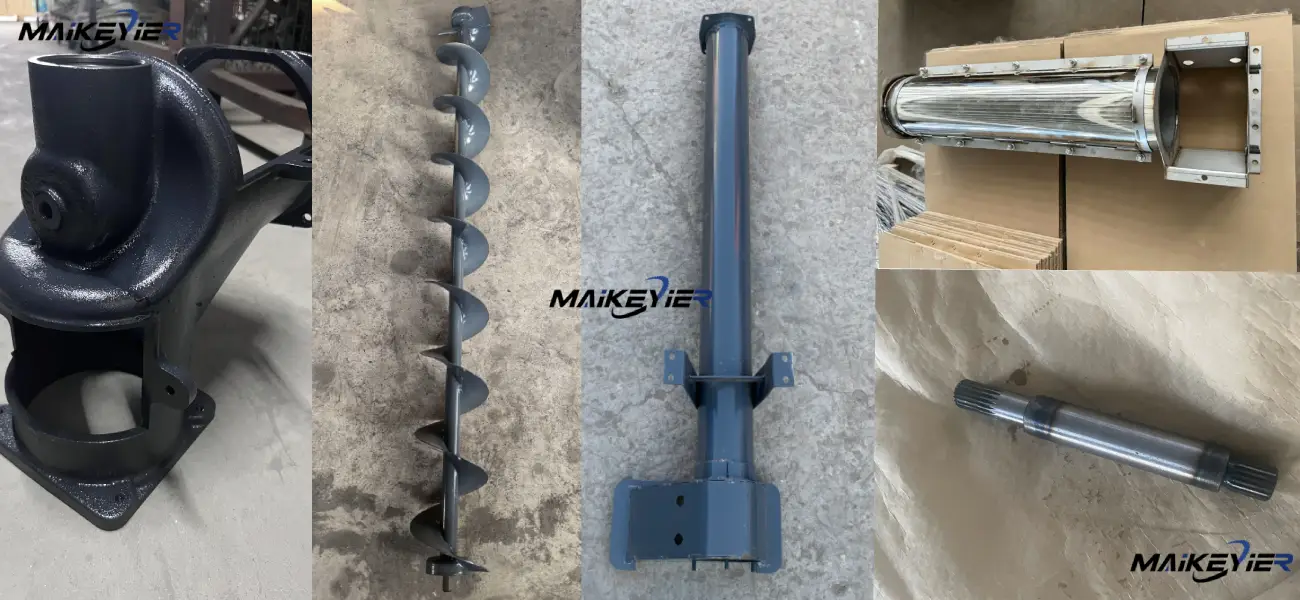
If you are procuring from an agricultural parts perspective, an “auger” is usually not just a single spiral shaft.
| English | Function |
| Auger Shaft | Main rotating shaft that carries the spiral flights |
| Auger Flighting / Flight | Core component that pushes material forward |
| Auger Tube / Housing | External casing (on some models) |
| Bearing | Supports shaft rotation and reduces friction |
| Bearing Housing | Secures the bearing |
| Sprocket | For chain drive connection |
| Pulley | For belt drive connection |
| Gear | For gear drive connection |
| Drive Components | Couplings, keys, etc. |
| Mounting Bracket | Fixes the auger in position |
Why Do Augers Fail?
Augers are components that are in continuous contact with material and rotate constantly. Under harsh field conditions, they are prone to wear and damage.
| Problem | Cause | Consequence |
| Flight wear | Continuous friction with grain, sand, and crop residue | Flights become thinner; conveying efficiency decreases |
| Auger shaft bending | Stones, foreign objects, or prolonged overload | Vibration, imbalance, or complete failure |
| Bearing failure | Insufficient lubrication, mud/water ingress, or normal wear | Abnormal noise, vibration, overheating, eventual seizure |
| Flight deformation | Blockage or impact from hard foreign objects | Uneven conveying; reduced efficiency |
| Weld cracking | Fatigue stress or welding defects | Separation of flight from shaft |
When Should You Replace a Harvester Auger?
Reduced output capacity – the grain tank fills noticeably slower, or unloading speed decreases.
Flight edges become thin or develop holes – the most common wear point; flights are gradually worn away by abrasive grain and sand.
Weld cracks – cracks appear at the flight-to-shaft connections or at shaft ends.
Shaft bending or rotational wobble – often occurs after blockages or foreign object impact.
Grain leaks from trough/housing joints, or abnormal vibration/noise at bearings.
A worn auger not only loses efficiency – it can also crush grain (increasing breakage), add load to the drive system, and eventually seize mid-harvest. If you notice any of these signs, schedule a replacement before the next operating day.
How to Identify the Correct Replacement Auger
Two augers with the same name can have completely different lengths, flight pitches, rotation directions, and shaft end configurations. Guessing when procuring only wastes time and money.
Machine brand and model – e.g., Kubota DC70, Yanmar AW82V, Lovol RG series.
OEM / reference number – printed on the part or found in the parts manual.
Overall length and tube diameter – measure the old part directly when possible.
Flight outside diameter, pitch, and thickness.
Shaft type and shaft end configuration – splined, keyed, or universal joint.
Rotation direction (viewed from the drive end) and installation position.
Photos of the part and installation area – helps confirm compatibility.
With this information, a reliable supplier can match the OEM number or manufacture a compatible auger to your sample.
Materials and Quality That Determine Auger Life
Material selection is the single biggest factor determining the life of a replacement auger. Under normal conditions, 45# steel is recommended for the main shaft and Q235 for the flights. For high-load or humid environments, 40CrMo shafts and stainless steel flights are available. Common flight thicknesses are 2mm (light-duty), 3mm (standard, most widely used), and 4mm (heavy-duty). Surface protection ranges from oiling (for inland dry areas) to powder coating (for sea freight and humid markets). A quality auger must have precise flight pitch (uneven pitch causes material pulsation and machine vibration), sufficient weld penetration, and balanced rotational accuracy.
Step-by-Step Guide to Auger Replacement
Replacing an auger is a mechanical procedure best performed by an experienced repair shop. If you are not confident in the process, consult the service manual from your parts supplier or dealer – incorrect installation can quickly damage new harvester parts.
Safety first – shut down the engine, secure the machine, and release drive system tension.
Open access – remove guards, trough covers, or the header as per the service manual.
Disconnect the drive – remove belts/chains, disconnect couplings or universal joints.
Remove the old auger – support the shaft, remove end covers/bearings, and withdraw the auger as a complete unit.
Inspect surrounding components – with the auger removed, check bearings, sprockets, trough wear, and seals.
Install the new auger – confirm rotation direction, align shaft ends, and reinstall bearings and drive components.
Torque to specification – and verify smooth manual rotation as per standards.
Test run – run at low speed first to confirm no vibration or rubbing, then proceed to normal operation.
How to Choose a Reliable Harvester Auger Supplier
Choosing a reliable harvester auger supplier is a critical decision for agricultural parts dealers, wholesalers, and repair networks. A quality supplier is not just a product provider – they are a guarantee of business stability and customer satisfaction.
Process
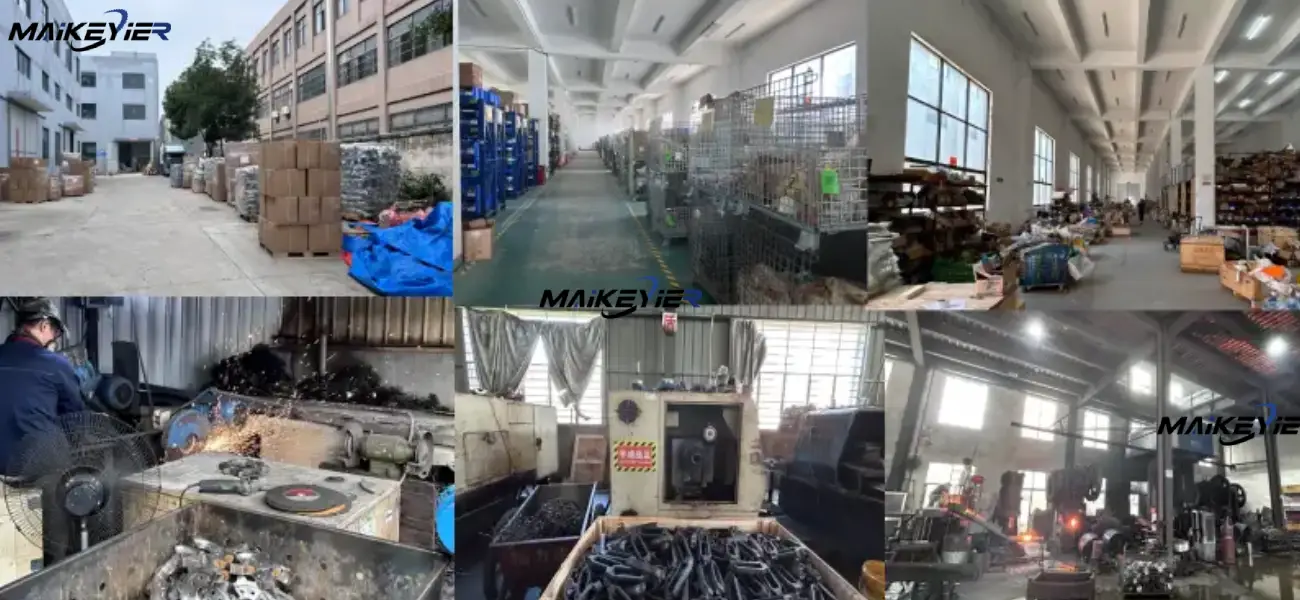
Production capability and technology: Assess whether the supplier has complete production lines, including cold-rolling, precision welding, CNC machining, and other core processes.
Quality certification and inspection standards: Look for ISO 9001 and other international quality management certifications. Check whether their factory QC process includes critical steps such as raw material spectrographic analysis, weld inspection, hardness testing, and dynamic balancing.
Industry experience and specialization: Prioritize suppliers with long-term focus on agricultural parts.
Quality Inspection
Material and workmanship: Quality auger flights are typically made of 45# steel, Q235 cold-rolled steel, or 304 stainless steel.
Critical dimensions and fit: Key dimensions such as overall length, shaft diameter, flight outside diameter, and pitch must be precise.
Service
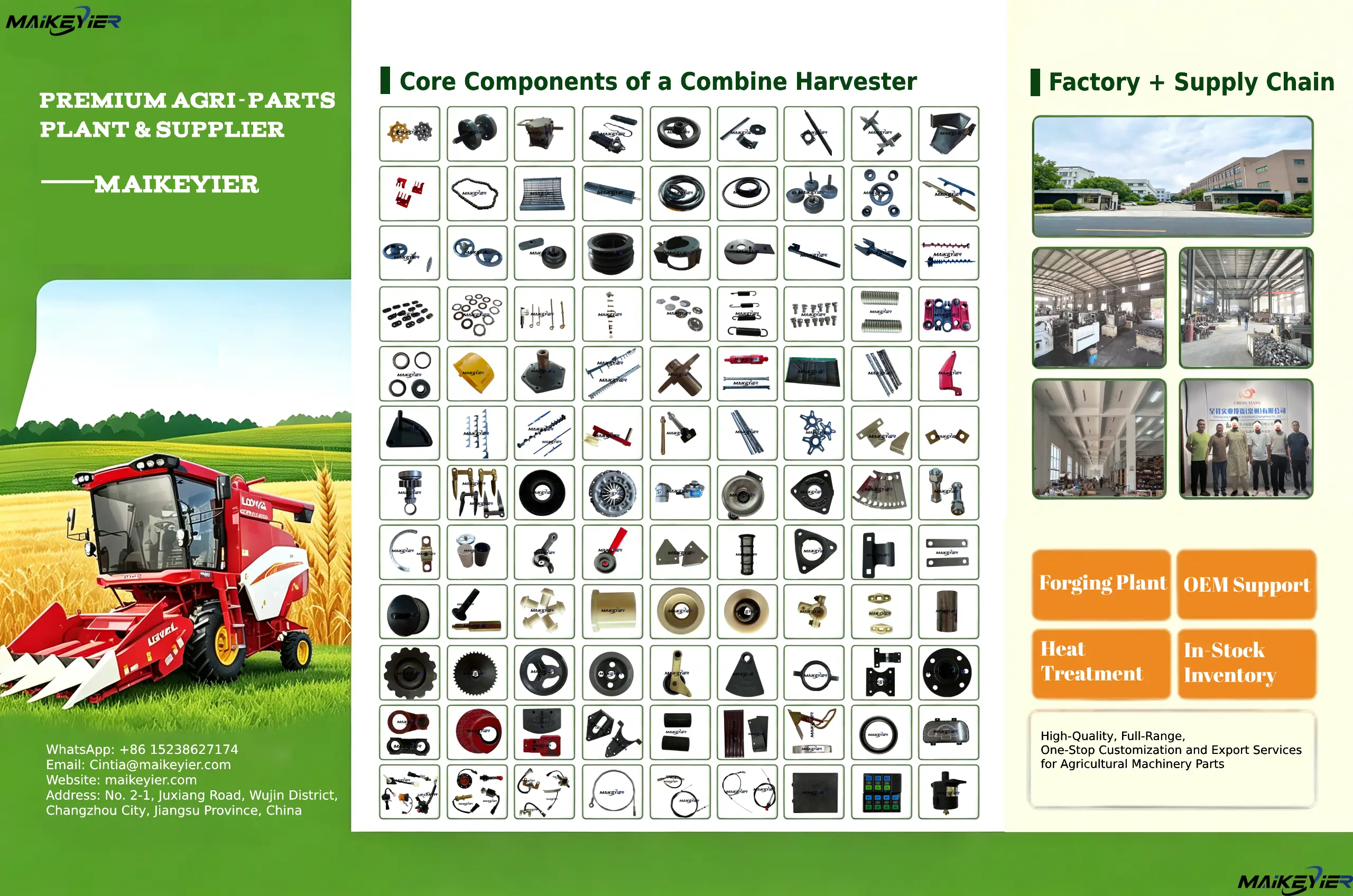
One-stop supply capability: A quality supplier not only provides augers but can also integrate cutter blades, threshing teeth, sprockets, bearings, belts, and related parts.
Customization and technical support: A good supplier should have the technical capability for non-standard customization based on drawings or samples.
Delivery capability and after-sales support: Stable delivery ensures business continuity. Pay attention to metrics such as on-time delivery rate.
Procurement Preparation
Request samples and test: Start with a small trial order.
Verify OEM information and dimensions: Provide accurate machine model, OEM number, or detailed dimensions; ask the supplier for a precise matching plan.
Request material and test reports: Ask for raw material certificates (MTR) and factory test reports for critical items such as hardness and dynamic balancing.
Visit the factory (or video inspection): If possible, a site visit is the most effective way to assess real production capacity and quality control. Alternatively, request a video tour of production lines and QC processes.
Confirm mixed-lot and customization policies: Clarify minimum order quantities (MOQ), support for mixed orders, and lead times for custom products.
When selecting a quality harvester auger and parts supplier, consider a combination of price, manufacturing strength, product quality, service capability, and commitment to cooperation. Maikeyier is your ideal partner. If you have a specific harvester model or OEM part number, feel free to let us know – we can help you further analyze your matching needs.