
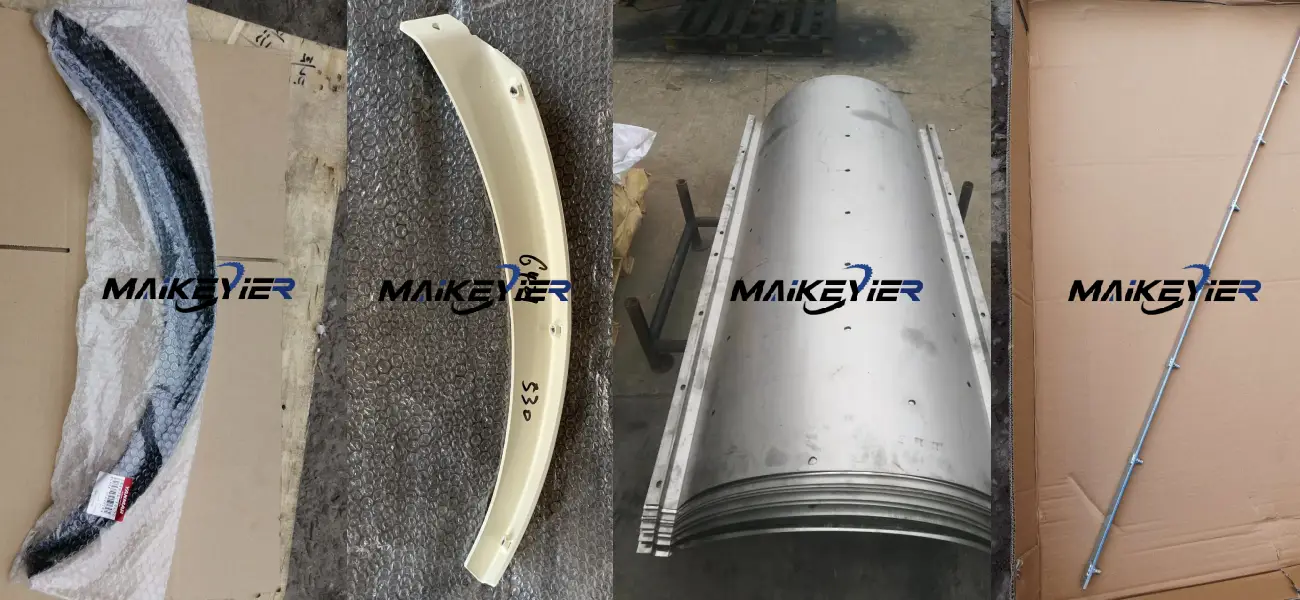
In the threshing system of a combine harvester, the roller cover assembly covers the top of the threshing drum. It maintains internal airflow and the material flow trajectory, while protecting the high-speed rotating internal components from external debris. Additionally, internally welded guide plates guide the crop to flow smoothly backward inside the threshing chamber to prevent blockages. Typically, a standard combine harvester roller cover assembly consists of 2–3 split cover plates bolted together, with inspection openings left in between for easy cleaning of blockages and checking drum wear.
What Does the Roller Cover Assembly Do?
| Core Function | Description |
| Safety Protection | Completely encloses the high-speed rotating threshing drum, preventing personal injury from contact and stopping external debris from falling in and damaging the drum. |
| Material Guidance | Guide plates are welded on the inside of the cover. As the crop moves backward in a spiral motion inside the drum, the guide plates control the axial flow rate and retention time of the material, directly affecting threshing cleanliness. |
| Sealing & Leak Prevention | Multiple sections of sealing rubber strips are fitted along the edges, tightly adhering to the threshing body to prevent grain and broken straw from splashing or leaking out through the gaps. |
| Convenient Opening & Closing | Gas springs (struts) are installed on both sides, allowing the heavy cover plate to be lifted easily and held in a suspended position, making it convenient for maintenance personnel to clear blockages or inspect the interior. |
Main Structure of the Roller Cover Assembly
The roller cover assembly is installed on the upper part of the combine harvester’s threshing chamber, covering the threshing drum. It faces downwards toward the arc-shaped concave below—the enclosed space between them is the threshing chamber. Standard Maikeyier combine harvester parts include: Roller cover component & weldment, Guide plate weldment, Semi-circular plate weldment, Front & rear sealing strips, Right & left sealing strips, Gas spring, Cotter pin & bolt, Cup head square neck bolt, Internal hexagon cylindrical head screw, Plain washer, Standard spring washer, Hexagon nut style 1, Backing plate, etc.
| Component | Position | Function | Typical Wear |
| Cover Plate Body | Upper arc surface of the threshing chamber | Encloses the threshing chamber, withstands material erosion | Thinning, wear-through, local deformation |
| Guide Plate (Spiral Vane) | Inner wall of the cover plate | Pushes the crop to move axially | Flattening, detachment, height reduction |
| Inspection Port & Cover | Middle or side of the cover plate | Channel for clearing blockages and inspection | Cover deformation, seal failure |
| Sealing Strips & Fasteners | Cover joints and fixing points | Leak prevention, anti-loosening | Aging, loss, bolt hole wear |
| Reinforcement Ribs | Back of the cover plate | Anti-deformation | Generally does not fail independently |
When Should the Roller Cover Assembly Be Replaced?
| Symptom | Possible Cause | Affected Components |
| Abnormally heavy to lift or fails to hold suspended position | Gas spring leak or failure | Gas spring |
| Severe grain leakage from the top of the machine | Aging/detached sealing strips, cover plate deformation/warping | Left/right and front/rear sealing strips |
| Incomplete threshing or poor straw discharge (even blockage) | Severe wear or detachment of internal guide plates | Guide plate weldment |
| Abnormal noise from the cover, high vibration | Loose fasteners, worn hinge holes | Various bolts, washers |
| Cover plate deformation | Forced opening/closing, impact, or insufficient material strength | Roller cover weldment body |
How to Choose the Right Roller Cover Assembly Replacement?
Exact matching by assembly number or machine model: Combine harvesters with different feed rates (e.g., 5 kg/s vs. 8 kg/s class) have completely different cover plate curvatures, lengths, and guide plate spiral angles. Never place an order based solely on similar appearance or simple measurements of length and width.
Focus on checking the sealing strips and gas springs: These are common wear parts on combine harvesters. If you only replace the cover plate body without replacing the sealing strips, grain leakage will persist.
Evaluate welding and anti-rust processes: A high-quality cover plate should use high-strength steel plates, with full-weld processes for the internal guide plates, and a surface coated with anti-rust primer.
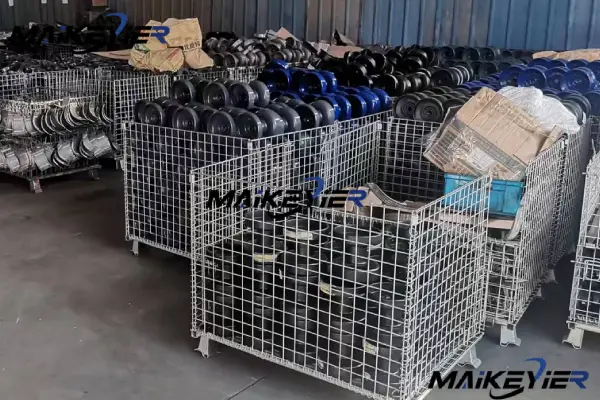
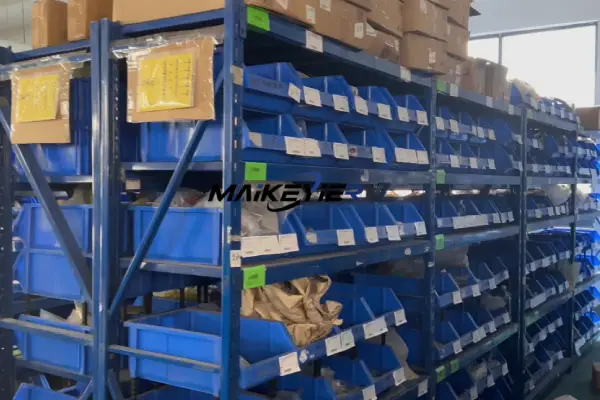
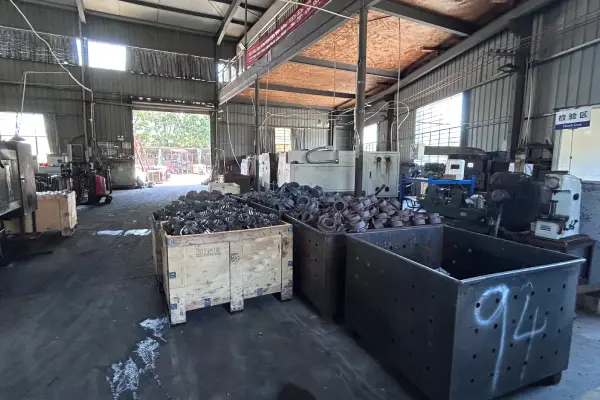
As a supplier with the dual identity of an owned forging factory + complete machine parts supply chain, Maikeyier’s sheet metal cover parts, such as combine harvester roller cover assemblies, are produced by partner factories. We are responsible for model matching, factory selection, quality control, and export packaging. Meanwhile, forged parts such as sprockets, drive sprocket rings, gears, and transmission shafts are manufactured in our own factory. Both types of products can be ordered together and shipped in a consolidated container.