
A combine harvester involves seven major systems from top to bottom: the header, threshing, conveying, engine, running chassis, hydraulic, and sheet metal systems – covering thousands of components, with materials ranging from forgings, castings, sheet metal, and stampings to rubber, plastic, nylon, and more. In the agricultural aftermarket, finding a reliable parts supplier is often more difficult than finding a customer. Maikeyier has compiled a checklist from three dimensions – supplier type selection, supply model comparison, and evaluation methods – to help you find a truly reliable agricultural parts supplier.
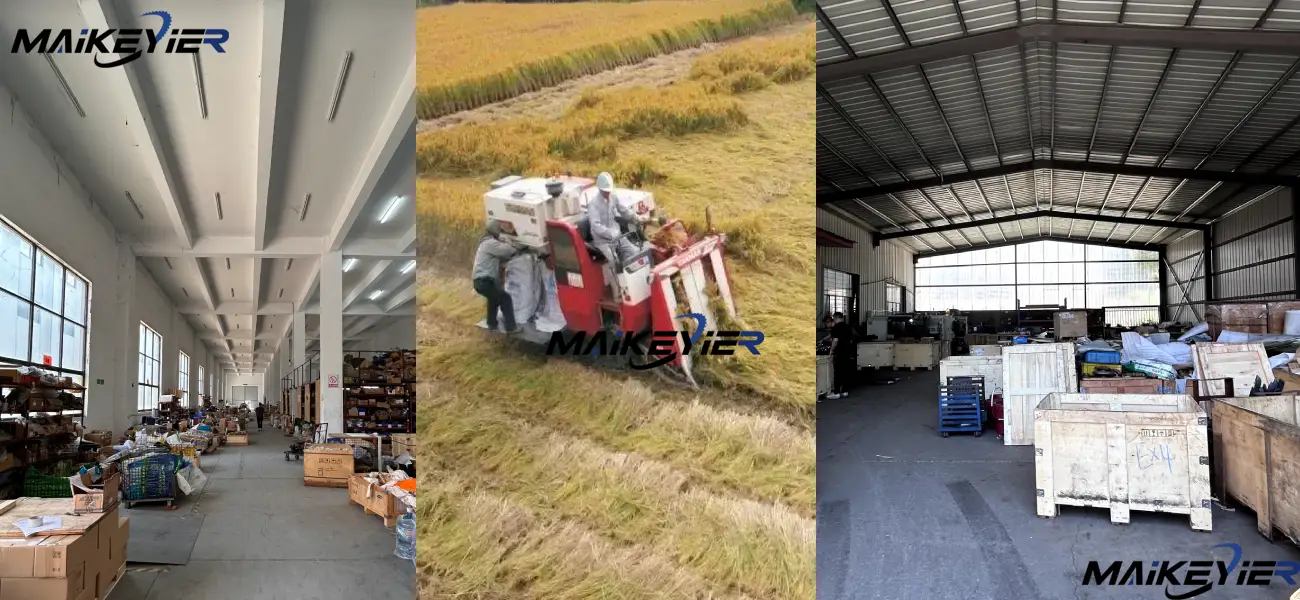
OEM Parts Suppliers vs. Aftermarket Parts Suppliers – Which to Choose?
Due to the wide variety of products and the many discontinued older models on the market, aftermarket parts occupy a large share of the repair and maintenance market. If you are sourcing high-frequency harvester wear parts and value cost-performance, then quality aftermarket parts suppliers with sound quality control systems are an excellent choice.
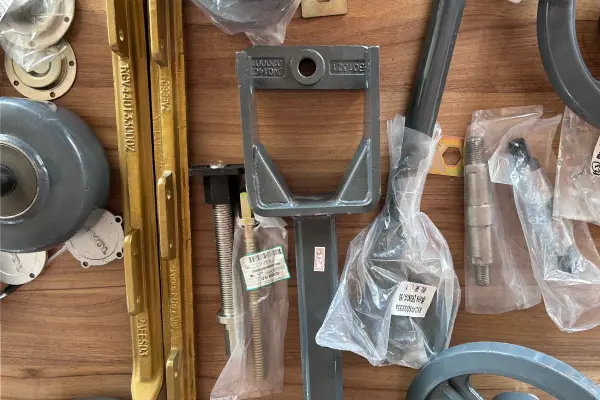
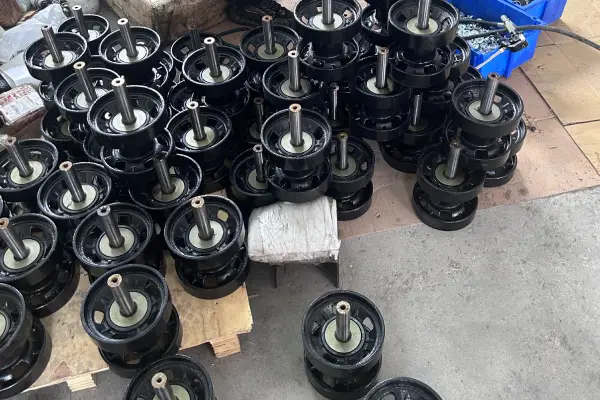
OEM Parts Suppliers
OEM (Original Equipment Manufacturer) parts suppliers are factories that produce matching components for the OEM (such as Kubota, Yanmar, Lovol, World, etc.), or authorized parts distribution systems. The parts they produce pass the OEM’s quality certification system and carry the original brand logo on the packaging.
Advantages:
- Highest fit accuracy: Produced strictly to original specifications; no modification needed during installation.
- High quality assurance: Mature quality systems with good batch-to-batch consistency.
- Comprehensive after-sales support: Quality issues can be traced back to the OEM system.
Disadvantages:
- Higher price: Includes brand premium and licensing costs.
- Limited channels: Possible stock shortages or supply delays in some regions.
- Discontinued support for older models: OEMs typically only support new models and equipment; parts for older models may be discontinued.
- High procurement threshold: Some brands supply only to authorized dealers.
Aftermarket Parts Suppliers
Aftermarket parts suppliers are manufacturers or trading companies that operate independently of the OEM system, producing or integrating parts that fit various brands of agricultural machinery according to original specifications. They generally have a wider product range and lower prices, but the packaging does not carry the original brand logo.
Advantages:
- Price advantage: Typically lower than OEM parts.
- Broader category coverage: Can supply across brands and models.
- Flexible procurement: Supports mixed lots, small batches, and stock availability.
- Support for older models: Parts for older models discontinued by OEMs may still be available from aftermarket suppliers.
Disadvantages:
- Variable quality: Large differences between suppliers; needs careful screening.
- Potential fit differences: Some low-quality products may have dimensional deviations.
- Weaker brand assurance: Lacks the OEM brand endorsement.
- Traceability challenges: Inferior suppliers may have batch inconsistency issues.
How to Choose Between the Two?
| Procurement Scenario | Recommended Supplier Type | Reason |
| Repairs for equipment under warranty | OEM supplier | Avoid affecting the original warranty |
| Routine maintenance for out-of-warranty equipment | Quality aftermarket supplier | Lower cost, better cost-performance |
| High-frequency wear parts (blades, chains, belts, etc.) | Quality aftermarket supplier | High replacement frequency; cost advantage is clear |
| Parts for older or discontinued models | Quality aftermarket supplier | OEM channels may have stopped supply |
| Precision electronic/hydraulic components (ECUs, common-rail injectors, etc.) | OEM supplier | Extremely high technical requirements; aftermarket cannot fully replace |
| Bulk maintenance and complete machine refurbishment | Quality aftermarket supplier | Better cost control and supply efficiency |
| Building your own brand of parts | Quality aftermarket supplier | Supports OEM private-label customization |
Specialized Parts Factory vs. Complete Machine Parts Supply Chain – How to Choose?
Once you have determined the product source, the next question is: choose a specialized factory that only makes a single category, or a supply-chain-based supplier that covers all categories of the complete machine?
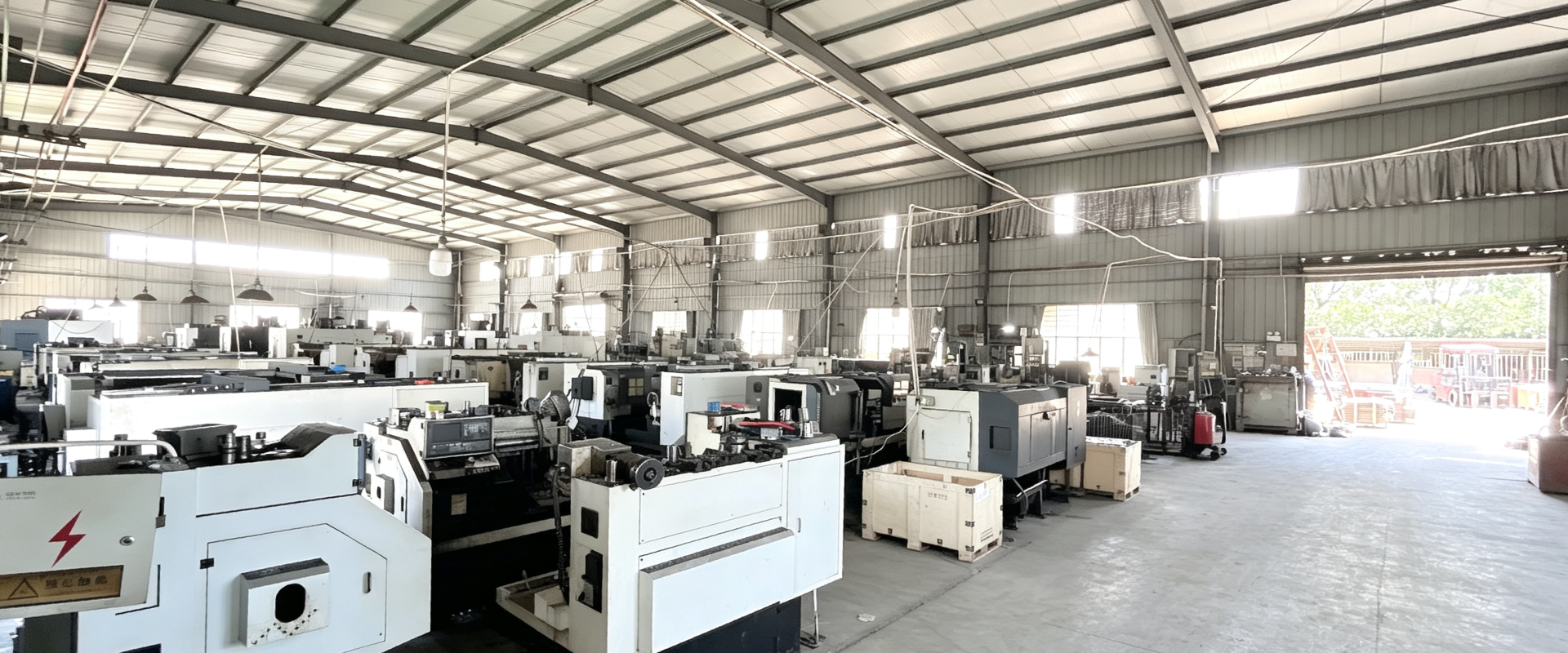
Specialized Single-Category Factory
Such factories focus on one process or one type of part – for example, a professional forging plant only produces forgings, a professional sheet metal plant only does sheet metal.
Advantages:
- Deep process expertise: Long-term dedication to a single field with accumulated technical depth.
- Cost advantage: Scale production of a single category enables strong cost control.
- Stable quality: Mature processes with high product consistency.
Disadvantages:
- Single category: Cannot meet the multi-category procurement needs of agricultural parts.
- High management costs: Customers must deal separately with forging plants, casting plants, sheet metal plants, rubber plants, etc.
- Complex communication: Each supplier has different lead times, quality standards, and payment terms.
- Difficult container consolidation: When single-category purchase volumes are insufficient to fill a full container, logistics costs increase significantly.
Complete Machine Parts Supply Chain Supplier
Most such suppliers are trading companies with strong supply chain management systems, having established stable and long-term cooperation with multiple factories, covering all categories of harvester parts.
Advantages:
- One-stop procurement: Covers all parts needs, simplifying the procurement process.
- Low management costs: Single point of contact, unified quality standards, unified delivery management.
- Flexible mixed lots: Different categories can be combined for procurement and shipment.
- High logistics efficiency: Multi-category container consolidation improves container utilization.
Disadvantages:
- Need to evaluate integration capability: Trading companies may lack quality control capability.
- Inconsistent product standards: With many suppliers, the same product from different batches may have quality inconsistencies.
- Poor customization and OEM capability: Often can only supply products from partner factories; sample customization is difficult.
- Core categories may not be in-house: Need to know which categories are self-manufactured and which are outsourced.
Factory + Supply Chain
Maikeyier falls into this third business model – evolving from a supply chain to owning its own forging plant. Not limited to a single category or process, we provide customers with agricultural parts that offer quality and price assurance through “in-house manufacturing + integrated supply chain.”
Advantages:
- Manufacturing capability: Controls quality and delivery from the source.
- Integrated supply chain system: For non-self-manufactured categories such as standard parts, rubber parts, plastic parts, and electronic parts, we have established a strictly audited supply chain cooperation system to ensure consistent quality.
Value:
- Core part quality controlled: Full process control over forging, heat treatment, and precision machining; every batch traceable.
- Full category demand fulfilled: One order covers all parts needs of the complete machine.
- Unified quality standards: Whether self-manufactured or integrated parts, the same acceptance standards apply.
- Stable delivery lead times: In-house production capacity for core parts; integrated suppliers coordinate production schedules.
Harvester Parts Supplier Evaluation Guide
From channel search → qualification screening → factory inspection (on-site/video) → sample testing → performance verification, we have compiled a simple process that we hope will be helpful to you.
Where to Find Suppliers?
| Channel | Description | Suitable Stage |
| B2B platforms | Major online platforms in each country | Initial screening; obtain supplier lists |
| Industry exhibitions | National and international agricultural machinery fairs | Face-to-face evaluation; intuitive experience |
| Industry referrals | Recommendations from peer dealers and repair shops | High credibility; already verified |
| Industry associations / chambers | Agricultural machinery industry associations, etc. | Obtain member lists |
| Online search | Google/Bing/Yandex keyword search | Self-research; large amount of information |
Screening Out Unqualified Suppliers
| Screening Dimension | Key Points to Check |
| Years in business | Recommend 5+ years – indicates market cycle experience |
| Business qualifications | Business license, export license, self-import/export rights |
| Factory scale | Has its own factory or is purely a trading company |
| Core products | Whether they match your procurement needs – forgings or full-category? |
| Main markets | Whether they have exported to your region or similar markets |
| Certification system | ISO9001 and other quality management certifications |
| Customer feedback | Verifiable case studies or reviews |
| Response | Whether inquiries are answered promptly and professionally |
On-Site / Video Factory Inspection
| Evaluation Module | Specific Content |
| Factory environment | Cleanliness, material storage |
| Production capability | Key equipment: forging workshop, heat treatment line, CNC machining centers |
| Quality control system | QC department, testing equipment (spectrometers, hardness testers, CMM, etc.), completeness of inspection records |
| Warehouse management | Segregated storage for raw materials, semi-finished goods, finished goods; clear inventory labeling |
| Worker performance | Standard operating practices, normal production rhythm |
| Packaging and shipping | Standardized packaging, dedicated shipping area |
Sample Testing
| Step | Recommended Action |
| Request samples | Request free samples (can bear shipping cost); choose 2-3 product types of greatest concern |
| Physical inspection | Upon receipt, check appearance, dimensions, material markings, packaging |
| Installation test | Install on end-user equipment for trial use to verify fit |
| Life test | Use under actual operating conditions; record wear and effective service time |
| Data comparison | Compare with existing supplier products: lifespan, price, ease of installation |
| Archive sample | Retain sample for subsequent batch comparison |
How to Avoid Common Pitfalls in Cooperation?
| Common Issue | Avoidance Suggestion |
| Quality inconsistency | Specify quality standards in the contract; seal and archive the first-order sample |
| Delivery delays | Sign a formal purchase contract with clear penalty clauses for breach |
| After-sales support | Clarify whether defective parts can be returned/exchanged and the processing time |
| Misdeclared item names | Require a detailed customs declaration; ensure goods match the contract list |
| Fake documents/photos | Request genuine factory/loading photos, truck pickup photos, etc. |
| Branding / private labeling | Confirm whether OEM customization is supported and the process |
Maikeyier – Your Partner in Building Your Agricultural Parts Supply System
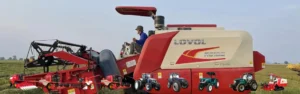
Maikeyier is an agricultural parts factory supplier with forging capability at its core. Our operating model is “factory + supply chain,” covering all series of harvester parts for four major brands: Kubota, Yanmar, Lovol, and World.
- Forging plant: Core forged parts such as track rollers and guide wheels are produced in-house.
- Extensive die inventory: Hundreds of dies in stock; custom die development also supported.
- Complete supply chain integration: Covers all categories including castings, sheet metal parts, rubber/plastic parts, standard parts, and electronic parts.
- Strict quality control: From raw materials to finished products, every step follows production processes; every batch is traceable.
- Flexible procurement support: Samples, mixed lots, full containers – all available.

In the harvester parts sector, the biggest cost is not paying too much – it’s buying the wrong thing. Whether you are a trial customer looking for your first samples or an overseas dealer wanting to establish a long-term stable supply, please feel free to contact Maikeyier. We welcome your inspection and validation.