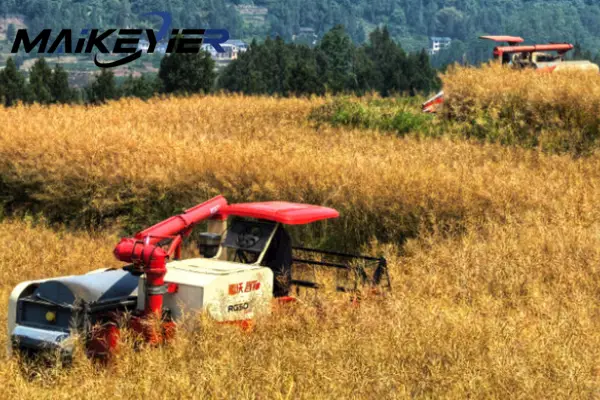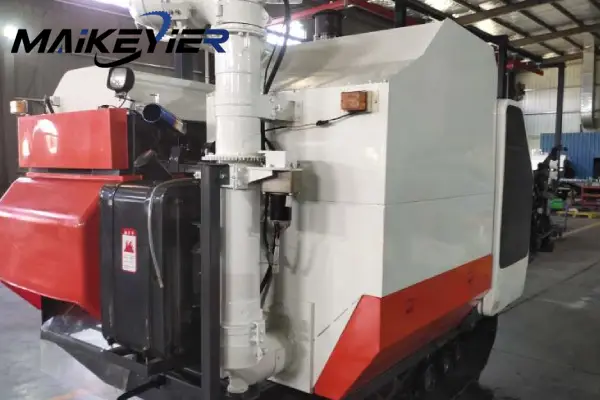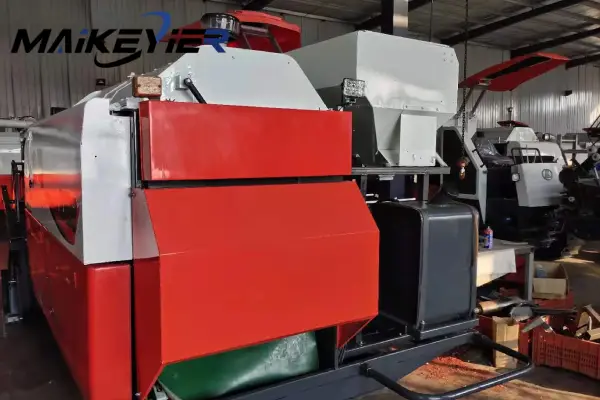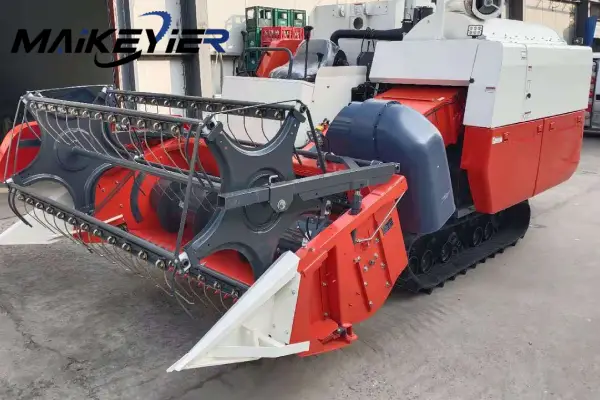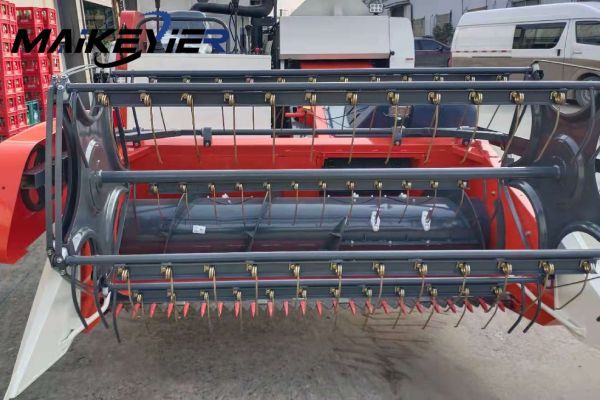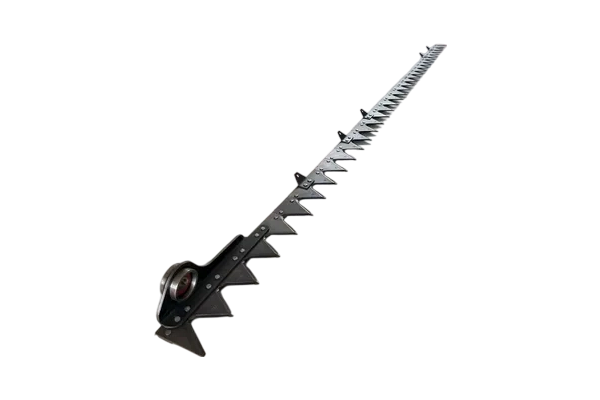
driven by the cutter assembly to complete the cutting of rice, wheat, soybeans, and other crops.
Relying on its own forging plant and precision machining capabilities, Maikeyier has developed
and produced harvester cutter bar assemblies that support three mainstream materials:
65Mn spring steel, 75Cr1 white steel, and SK5 high‑carbon steel.
Extended & Standard
Serrated & Plain
Baked Paint / Oil‑coated
Product Details
Cutter Bar Assembly · Knife Section · Blade · Knife Back
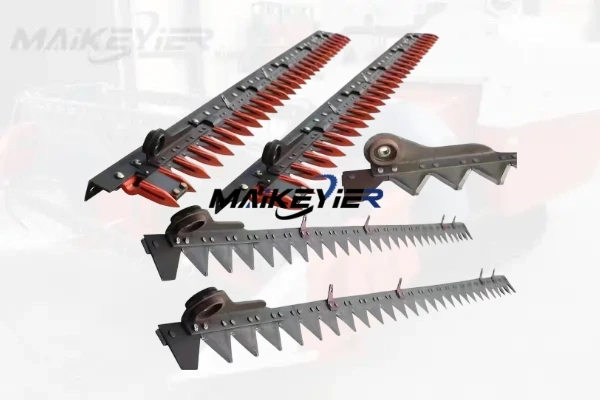
Harvester Cutter Bar Assembly
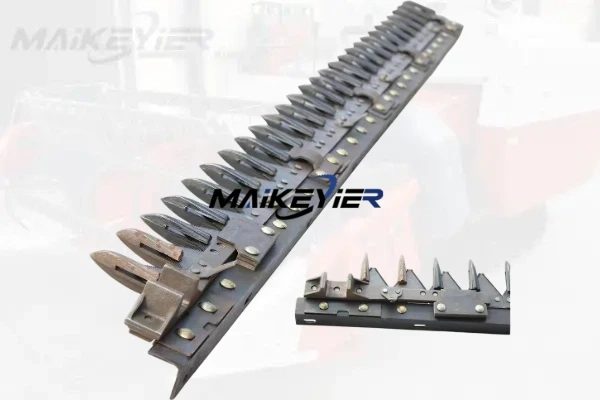
The harvester cutter bar assembly consists of three main parts: the knife section, the blade, and the knife back,
fastened together by rivets or bolts. Together, these three determine cutting efficiency and service life.
Sickle Knife Section Smallest Unit
The knife section is the smallest unit of the cutter bar assembly, formed by combining a blade and a knife back.
Each knife section contains one blade and one corresponding knife back section.
- Extended: Large‑feed harvesters, high‑yield crops
- Standard: Conventional operations, cost‑priority
Knife Blade Cutting Element
The blade is the cutting element that directly contacts the crop. Its thickness and tooth design directly affect cutting performance and service life.
- Thickness: 2.0 / 2.5 / 2.6 / 2.8 mm
- Tooth type: Serrated / Plain edge
Knife Back Mounting Base
The knife back is the mounting base for the blade. Its thickness determines the overall rigidity and bending strength of the cutter bar assembly.
- 6 mm: Standard, matches most harvesters
- 7 mm: Reinforced, high‑load operations
Core Specifications
Knife section, blade, and knife back parameters and applications.
Knife Section Specifications
| Specification | Description | Application Scenario |
| Extended knife section | Length increased compared to standard; wider cutting coverage per pass | Large-feed harvesters, high-yield crops, scenarios requiring high operational efficiency |
| Standard knife section (non-extended) | Length meets general standards; compatible with most harvesters | Conventional harvesting operations, cost-priority bulk procurement |
Blade Thickness
| Thickness | Recommended Application | Durability |
| 2.0mm | Light harvesting, thin-stalk crops | Economical, suitable for light-duty operations |
| 2.5mm | Conventional rice/wheat harvesting | Standard thickness; most widely used on the market |
| 2.6mm | High-yield, densely planted crops | Reinforced, better durability |
| 2.8mm | Thick-stalk crops, high-yield fields | Heavy-duty; longest service life |
Tooth Type Selection
| Tooth Type | Features | Application Scenario |
| Serrated edge | Fine teeth on the cutting edge; stronger cutting force, anti-slip | Damp lodged crops, fields with tough straw |
| Plain edge | Smooth, straight cutting edge; lower cutting resistance | Dry, standing rice/wheat; conventional harvesting |
Knife Back Thickness
| Thickness | Features | Application Scenario |
| 6mm | Standard thickness; matches original specifications of most harvesters | Conventional harvesting operations |
| 7mm | Reinforced, thicker; superior rigidity | High-load continuous operations, thick-stalk crops, large-feed harvesters |
Three Materials · Precision Match
65Mn Spring Steel · 75Cr1 White Steel · SK5 High‑Carbon Steel
Two Blade Types
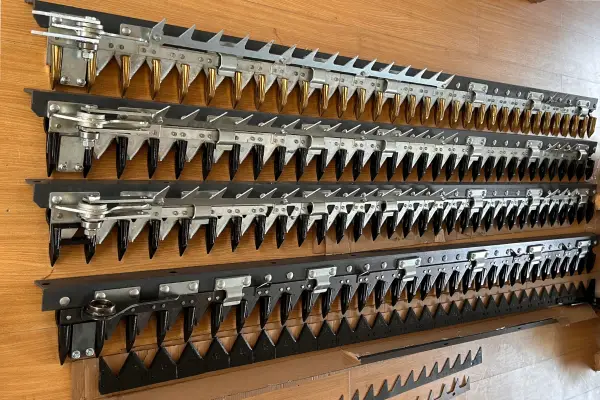
Extended · Serrated | Standard · Plain
Extended · Serrated
- Structure: Extended design for wider cutting coverage; serrated edge for stronger cutting force
- Application: Damp lodged crops, high‑yield densely planted crops, weedy fields
- Efficiency: Larger coverage per pass, higher efficiency
- Note: Must confirm header drive system compatibility
Standard · Plain
- Structure: Standard length; smooth, straight cutting edge
- Application: Dry standing rice/wheat; conventional harvesting
- Maintenance: Easy to sharpen manually
- Compatibility: Compatible with most harvesters, broadest fit
Core selection principle: Damp/lodged crops → Serrated; Dry/standing crops → Plain.
Extended increases efficiency, Standard offers broadest compatibility.
Surface Treatment & Fastening
Choose based on storage environment and maintenance needs.
Surface Treatment
- Baked paint: Anti‑rust paint applied and cured at high temperature; excellent rust protection, neat appearance, suitable for long‑term storage, sea freight
- Oil‑coated (natural finish): Anti‑rust oil applied to finished product; low cost, does not affect welding or secondary processing; economical and practical
Coastal humid markets → Baked paint; Inland dry areas → Oil‑coated
Fastening Method
- Rivet: Permanent connection, high reliability, suitable for OEM, infrequent replacement
- Bolt: Convenient replacement, ordinary wrench for removal, suitable for repair markets, overseas distributors
Repair markets → Bolt preferred; OEM → Rivet
Quick Selection Guide
Match the best solution based on customer type and working conditions
| Comparison Dimension | Extended Knife Section | Standard Knife Section |
| Cutting width | Wider; larger coverage per pass | Standard width |
| Operational efficiency | Higher; larger area per unit time | Standard efficiency |
| Model compatibility | Must confirm header drive system compatibility | Compatible with most harvesters |
| Procurement cost | Slightly higher | Lower |
| Recommended scenario | High-yield crops, large contiguous fields | Conventional harvesting, multi-model general stocking |
Supplier – Maikeyier
Since 2010, serving agricultural parts aftermarkets in more than 25 countries worldwide.
Factory Strength
Relying on its own forging plant and precision machining capabilities, Maikeyier has developed and produced harvester cutter bar assemblies supporting 65Mn, 75Cr1, and SK5. Products perfectly fit Kubota, Yanmar, World, Lovol, and other mainstream brands.
Service Commitment
Full‑chain services: selection consultation, free samples, compatibility confirmation, customization evaluation, documentation support, market strategy advice. After‑sales: quality traceability, rapid issue resolution, installation guidance, long‑term supply commitment.
Pre‑Sales Services
- Product selection consultation
- Free samples of Combine Harvester Parts and tractor parts
- Compatibility confirmation
- Customization evaluation
- Product documentation support
- Market strategy recommendations
After‑Sales Services
- Quality issue traceability
- Rapid quality issue resolution
- Installation technical guidance
- After‑sales technical consultation
- Long‑term supply commitment
Production Process & Quality Control
Full‑chain quality management from raw material to finished product.
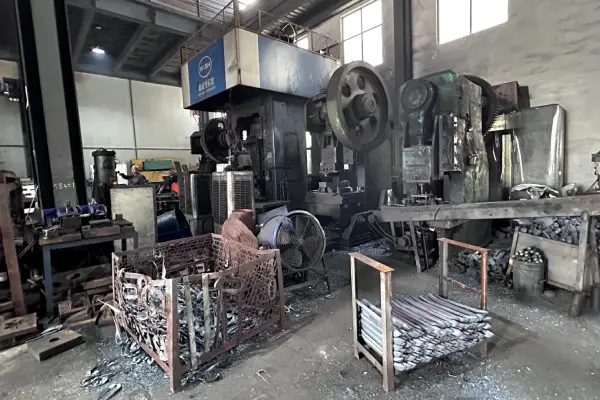
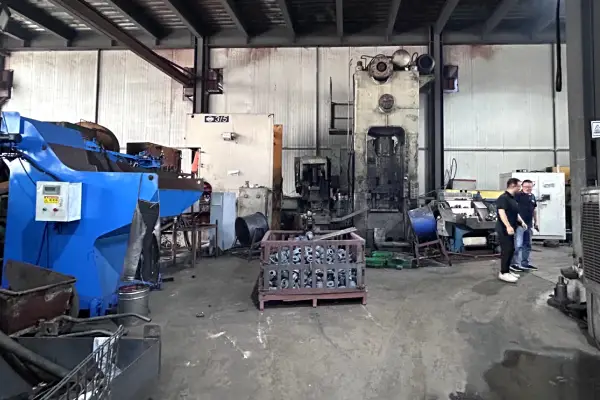
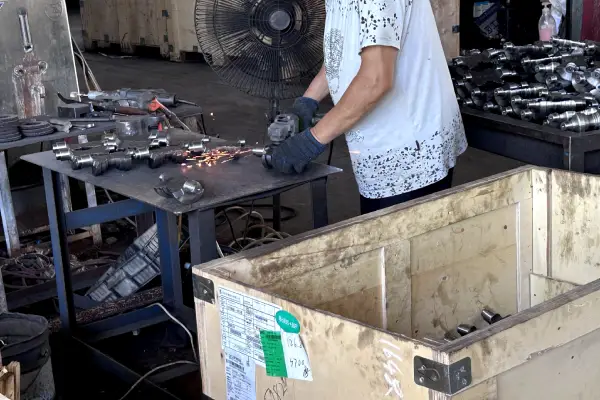
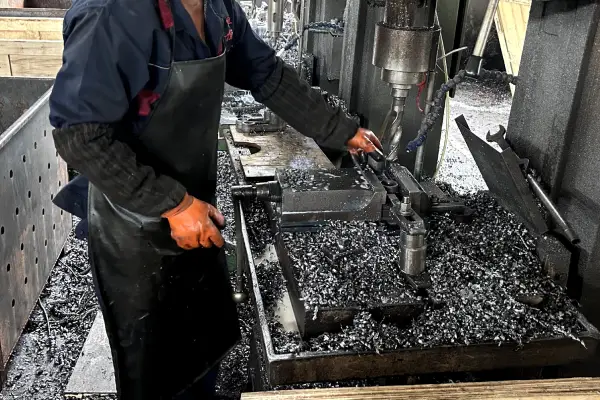
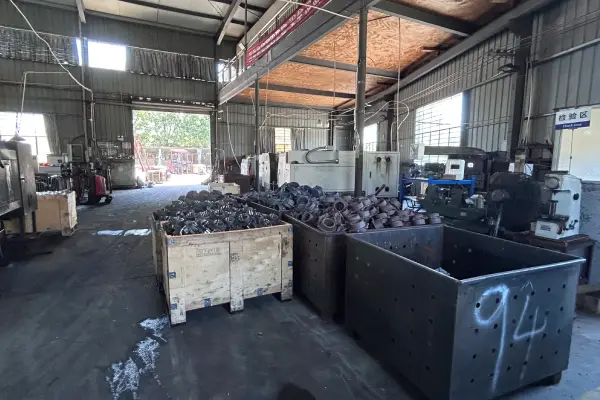
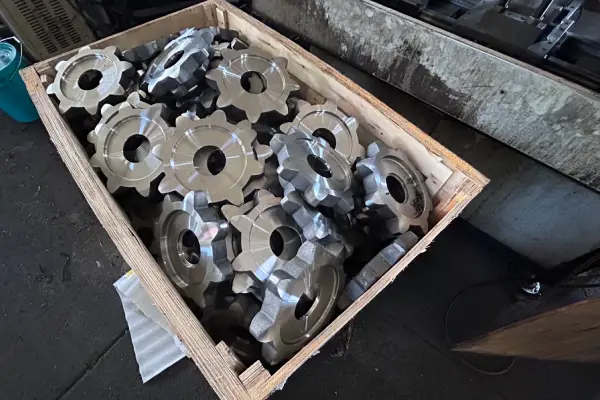
Cutter Bar Production Process
Raw material inspection
Spectrographic analysis to ensure composition standards
Precision stamping
One‑time forming; serrated teeth formed by precision dies
Continuous heat treatment
Quenching and tempering for uniform hardness
Knife back processing
Drilling, bending, straightening; hole accuracy ±0.2mm
Surface treatment
Baked paint or oil‑coated as required
Assembly
Rivet/bolt fastening, torque testing
Final inspection
Appearance, sharpness, dimensional sampling
Shipment
Each batch retains inspection report, traceable
Quality Control Process
| Stage | Inspection Item | Inspection Equipment/Method |
| Incoming material inspection | Material composition analysis | Spectrographic analyzer; ensures material meets standards |
| Cutting inspection | Dimensional consistency | Precision calipers; batch sampling |
| Stamping forming | Blade dimensions, tooth integrity | Gauges + 100% visual inspection |
| Heat treatment | Hardness, toughness | Rockwell hardness tester; batch sampling |
| Knife back processing | Length, hole spacing, flatness | Coordinate measurement + go/no-go gauges |
| Assembly fastening | Rivet/bolt torque, blade angle | Torque wrench + angle gauge |
| Finished product inspection | Sharpness, assembly dimensions, appearance | Test cutting + full-size sampling |
| Shipment sampling | Batch consistency verification | Each batch retains inspection report |
Procurement Recommendations by Market Region
Optimal combination based on regional conditions
| Market Region | Recommended Material | Recommended Blade Type | Recommended Surface Treatment |
| Southeast Asia (hot, rainy) | 65Mn / SK5 | Serrated offset blade + extended knife section | Baked paint |
| South Asia (distinct dry/wet seasons) | 65Mn | Standard selection | Oil-coated / Baked paint |
| South America (large-scale farms) | 75Cr1 | Extended knife section | Baked paint |
| Africa (dry, rocky) | 65Mn | Plain offset blade | Oil-coated |
| Europe / North America (high-end markets) | 75Cr1 / SK5 | Based on crop type | Baked paint |
Pricing Factors
Price determined by material, thickness, length, surface treatment, fastening method, and order quantity.
Material selection
75Cr1 > SK5 > 65Mn
Blade thickness
2.8mm > 2.6mm > 2.5mm > 2.0mm
Surface treatment
Baked paint > Oil‑coated
Knife section
Extended > Standard
Fastening method
Bolt > Rivet
Order quantity
Larger volumes reduce per‑unit cost
Compatible Brands & Models
Perfect fit for Kubota, Yanmar, World, Lovol, and other mainstream brands
Kubota
DC70, DC105, PRO series, AR series, R series, etc.
Yanmar
AW70V, AW82V, AG series, C series, Y series, etc.
FMWorld (World)
RG series, 4LZ series, etc.
Lovol
RG series, 4LZ series, etc.
Other brands: Suitable for most rice, wheat, and soybean combine harvesters



Frequently Asked Questions
Need Harvester Cutter Bars?
Whether you need 65Mn standard cutter bars, 75Cr1 high‑end wear‑resistant cutter bars, or SK5 sharp‑edge cutter bars;
whether you face dry standing crops or damp lodged crops; whether you are a repair shop stocking in bulk or exporting full containers –
Maikeyier can provide you with high‑quality, cost‑effective Harvester Cutter Bar solutions.