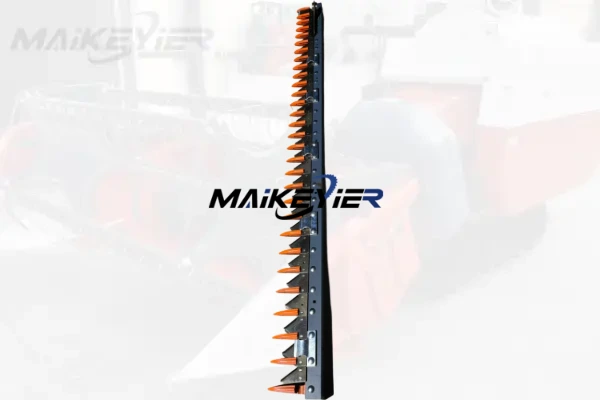
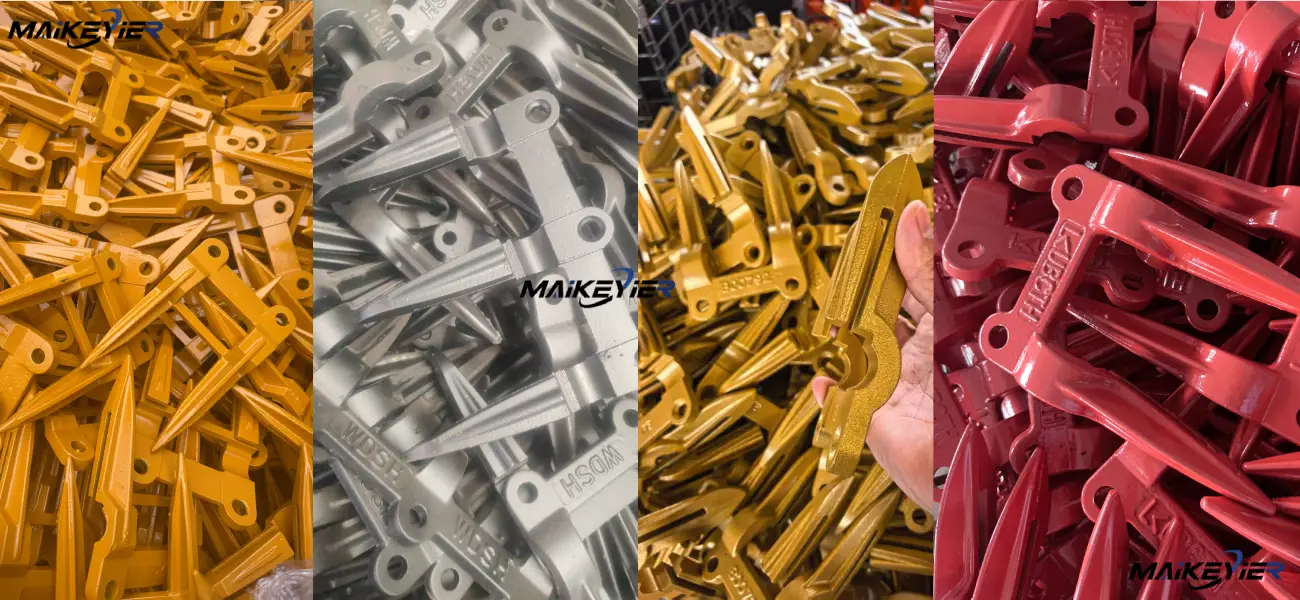
Maikeyier is an agricultural parts supplier with forging manufacturing capability at its core. The Sickle Guard / Knife Guard is one of the core forged parts in our cutting system product line — die-forged from 45# steel, 40Cr, and 42CrMo, combined with medium-frequency hardening or carburizing hardening, with full in-house control from raw materials to heat treatment. We supply knife guards for all series of harvesters from mainstream brands such as Kubota, Yanmar, Lovol, and World, supporting bulk procurement of OEM-equivalent and aftermarket parts. Leave us a message with your machine model and brand to get a free quotation.
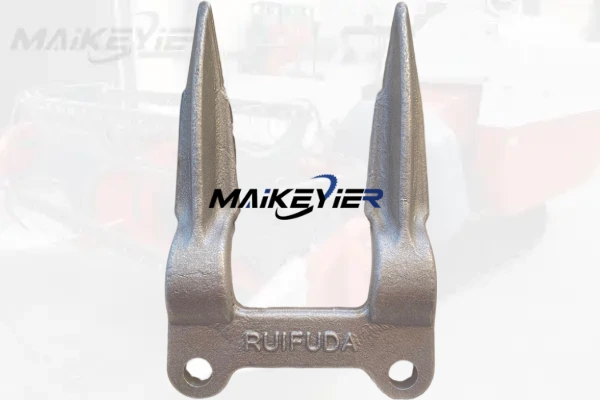
Forged Steel Knife Guard
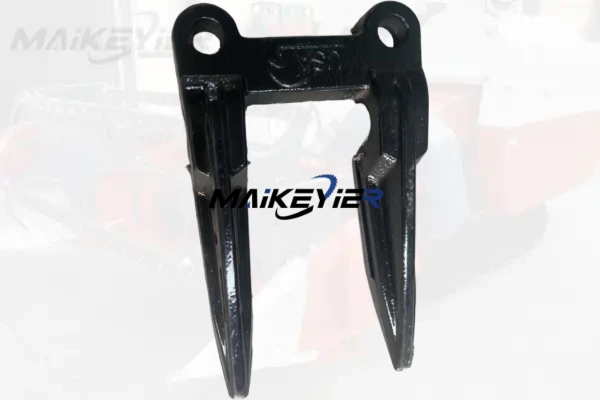
Premium Black Knife Guard
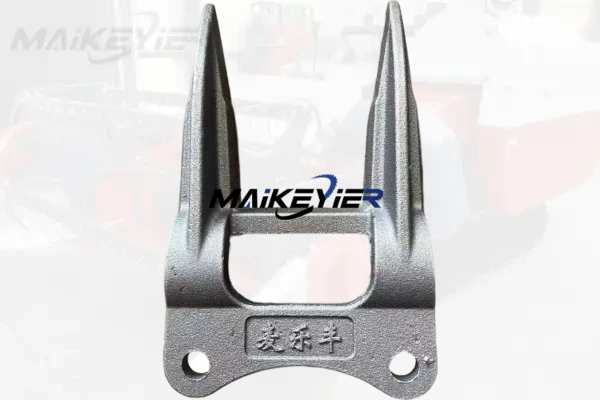
Alloy Steel Knife Guard
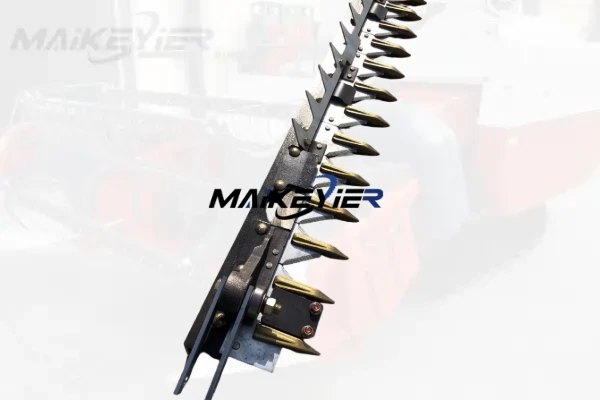
Harvester Header Assembly & Knife Guard
The Combine Harvester Knife Guard is a key harvester wear part of the harvester header cutter, installed below the cutter bar and forming a shear pair with the reciprocating knife section to cut crops such as rice, wheat, and soybeans. At the same time, the knife guard also protects the knife section and guides the crop into the cutting zone.
Lovol Cutter Bar Parts
Kubota Cutter Bar Parts
Knife Guard Composition
Component
Function
Guard Body
Main structure, bears shear reaction force and impact loads
Prong / Finger
Guides crop into the cutting zone; available in single-prong, double-prong, and extended types
Ledger Plate / Shear Surface
Forms a shear pair with the knife section to complete cutting
Mounting Holes
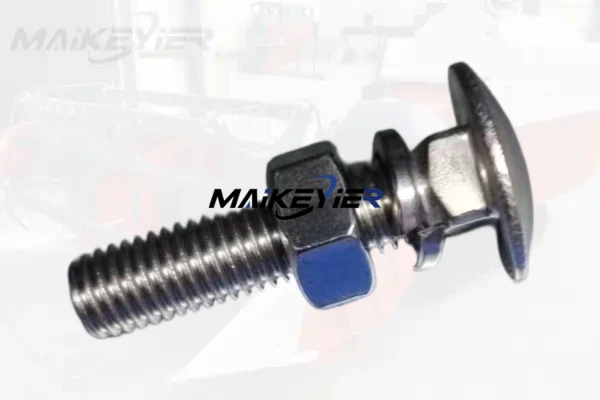
Bolts secure the knife guard to the cutter bar beam
Hold-Down Surface
Works with the hold-down clip to maintain correct clearance between knife section and knife guard
Side panels, floor plate, crossbeams, reinforcements
Carries subsystems and maintains structural rigidity
Feeder House
Conveyor chain, chain rakes, feeder house housing
Transports crop from header to threshing system
Drive System
Belts, sprockets, gearbox, universal joints
Drives reel, cutter, and auger
Lift & Flotation
Hydraulic cylinders, contour skids, springs
Adjusts header height to adapt to terrain
Dividers & Guards
Dividers, guards, shields
Guide crop and protect moving parts
Combine Harvester Knife Guard for Sale
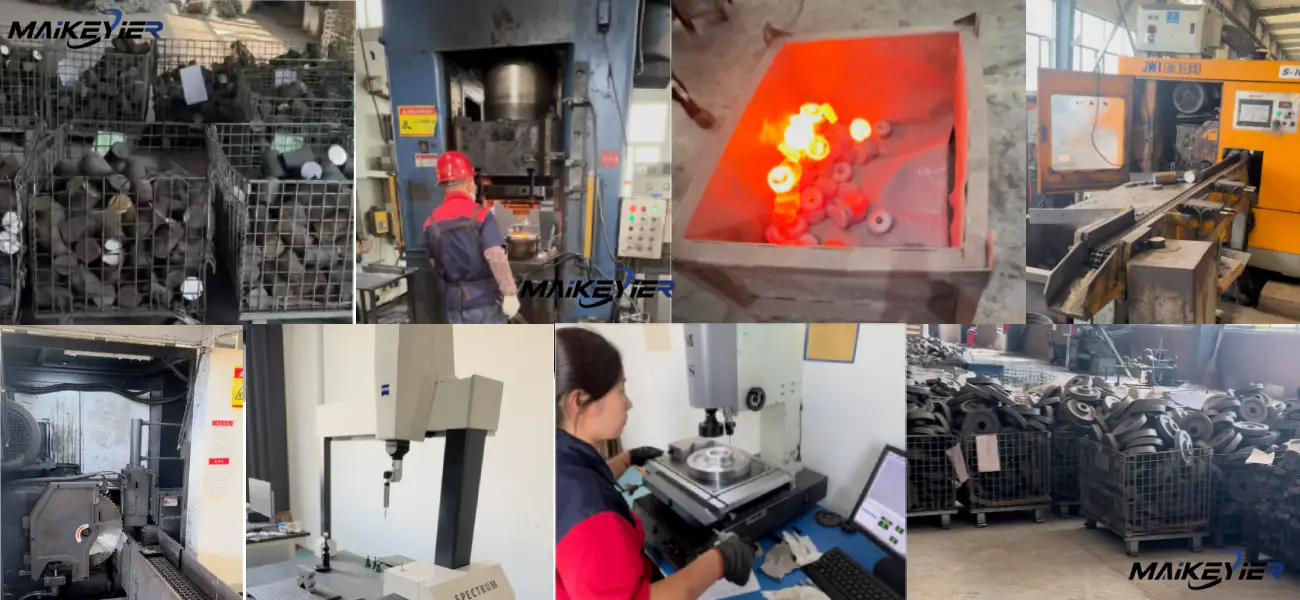
We supply Combine Harvester Knife Guards in various materials, such as forged steel, alloy steel, etc. Maikeyier’s forging factory can produce forged knife guard bodies, guard prongs, hold-down clips, knife head pins, and other forged cutting parts, with forging, machining, and heat treatment completed in our own workshop. Chilled cast iron and cast steel knife guards are produced by our long-term partner foundries according to our drawings, material grades, and incoming inspection standards — each batch is inspected for dimensions and hardness before being warehoused.
Kubota Yanmar Lovol World Knife Guard
Knife Guard Materials
Material
Heat Treatment
Hardness
Features
Applicable Scenarios
45# steel
Medium-frequency hardening
HRC 45-52
Balanced strength and wear resistance, moderate cost, relatively deep hardened layer
Standard replacement parts, conventional conditions
40Cr
Carburizing hardening
Surface HRC 58-62, good core toughness
High surface hardness, wear-resistant and impact-resistant, excellent fatigue resistance
Longer forward extension, suitable for tall-stalk crops
Tall-stalk rice, wheat
Serrated guard
Serrated Guard
Serrated edge, stronger shearing force
Wet, tough crops
Forged Knife Guards vs. Cast Knife Guards
The manufacturing process of the knife guard directly determines its strength and service life. Maikeyier’s core advantage lies in the forging process.
Comparison Aspect
Forged Knife Guard
Cast Knife Guard
Forming method
Hot die forging, complete metal flow lines
Sand casting, loose structure
Internal defects
No porosity or shrinkage
Prone to porosity, sand holes, shrinkage
Impact resistance
Excellent, not easy to break
Easy to break, short service life
Material utilization
High, near-net shape
Relatively low
Precision
Accurate dimensions, precise fit
Average precision
Applicable models
Medium and large harvesters, heavy-load conditions
Small machines, light loads
Overall cost
Long service life, lower long-term cost
Low unit price, but frequent replacement
Maikeyier One-Stop Harvester Parts Supply
Maikeyier supplies Combine Harvester Knife Guards + cutter bars + blades + knife sections + stationary blades, supporting complete cutting system parts for the four major brands — Kubota, Yanmar, FMWorld, and Lovol — in one order. At the same time, for customers with different working conditions, we offer multiple options including OEM parts, aftermarket parts, and improved parts. If you are not sure how to choose, send a photo of your machine, the part number of the old knife guard, or a photo to our email, and we will provide a solution.
Factory + Quality Inspection
Product Series
Product
Description
Knife Guard / Cutter Bar Guard
Forged steel produced in-house; chilled cast iron from partner foundries
Anti-rust oil, blackening, or painting, suitable for export storage and transport
Matching check with knife section
Clearance trial assembly with matching knife section
Final inspection and packaging
Pitch gauge inspection, marking, quantity and packing list
Combine Harvester Knife Guard FAQ
Q1. What is the difference between forged and cast knife guards?
Forged knife guards have complete metal flow lines and a dense structure, are impact-resistant, and are not easy to break; cast knife guards are prone to porosity and shrinkage and have lower strength. All Maikeyier knife guards use the forging process.
Q2. What materials are generally used for knife guards?
Chilled cast iron offers the best edge wear resistance; cast steel is more impact-resistant in rocky fields; forged steel has the highest strength; hardened plastic fingers are suitable for dry fields with stone risk. Many high-end knife guards use a replaceable hardened ledger blade structure, so only the blade plate needs to be replaced when worn.
Q3. How to choose among the three materials?
45# steel with medium-frequency hardening: high cost-performance, suitable for conventional conditions; 40Cr carburizing hardening: hard surface, tough core, suitable for heavy loads; 42CrMo carburizing hardening: highest strength, suitable for large harvesters and extreme conditions.
Q4. How do I know which knife guard fits my header?
Match by cutter data, not just the machine model: knife section pitch (commonly 50.8 or 76.2 mm), knife guard bolt specifications and hole positions, overall length, and prong height. Send us the part number, or an old knife guard with a clear photo and dimensions, and we can complete the match.
Q5. How often do knife guards need replacement?
It depends on the operating area and working conditions. It is generally recommended to inspect before and after each season. When the edge becomes rounded from wear and the clearance increases to about two blade thicknesses, it should be replaced promptly.
Q6. Can knife guards be replaced individually?
Yes. The knife guard is an independent component and can be replaced separately. It is recommended to also check the condition of the knife sections and hold-down clips.
Q7. Can knife guards be mixed with other cutting system parts in one order?
Yes. Knife guards, cutter bars, blades, hold-down clips, and other cutting system parts support mixed orders and can be shipped in one combined container.
Q8. What is the MOQ? Can knife guards be consolidated with other parts in one container?
200 pieces. They can be mixed with knife sections, tracks, sheet metal parts, and wear parts in one container — consolidation reduces per-unit freight and simplifies documentation.
Beyond the header system, we supply complete harvester parts — threshing, undercarriage, sheet metal, engine, and hydraulic parts. The Combine Harvester Knife Guard is small but heavy, making it an ideal container-fill item: send us your requirement list, a sample, or a clear photo with dimensions, and we will reply with specification matching, price, and delivery time!