
A combine harvester is assembled from thousands of individual components. Beyond the core assemblies such as the engine, hydraulic system, header, and threshing system, a large number of hardware connectors, fasteners, supports, and mounting parts are required to maintain stable machine operation. The choice of harvester hardware parts affects assembly quality, machine stability, vibration resistance, maintenance, and service life. Let’s take a comprehensive look at these parts – from types, machine application locations, materials and surface treatments, quality considerations, price factors, to how to choose a reliable supplier.
What Are Combine Harvester Hardware Parts?
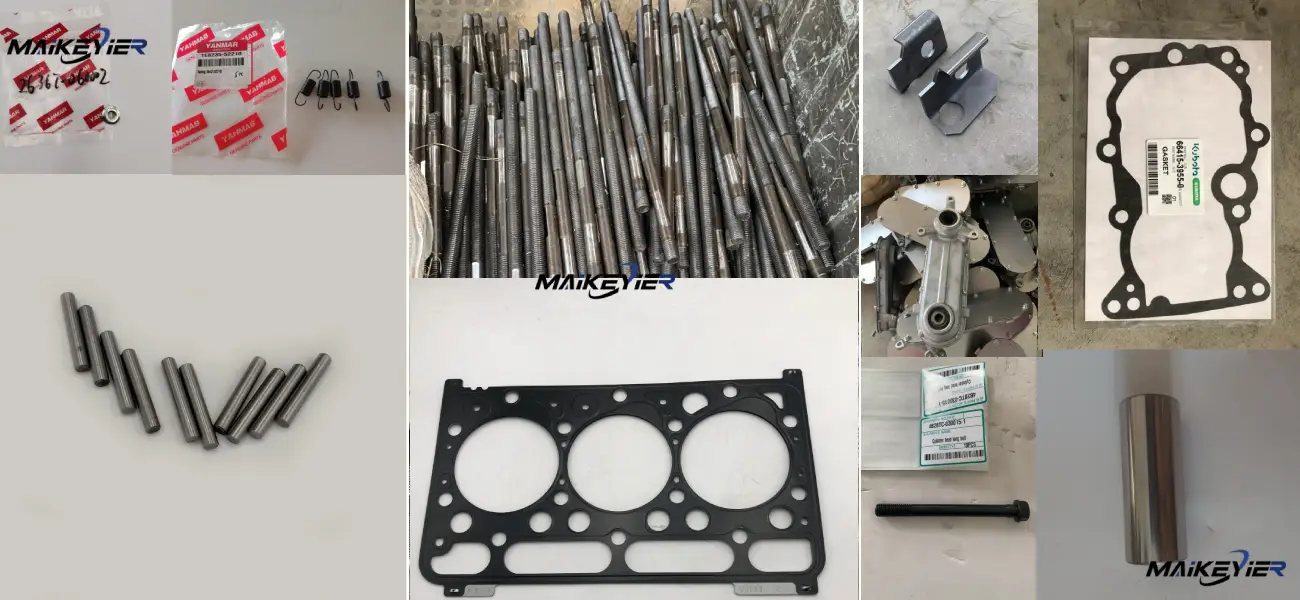
Combine Harvester Hardware Parts refer to the metal components used for fastening, connecting, supporting, mounting, adjusting, and protecting various systems on a harvester. For a combine harvester, every small hardware part directly affects the assembly quality, operational stability, and maintenance convenience of the entire machine. They run through every system of the harvester – from the header to the threshing system, from the chassis to the engine compartment, they are everywhere.
| Function | Description |
| Fastening | Secures various components firmly in their designed positions |
| Connecting | Connects different parts and assemblies |
| Supporting | Bears and supports structural components |
| Mounting | Provides mounting bases for various parts |
| Adjusting | Adjusts tension, clearance, and position |
| Protecting | Protects hoses and wiring from abrasion and vibration |
Common Types of Combine Harvester Hardware Parts
For distributors and wholesalers who need to procure complete sets of harvester parts for repair and maintenance orders, understanding the classification of hardware parts is essential. The most common types of hardware on a harvester include bolts and nuts, washers and locking components, pins and retainers, brackets and mounting hardware, clamps and fastening components, springs and tension components, and more.
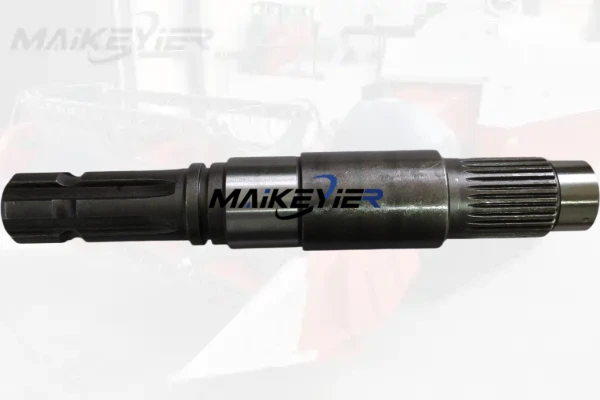
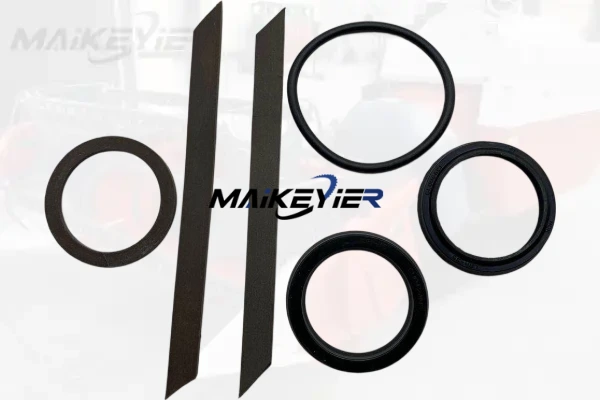
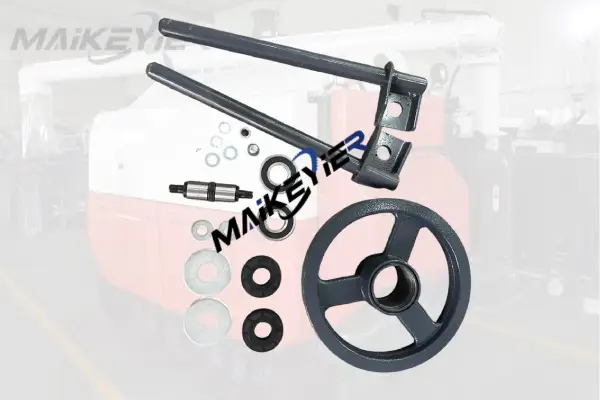
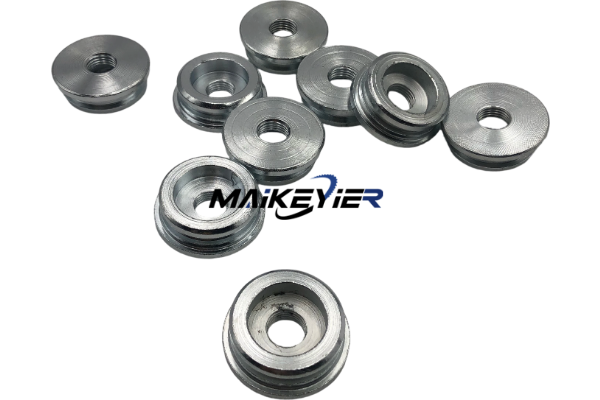
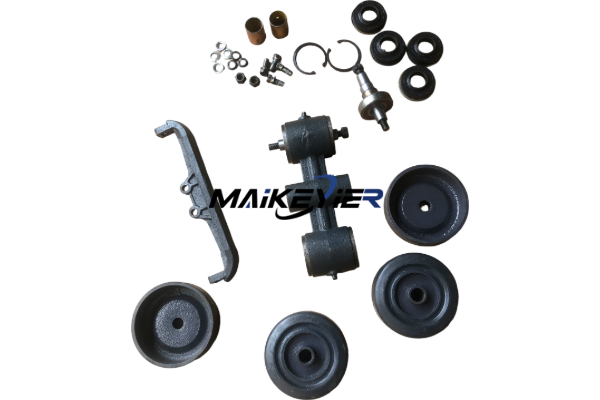
Bolts and Nuts
Bolts and nuts are the most numerous hardware type on a harvester, used for connecting frames, guards, headers, chassis, and various mechanical assemblies.
Common Types:
| Type | Features | Typical Application |
| Hex Bolts | Standard hex head design; most versatile | Frame connections, guard fixing |
| Flange Bolts | Built-in flange increases contact area; better anti-loosening | Chassis and header mounting |
| Lock Nuts | With nylon insert or deformed threads; effective anti-loosening | High-vibration area fastening |
| Self-Locking Nuts | No additional locking measures needed | Engine and transmission system mounting |
| Special Bolts | Custom sizes or special head types | Specific brand and model special parts |
Washers and Locking Components
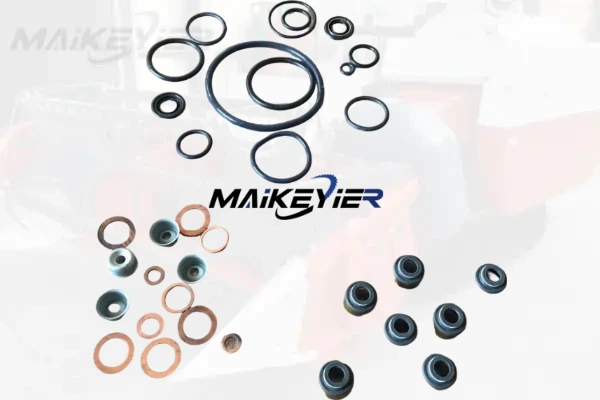
Harvesters operate in high-vibration environments for extended periods. Washers and locking components are key to preventing bolt loosening and ensuring assembly reliability. Though small in size, washers play an important role in anti-loosening, pressure distribution, and vibration damping.
Common Types:
| Type | Function |
| Flat Washer | Increases bearing area; prevents bolt from embedding into the workpiece surface |
| Spring Washer | Provides anti-loosening function through elasticity |
| Lock Washer | Toothed structure embeds into workpiece surface to prevent loosening |
| Retaining Washer | Used with nuts or bolt heads to prevent rotational loosening |
Pins and Retainers
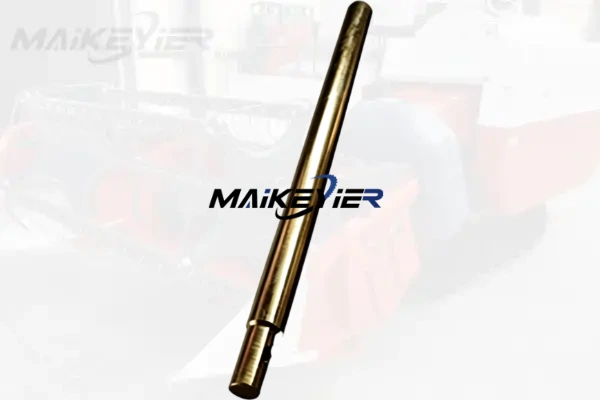
Pins are mainly used for connection, positioning, articulation, and quick disassembly.
Common Types:
| Type | Function |
| Cotter Pin | Inserted into bolt or shaft end holes to prevent nuts or pins from detaching |
| Roll Pin | Held in place by elastic deformation in a hole; used for positioning or articulation |
| Clevis Pin | Pin with a hole; used with a cotter pin for articulated connections |
| Lock Pin | Built-in locking function; used for quick-disconnect locations |
| Retaining Pin | Provides precise alignment; ensures accurate component installation positions |
Brackets and Mounting Hardware
Brackets are an important part of the harvester’s structural system, used to fix and support various components.
Common Types:
| racket Type | Function |
| Mounting Bracket | Used to fix cylinders, motors, sensors, and other components |
| Support Bracket | Used to bear structural components |
| L-Shaped Bracket | Suitable for installation in confined spaces |
| Reinforcement Bracket | Used to strengthen structurally weak areas |
Clamps and Fastening Components
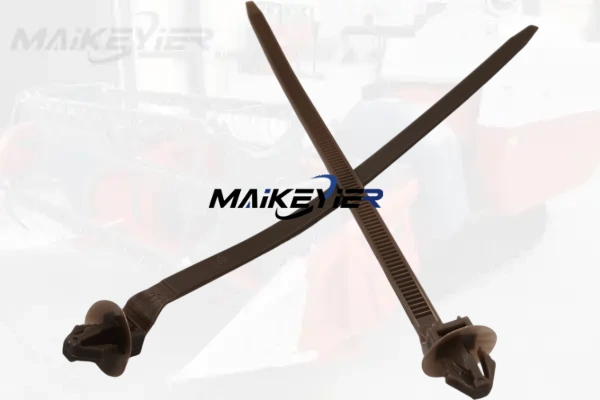
Clamps are mainly used to secure hydraulic lines, electrical wires, hoses, and pipes.
Common Types:
| Type | Function |
| Hose Clamp | Secures hydraulic hoses and cooling water pipes |
| Pipe Clamp | Secures rigid piping |
| Cable Clamp | Secures wiring harnesses |
| U-Bolt | Secures piping to brackets |
| Retaining Clip | Quickly secures various lines and hoses |
Springs and Tension Components
Springs and tension components perform elastic adjustment and tensioning functions on harvesters.
Common Types:
| Type | Function |
| Compression Spring | Provides thrust or cushioning |
| Tension Spring | Provides pulling force or tension |
| Torsion Spring | Provides torsional torque |
| Spring Finger | Elastic crop-lifting component on the reel |
Where Are Hardware Parts Used on Combine Harvesters?
By understanding the distribution of Combine Harvester Hardware Parts across the main systems of the harvester, we can grasp the loads, vibration, accessibility, and environmental exposure they need to withstand – helping us gain a more comprehensive understanding of these parts.
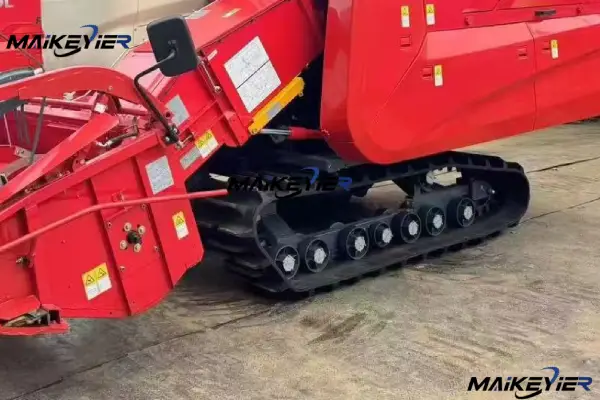
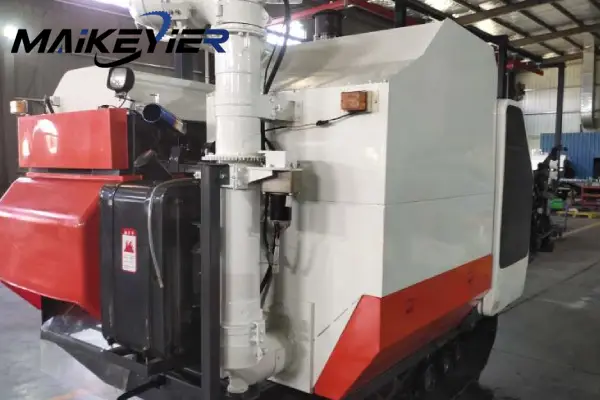
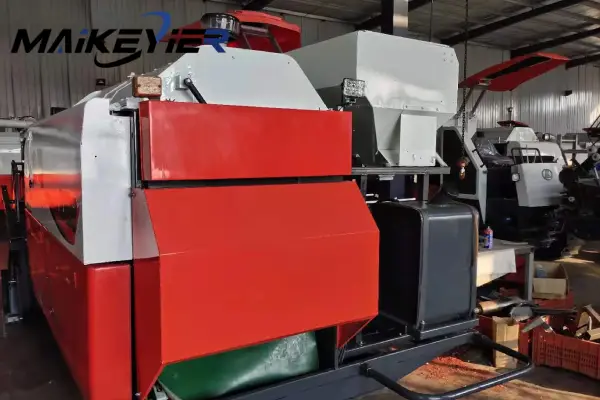
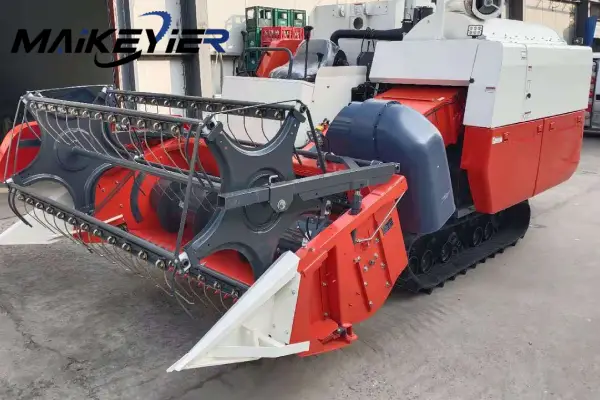
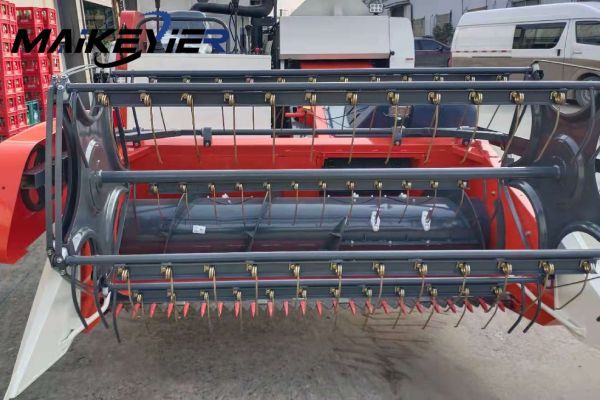
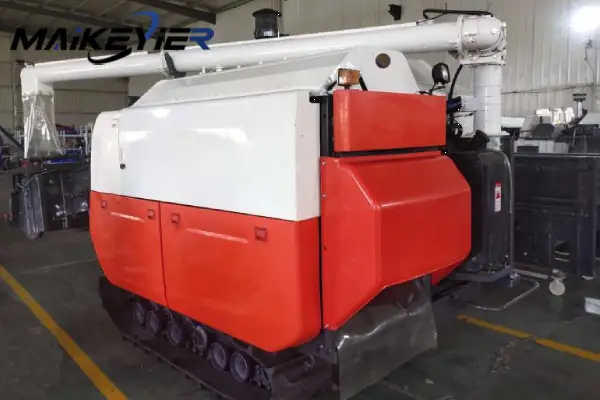
Header System
The combine header is one of the most hardware-dense areas on a harvester. With many moving parts and adjustment points, a large number of bolts, nuts, pins, and brackets are needed to secure the cutter bar, reel, auger, and guards.
Common hardware parts:
- Bolts and nuts
- Pins
- Brackets
- Spring components
Feeding System
The feeding system transports crop from the header to the threshing drum. Its chain tensioning devices and guide mechanisms require a variety of hardware parts.
Common hardware parts:
- Fasteners
- Pins
- Chain guides
- Brackets
- Adjusting components
Threshing System
The threshing system is subject to high vibration and loads, involving rotating drums, concave sieves, and adjustment mechanisms that must be securely mounted. Fasteners and brackets here require higher strength and reliability.
Common hardware parts:
- Mounting bolts
- Locking components
- Support brackets
- Adjustment parts
Chassis and Undercarriage
Hardware parts in the chassis and running system include track system mounting parts, track roller fixing parts, and guide rail mounting parts. Hardware in this area must withstand heavy loads, mud, and humid conditions.
Common hardware parts:
- Track hardware
- Pins
- Bolts
- Brackets
- Retaining components
Engine and Transmission
The harvester engine and transmission system require high-strength fasteners and heat-resistant components to cope with heat, vibration, and torque loads, while also requiring secure piping and line fixing.
Common hardware parts:
- Mounting bolts
- Brackets
- Clamps
- Belt guard mounting hardware
Materials Used for Combine Harvester Hardware
The material selection for harvester hardware directly affects strength, durability, and reliability. In most combine harvester applications, carbon steel and alloy steel are the dominant materials; spring steel is used for elastic components; and stainless steel is reserved for corrosion-prone areas. During procurement, we can choose the most cost-effective material for each specific application based on load, vibration level, wear conditions, corrosion exposure, and working environment.
| Material | Features | Typical Application |
| Carbon Steel | High strength, controllable cost | Bolts, brackets, general fasteners |
| Alloy Steel | High strength, good hardenability | High-strength fasteners, heavy-duty pins |
| Stainless Steel | Corrosion-resistant, oxidation-resistant | Special parts for humid environments |
| Spring Steel | Good elasticity, fatigue-resistant | Springs, reel tines, retaining rings |
| Ductile Iron | High strength, good vibration damping | Brackets, housings, structural parts |
Surface Treatment for Agricultural Machinery Hardware
Harvester hardware must endure long-term exposure to dust, moisture, crop residue, and chemicals in the field. Surface treatment not only improves appearance but, more importantly, enhances corrosion resistance and extends service life.
| Treatment | Advantages | Typical Application |
| Zinc Plating | Good rust protection, relatively low cost | Bolts, nuts, washers |
| Black Oxide | Uniform surface finish; suitable for precision parts | Bolts, pins, mechanical parts |
| Phosphating | Improves corrosion resistance and paint adhesion | Brackets, structural parts, pre-treatment |
| Powder Coating | Thick coating, corrosion-resistant, good appearance | Brackets, covers, structural hardware |
Why Quality Hardware Matters for Combine Harvesters
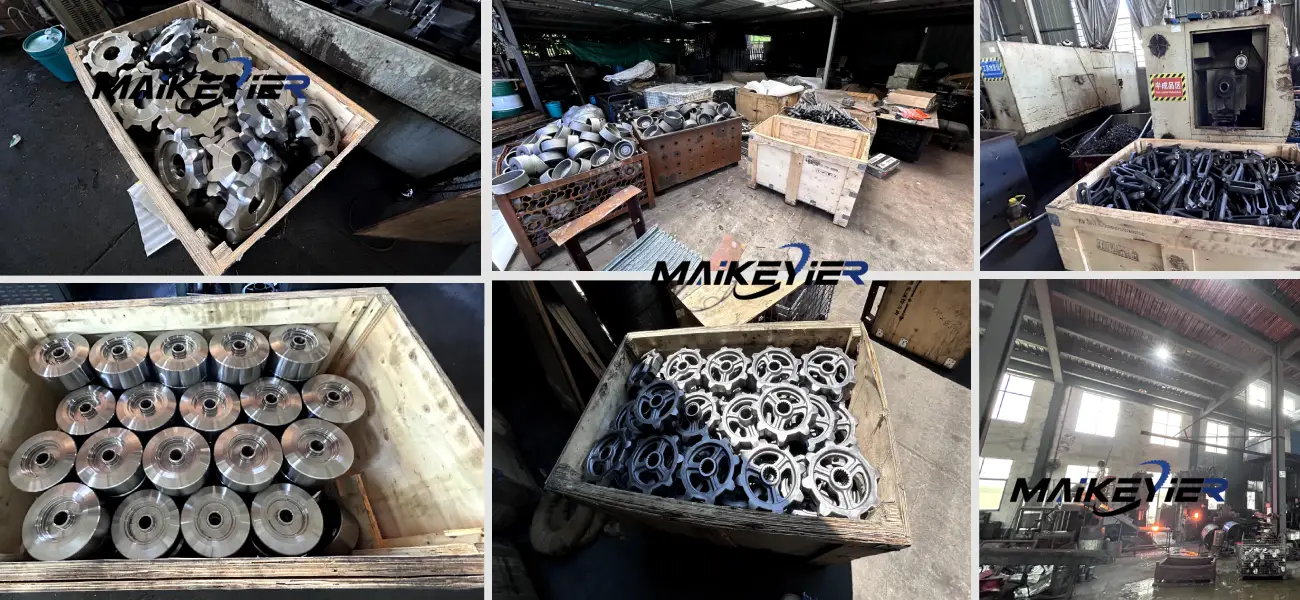
The operating conditions of combine harvesters make hardware quality a critical factor. A small hardware failure can sometimes cause long-duration machine downtime. Choosing quality hardware is not about minimizing cost – it often helps us avoid unnecessary losses.
High Vibration Environment
- When the harvester operates in the field, the engine, threshing drum, and running system generate continuous vibration. Poor-quality fasteners may gradually loosen → shift → fail under vibration, causing guard detachment, component displacement, or even more serious mechanical failures.
Heavy Loads
- The chassis, header, and transmission systems bear the full working load of the harvester. Bolts and brackets used to secure these systems may deform or fracture under heavy loads if they lack sufficient strength.
Dust and Moisture
- The field working environment is full of dust, mud, moisture, and crop residue, which can cause hardware corrosion, leading to difficult disassembly and reduced strength.
Long Working Hours
- The harvest season has a limited time window, and harvesters often need to work 12–16 hours continuously each day for weeks on end. During this period, any loosening of a critical bolt can cause the whole machine to stop.
What Factors Affect the Price of Combine Harvester Hardware Parts?
| Factor | Description |
| Material | Carbon steel, alloy steel, stainless steel, etc. – prices vary significantly |
| Size and Specification | Larger dimensions or more special specifications increase cost |
| Strength Grade | Higher strength grades (e.g., 10.9, 12.9) cost more |
| Manufacturing Process | Cold heading, hot forging, machining – different process costs |
| Surface Treatment | Zinc plating, black oxide, phosphating, powder coating – costs increase accordingly |
| Customization | Non-standard sizes or special requirements require additional development costs |
| Order Quantity | Larger volumes reduce unit cost |
| Packaging | Bulk, kit-packed, or custom packaging – different costs |
| Shipping Cost | Hardware parts are heavy; logistics costs must be considered |
How to Choose a Reliable Combine Harvester Hardware Supplier?
| Evaluation Item | Check Points | Explanation |
| Product Range | Does the supplier offer a complete range of hardware types? | Full coverage of bolts, nuts, washers, pins, brackets, clamps, springs, etc. – reducing the number of suppliers |
| Material Control | Does the supplier have stable raw material sources? | Material composition testing (e.g., spectrographic analysis) for each batch to ensure quality from the source |
| Manufacturing Capability | Does the supplier have multiple process capabilities? | Forging, stamping, machining, welding, etc. |
| Quality Control | Does the supplier perform full-process quality inspection? | Dimensional inspection, hardness testing, surface inspection, batch sampling |
| OEM Compatibility | Can the supplier match in multiple ways? | Supports matching by OEM number, drawing, sample, etc. |
| MOQ | Is the minimum order quantity flexible? | Supports flexible bulk procurement and mixed-lot orders to reduce inventory pressure |
| One-Stop Supply | Can the supplier integrate multiple categories? | Hardware + Forged Parts + Sheet Metal Parts + Cast Parts + Wear Parts – all in one stop |
Why Choose Maikeyier for Combine Harvester Hardware Parts?
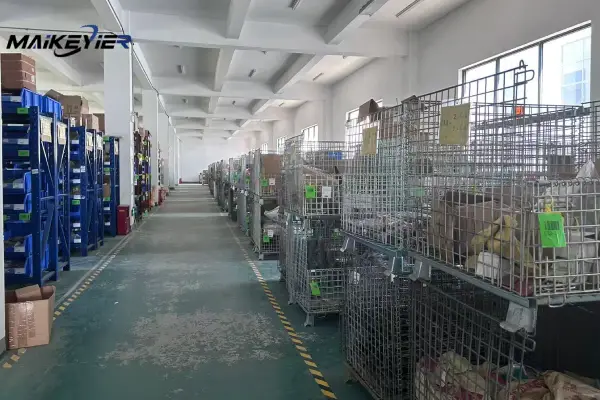
Maikeyier is a manufacturing and supply chain partner for combine harvester parts distributors and wholesalers worldwide, supplying hardware parts for all series of harvesters from mainstream brands including Kubota, Yanmar, Lovol, and FM World.
Manufacturing + Supply Chain
- Manufacturing capability and supply chain integration provide dual assurance for your hardware procurement.
Own Forging Capability
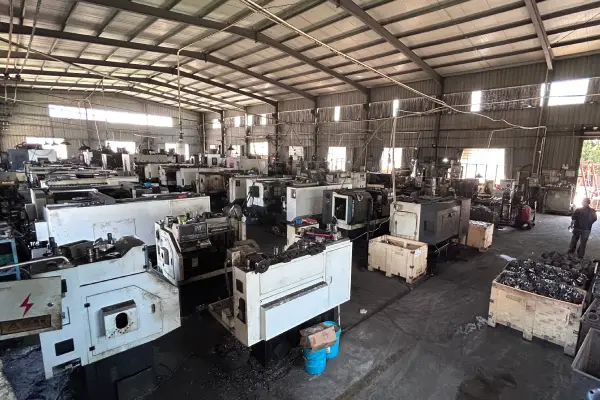
- Maikeyier has its own forging production line, capable of producing critical hardware parts such as high-strength bolts, brackets, pins, and structural components, controlling quality and delivery from the source.
Multi-Process Manufacturing
- Integrates forging, stamping, sheet metal fabrication, casting, machining, heat treatment, and other processes to meet the manufacturing needs of different hardware parts.
One-Stop Agricultural Machinery Parts Supply
- At Maikeyier, you can consolidate multiple procurement needs into a single order:Fasteners, Forged Parts, Sheet Metal Parts, Cast Parts, Wear Parts.
Multi-Brand Support
- Kubota Combine Harvester Hardware Parts,Yanmar Combine Harvester Hardware Parts, Lovol Combine Harvester Hardware Parts, FMworld Combine Harvester Hardware Parts – full series supply.
Frequently Asked Questions
You don’t need to contact separate suppliers for bolts, brackets, springs, and forged parts. Maikeyier can meet multiple procurement needs in one stop, significantly reducing procurement management costs. We provide flexible manufacturing and one-stop supply solutions for combine harvester parts distributors and wholesalers worldwide.