
Parts for agricultural machinery such as harvesters, tractors, and rotary tillers can be classified by function, loading conditions, material requirements, and cost into forged parts, sheet metal parts, precision-machined parts, stamped parts, castings, rubber and plastic components, and more. Among these, forged parts are widely used due to their high strength, wear resistance, impact resistance, and long service life.
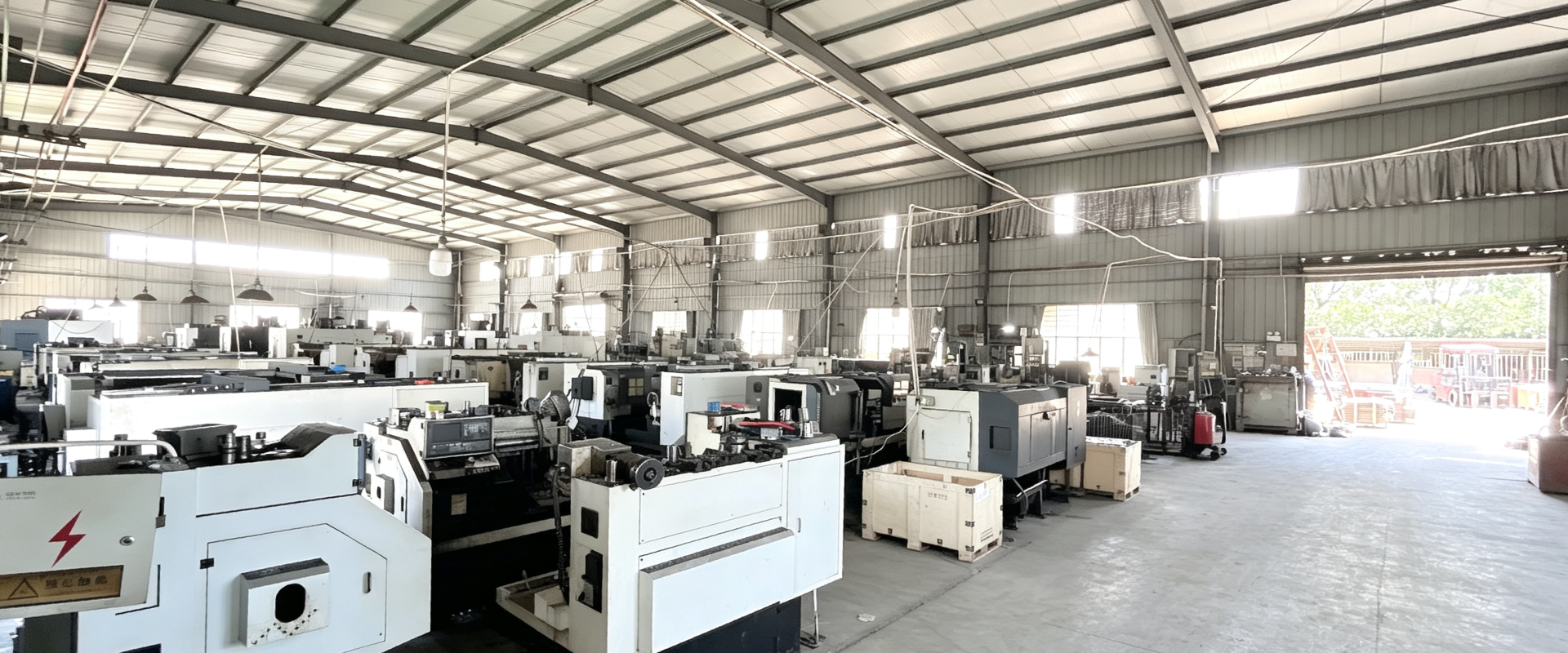
Forging Production Process
The forging process is a manufacturing technique that uses pressure to plastically deform materials such as carbon steel or stainless steel to achieve the desired shape, dimensions, and internal microstructure.
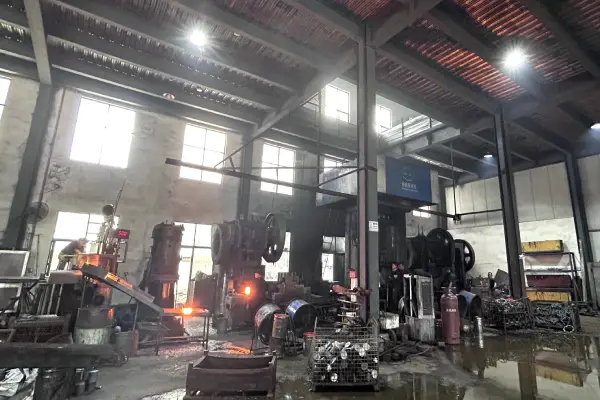
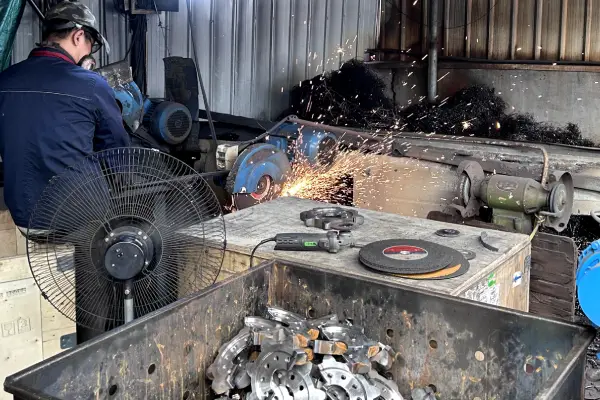
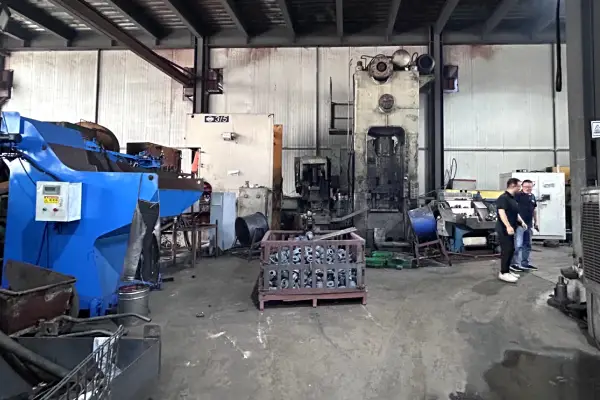
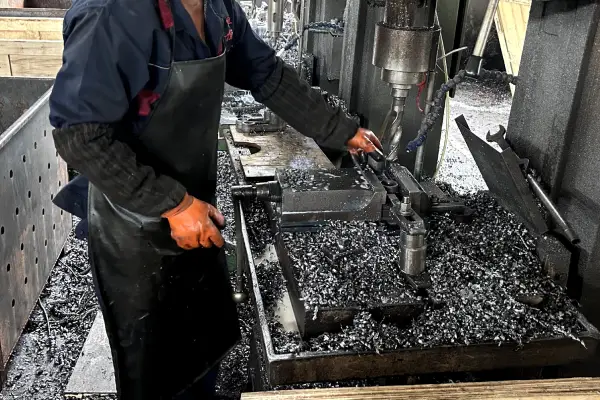
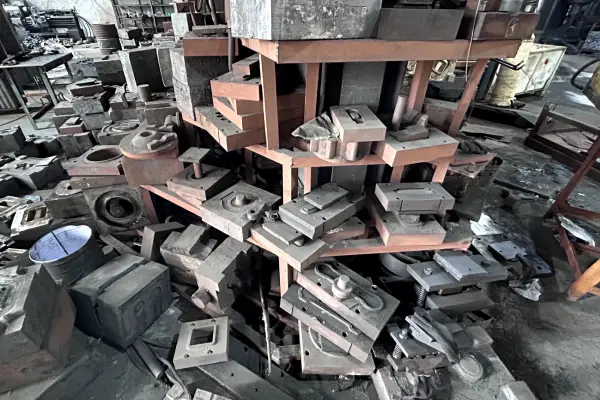
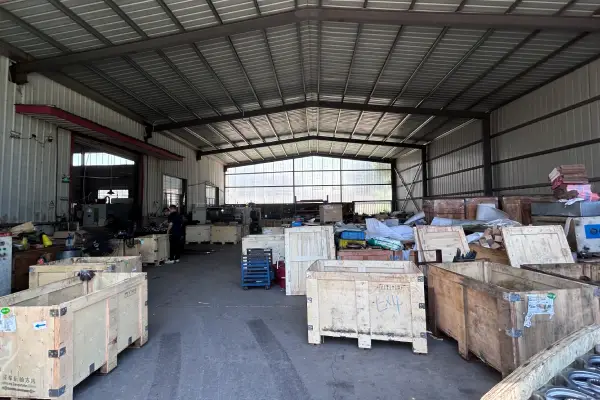
- Billet cutting:Raw steel bars (carbon steel, alloy wear-resistant steel, etc.) are cut to size according to the forging dimensions.
- Heating:The billets are heated to forging temperature in a medium-frequency furnace to increase the metal’s plasticity.
- Die forging:The heated billet is placed into a custom die and subjected to high-pressure squeezing and hammering in one stroke to form the complete shape of the part (e.g., knife teeth, sprockets, pins, knife guards, etc.).
- Trimming:Excess flash and burrs from forging are removed to give the forging a clean outline.
- Heat treatment:Normalizing → quenching → tempering – this eliminates forging stresses, modifies the internal metallurgical structure, and significantly enhances hardness, wear resistance, and impact strength.
- Finishing:Lathe and milling machines are used to machine mounting holes and mating shaft diameters, ensuring dimensions match the original equipment models.
- Surface treatment:Scale is removed, followed by sandblasting, blackening, and anti-rust oil application to prevent corrosion during storage and sea transport.
- Quality inspection:Includes dimensional checks, hardness testing, and non-destructive testing (e.g., magnetic particle, ultrasonic) to guarantee product conformity.
Forged Products
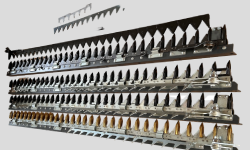
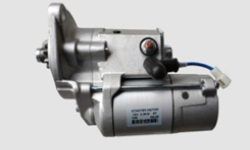
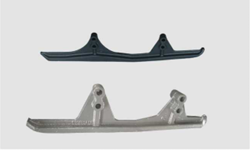
Thanks to their high strength and long service life, forging processes produce components covering core operations such as tillage, harvesting, and power transmission.
Tillage & Land Preparation Implement Parts
| Product Name | Common Material Grades |
| Forged plowshare / plow tip | 65Mn, 60Si2Mn |
| Forged rotary tiller blade | 60Si2Mn, 35CrMo |
| Forged disc harrow blade | 65Mn, boron steel |
| Forged subsoiler shovel tip | 35CrMo, 42CrMo |
| Forged press wheel ring gear | Q345B, 40Cr |
| Product Name | Common Material Grades |
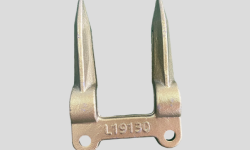
| Forged harvester knife section / movable blade | 65Mn, SK5 |
| Forged threshing drum rasp bar | 40Cr, 20CrMnTi |
| Forged stalk chopper blade | 60Si2Mn |
| Forged reel tooth | 45#, 40Cr |
| Product Name | Common Material Grades |
| Forged tractor axle shaft | 40Cr, 42CrMo |
| Forged drive shaft yoke / universal joint | 20Cr, 20CrMnTi |
| Forged differential gear | 20CrMnTi, 20CrMo |
| Forged transmission gear / spline shaft | 20CrMnTi, 40Cr |
| Forged clutch fork | 40Cr, 35CrMo |
| Forged steering knuckle | 40Cr, 42CrMo |
Other Common Agricultural Forged Parts
| Product Name | Common Material Grades |
| Forged baler knotter components | 20CrMnTi |
| Forged seeder furrow opener | 65Mn, 40Cr |
| Forged fertilizer applicator shovel tip | 35CrMo, wear-resistant alloy |
| Forged harrow tooth / soil crusher tooth | 60Si2Mn |
| Forged hitch linkage parts (lower link, pins) | 45#, 40Cr |
Forged Parts vs. Castings / Ordinary Machined Parts
| Comparison Aspect | Forged Parts | Castings | Ordinary Machined Parts |
| Internal structure | Dense structure, refined grains, continuous metal flow lines following the part contour. | Loose structure, possible porosity, shrinkage cavities, segregation, and other casting defects. | Flow lines are cut; mechanical properties are isotropic without directional strengthening. |
| Mechanical properties | Highest strength, toughness, and fatigue resistance; capable of heavy loads and impact. | Lower strength, high brittleness, poor impact resistance, prone to fracture. | Average properties; no forging strengthening effect. |
| Material utilization | Relatively high. | High. | Relatively low. |
| Cost | High die cost; suitable for mass production. | Lower die cost; suitable for small batches or parts with complex internal cavities. | No die cost, but longer machining time; overall cost is low. |
| Applications | Critical load,bearing and safety parts – e.g., engine connecting rods, drive shafts, gears, agricultural knives. | Structural parts such as frames, housings, casings – where strength requirements are not high. | Simple shaft and sleeve parts requiring high precision but low stress. |
Why Use Forging for Agricultural Parts?
Higher strength: Forging significantly improves the strength and toughness of metals.
Impact resistance: Forged parts are less likely to crack or fracture under impact.
Wear resistance: After forging and heat treatment, parts have higher surface hardness and maintain good performance under long term abrasive conditions.
Fatigue resistance: Forged parts have better fatigue strength, effectively delaying the initiation and propagation of fatigue cracks, greatly extending service life.
Consistent quality: Maikeyier’s agricultural parts are die forged, ensuring stable dimensions and good interchangeability for easy installation and maintenance.
Safety and reliability: Forgings have no internal casting defects (porosity, shrinkage), ensuring stable and reliable quality.
Lightweight potential: With the same load bearing capacity, forged parts can be designed with lighter, more compact structures due to their higher strength, helping reduce overall machine energy consumption and improve efficiency.
Applications of Forging in Agricultural Parts
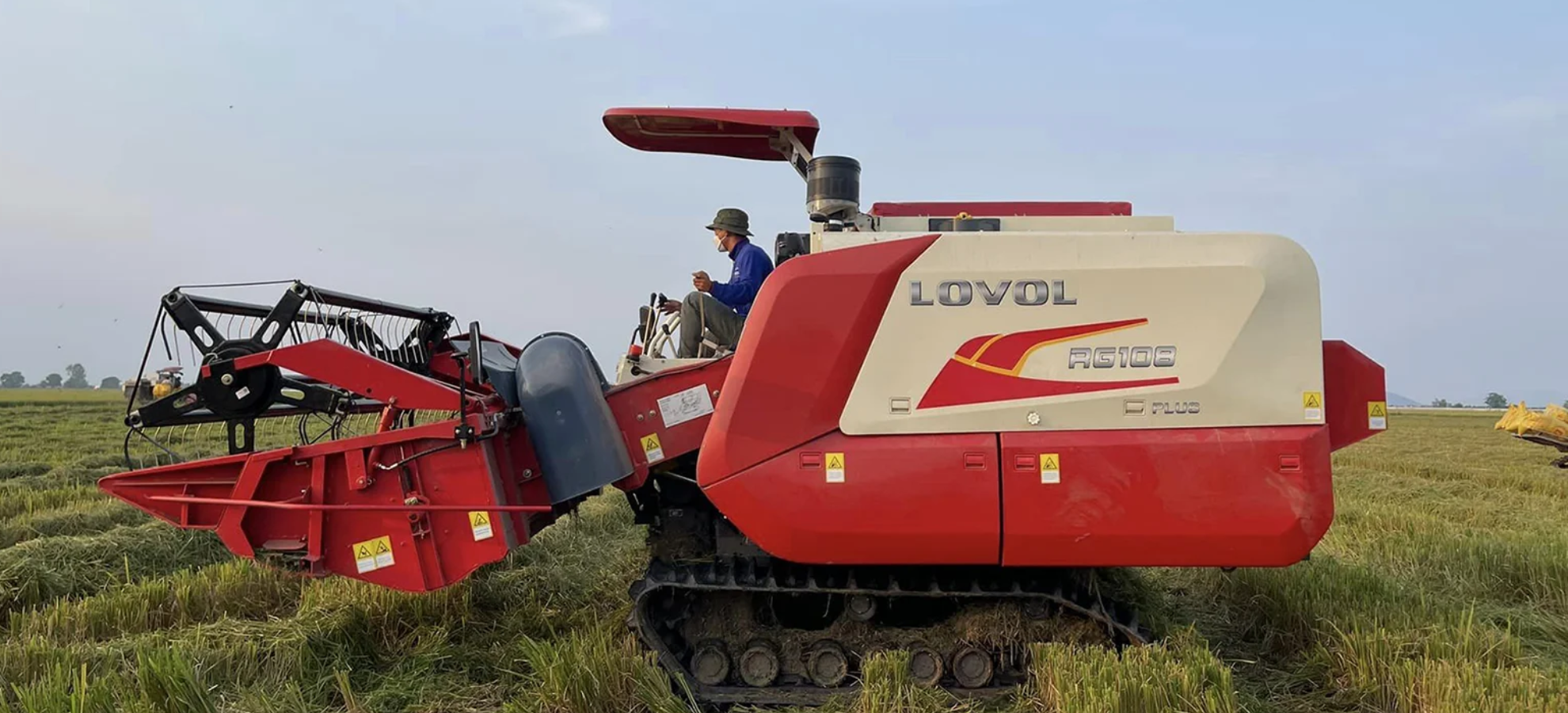
Forging is widely used for critical load bearing components in various agricultural machines that endure long term impact, vibration, and wear.
Tillage & Land Preparation Machinery
- Plowshares / plow tips: Directly impact and abrade against soil and gravel; forged parts offer extremely high hardness and impact toughness.
- Rotary tiller blades: Rotate at high speed cutting soil; forged blades have sharp, wear resistant edges and tough, bending resistant bodies.
- Disc harrow blades: Cut through soil and crop residue in complex terrain; forgings excel in crack resistance.
Harvesting Machinery
- Harvester knife sections / movable blades: High speed reciprocating motion cutting crop stalks; forged blades retain sharpness and resist edge rolling.
- Threshing drum rasp bars and concave screens: Withstand intense friction and impact from grain; forgings ensure structural integrity under prolonged use.
Power & Transmission Systems
- Tractor axle shafts and drive shafts: Transmit high torque and endure frequent starts/stops and sudden load changes.
- Differential gears and transmission gears: Die forged helical or spur gears have dense tooth structures, outstanding pitting resistance, and bending strength.
- Clutch forks and steering knuckles: These critical control parts demand extreme reliability – forging is the optimal choice.
Other Key Components
- Baler knotter components: Require high dimensional stability and wear resistance.
- Seeder furrow openers and fertilizer applicator shovel tips: Long-term contact with soil and corrosive fertilizers; forged parts combined with wear treatments significantly extend lifespan.
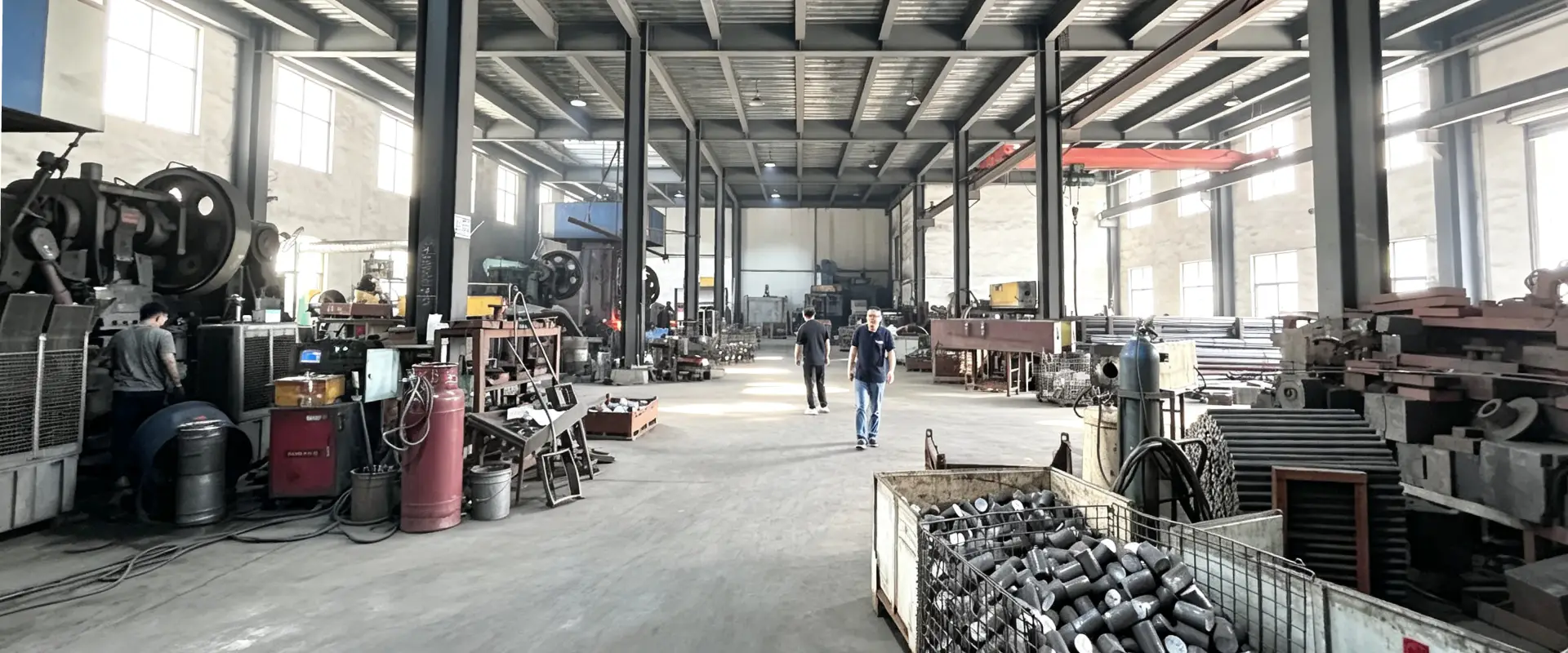
Agricultural machinery often operates continuously under high temperatures, dust, mud, and stone impact, with severe load fluctuations. Downtime during peak farming seasons causes substantial losses, so the reliability and durability of agricultural parts are paramount. Forging is the manufacturing process that ensures reliable, long-lasting agricultural components.Leave your requirements list and get a free quote!