
Kubota harvesters have become the mainstream choice for paddy and dryland harvesting due to their strong stability, clean harvesting performance, and low failure rate. In many cases, breakdowns during operation are not caused by the machine itself but by long-term lack of maintenance, severe wear of wearing parts, or failure to replace them in time. Maikeyier has compiled a daily inspection checklist, maintenance procedures, and recommended replacement intervals for common wearing parts of Kubota harvesters, hoping to help you prepare your equipment before the harvest season.

Why Do Harvesters Need Regular Inspections?
Kubota harvesters operate for long periods in harsh environments such as muddy fields, dust, high temperatures, and heavy loads. Without regular maintenance, the following issues are likely to occur: reduced cutting efficiency of the cutter bar, worn conveyor chains, slipping belts, damaged bearings, decreased threshing efficiency, engine overheating, oil seal leaks, hydraulic system failures, etc. These directly affect harvesting efficiency and operational profits, and may also lead to higher repair costs. Therefore, establishing scientific inspection and maintenance procedures is essential for every agricultural machinery user and service provider.
What Inspections Are Needed Before and After Kubota Harvester Operation?
Pre-Operation Inspection
Exterior and Overall Machine Inspection
| Inspection Category | Specific Items |
| Fasteners | Check whether bolts and nuts at all positions are missing or loose, especially at key connection points such as the header, track frame, and engine supports. |
| Structural components | Check whether the body, frame, and header frame have obvious cracks, deformation, or weld cracks. |
| Guards | Check whether protective covers, guard plates, and belt covers are intact and properly installed. Operation without guards is strictly prohibited. |
| Sealing inspection | Check the engine, transmission, and hydraulic system pipelines and joints for oil or water leaks; address any leakage promptly. |
| Debris removal | Remove straw, stalks, mud, and dust adhering to the machine, especially flammable debris around the engine compartment, radiator, and exhaust pipe, to avoid affecting heat dissipation and fire hazards. |
Engine System Inspection
| Inspection Item | Key Points |
| Engine oil | Stop the engine and wait more than 5 minutes; pull out the dipstick, wipe clean, reinsert, and pull out again to check the oil level. Keep it between the upper and lower marks. Never operate with insufficient or excessive oil to avoid engine wear and stalling. |
| Cooling system | Check the coolant level in the radiator; inspect the water tank and hoses for leakage or cracking; clean straw, dust, and debris from the radiator surface to prevent engine overheating and stalling during operation. |
| Fuel and filter | Fill up with compliant diesel; check fuel lines for leakage and the filter for blockage or water accumulation, to avoid insufficient power and frequent stalling due to poor fuel supply. |
| Air filter | Clean external dust; in dusty field conditions, blow out the filter in advance with compressed air (from inside out, pressure not exceeding 2.1 kgf/cm²). Replace immediately if severely clogged, to prevent insufficient air intake, power loss, and heavy carbon buildup. |
Header System Inspection
| Inspection Item | Key Points |
| Cutter bar and blades | Check the cutter bar, knife sections, and blades for chipping, deformation, or excessive wear; tighten all blade retaining screws to eliminate looseness and abnormal noise. |
| Blade clearance | The standard blade clearance for Kubota harvesters should be controlled between 0–0.5 mm, and the clearance between blade and blade holder between 0.1–0.3 mm. Excessive clearance can cause uneven stubble, pulling of straw, and missed cutting; adjust shims promptly for correction. |
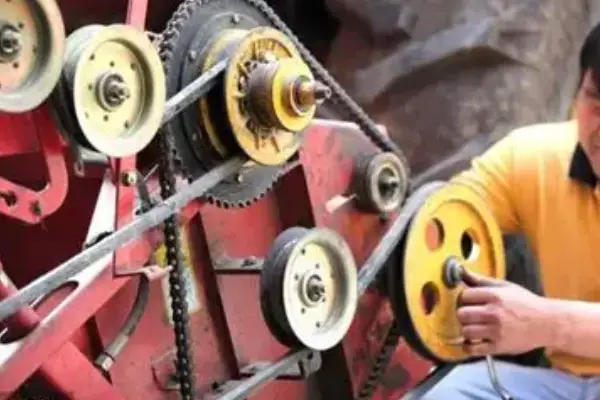
| Header drive components | Check chain and belt tension to ensure no looseness, misalignment, or cracking; apply grease to cutter drive bearings and pivot points to ensure smooth, jam free operation. |
| Sheet metal guards | Check that guards, protective plates, and brackets are free of deformation, damage, or looseness; sheet metal structural parts should fit properly to prevent straw entanglement and component impact damage during operation. |
Threshing and Cleaning System Inspection
| Component | Inspection Content |
| Threshing drum | Check whether the drum rotates smoothly and without sticking. |
| Threshing bars | Check for deformation, looseness, or severe wear. |
| Threshing drive belt | Check whether the drive belt tension is appropriate. |
| Fan | Check whether fan blades are damaged and whether rotation is normal. |
| Sieve box and oscillating tray | Check for abnormal vibration or noise. |
| Sieve | Check for damage or blockage. |
Travel and Electrical System Inspection
| Component | Inspection Content |
| Tracks | Check whether tension is moderate and whether there is misalignment, looseness, or cracking. |
| Battery | Check whether positive and negative terminals are securely connected and free of oxidation or damage. |
| Instruments and lights | Check whether dashboard indicators, lights, and sensors are working properly. |
| Start-up test | Listen for abnormal noise, oil leakage, water leakage, or overheating during engine idle operation. |
Dynamic Checks During Operation
| Key Points | Specific Actions |
| Monitor instruments | Constantly observe water temperature, oil pressure, engine speed, and fault indicator lights. Stop immediately and investigate if any abnormality appears; never operate with a known fault. |
| Listen for abnormal sounds | Pay attention to unusual noises, jamming, or vibration from the header, drum, and drive components. If abnormal, stop immediately, remove debris, and tighten components. |
| Check grain loss | Observe the rear of the machine and the sieve box discharge. If grain loss is severe or grain is mixed with straw, adjust sieve opening and fan speed promptly. |
| Key lubrication | During high-load operations, apply grease as needed to high-friction points such as blade holders, bearings, and drive pivots. |
Quick Response Table for Dashboard Alarms:
| Alarm Light | Possible Cause | Emergency Action |
| Water temperature light on | Radiator blocked / low coolant / belt slipping | Stop, idle to cool down, check radiator and coolant |
| Oil pressure light on | Low oil level / oil circuit blocked | Stop engine immediately, check oil level |
| Auger No. 2 alarm | Auger jammed with foreign object / belt loose | Stop and turn off engine, clear foreign object and check belt |
Post-Operation Maintenance
Thorough Cleaning of the Whole Machine
- Header: Remove mud and straw.
- Threshing unit: Open the left side cover and clean out chaff and dust (especially after harvesting wet crops, rice hulls tend to accumulate on the oscillating sieve louvers).
- Engine compartment: Use a soft brush to clean the dust screen (be careful not to deform the cooling fins).
- Straw chopper: Remove straw and chaff.
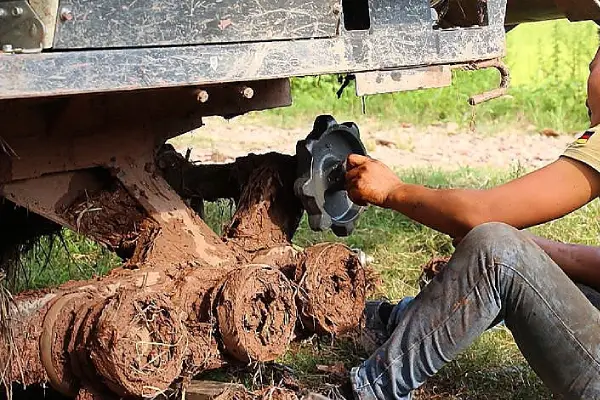
- Under-carriage: Remove mud and straw from wheels and tracks.
Re-inspection of Wearing Parts and Lubrication
- Re-inspection: Re-check the tightness of blades, blade holders, chains, belts, and bolts. Replace slightly worn parts immediately to avoid operating with defects the next day.
- Lubrication:Apply grease uniformly to all bearings, pivot joints, drive points, and grain tank supports.
- Header: Apply suitable lubricating oil to the cutter bar, lifting chain, stalk-end chain, and ear-end chain.
- Threshing unit: Run the threshing unit at low speed and lubricate the threshing chain and discharge chain.
- Grease nipples: Lubricate the header lift pivot, the threshing depth chain shaft (remember to open the bleed bolt), and the tension arm pivots of each drive belt.
Oil, Water, and Storage
- Top up engine oil, coolant, and diesel.
- Check the hydraulic oil level and inspect lines for leaks.
- Wipe the machine dry, and park it on a level, dry area.
- Turn off the power and apply dust protection.
Quick Troubleshooting for Common Kubota Harvester Faults
Incomplete threshing / grain carried over with straw
| Possible Cause | Solution |
| Sieve blockage | Stop and clean the sieve. |
| Insufficient fan air volume | Adjust fan speed (increase if too weak). |
| Excessive threshing drum clearance | Calibrate drum clearance. |
| Incorrect sieve angle | Adjust sieve louver opening. |
| Low engine speed | Increase throttle to rated speed. |
Frequent engine overheating
| Possible Cause | Solution |
| Radiator blocked | Clean radiator fins. |
| Low coolant level | Top up coolant and check for leaks. |
| Water pump failure | Repair or replace water pump. |
| Belt slipping | Tension or replace belt. |
| Air filter clogged | Blow clean or replace air filter element. |
Header jamming, abnormal noise, or missed cutting
| Possible Cause | Solution |
| Worn or chipped blades | Replace blades. |
| Excessive blade clearance | Adjust to standard clearance (0–0.5 mm). |
| Loose chain | Tension chain. |
| Debris entanglement | Stop and clear entangled straw. |
| Bearings lacking grease | Replenish grease. |
Severe grain loss / poor grain discharge
| Possible Cause | Solution |
| Excessive harvesting speed | Reduce operating speed. |
| Cleaning system blockage | Clear blockage. |
| Fan malfunction | Repair fan and drive mechanism. |
| Abnormal sieve box vibration | Check fixing bolts and damping devices. |
Engine fails to start
| Possible Cause | Solution |
| Fuel exhausted | Refill with compliant diesel. |
| Fuel filter clogged | Replace filter. |
| Water accumulated in fuel/water separator | Drain water and clean. |
| Main fuse blown | Replace the 60-amp main fuse. |
| Main speed lever not in “Stop” position | Move lever to “Stop” position. |
Recommended Spare Parts to Stock Before the Harvest Season
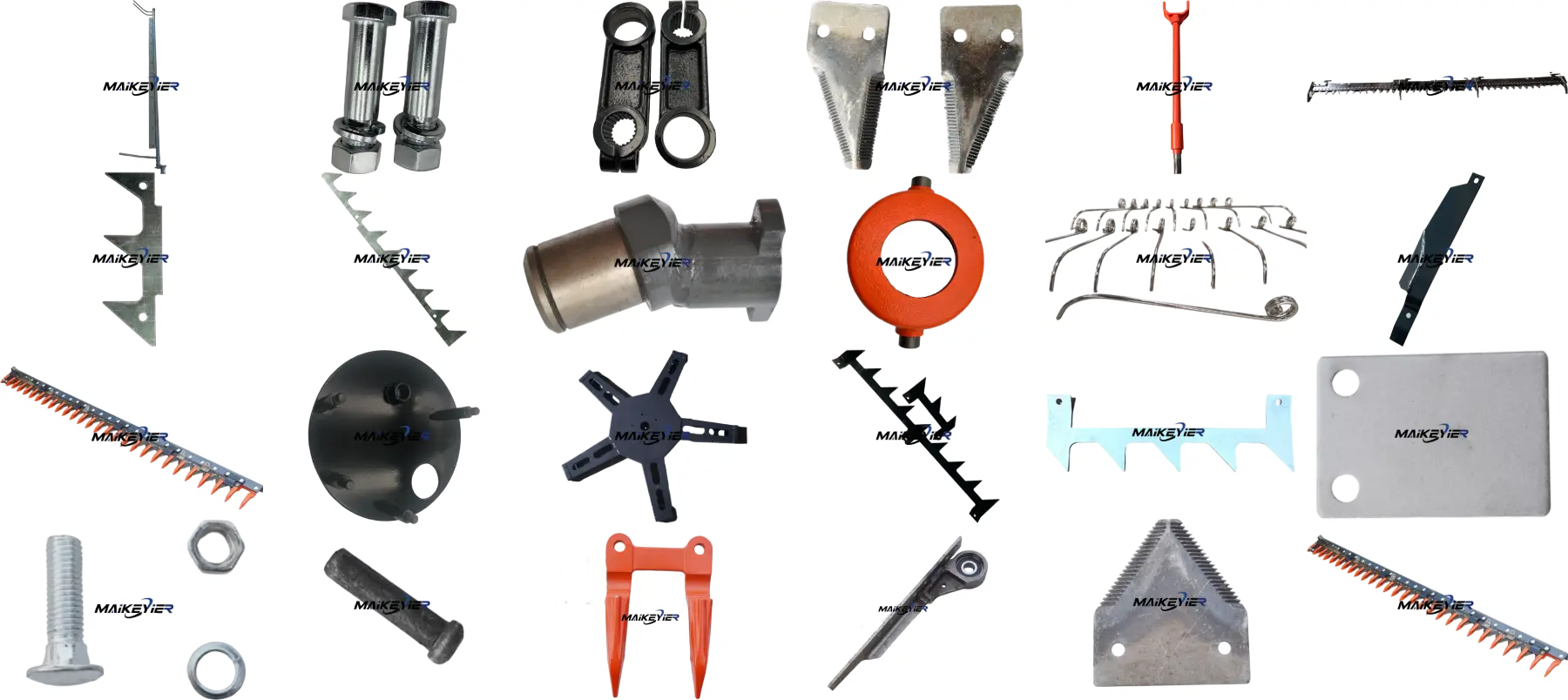
- Cutting system:Cutter bar, knife sections, stationary blades, blade holders
- Conveying system:Conveyor chains, sprockets, tension wheels
- Threshing system:Threshing teeth, concave screens
- Engine system:Air filters, oil filters, diesel filters
- Drive system:Belts, bearings, oil seals
Guide to Replacing and Purchasing Kubota Harvester Aftermarket Parts
During daily inspection, repair, and maintenance of Kubota harvesters, regular replacement of wearing parts and timely substitution of faulty components are the core of ensuring stable equipment operation. Choosing compliant, properly matched, high-quality aftermarket replacement parts is more important than frequent repairs.
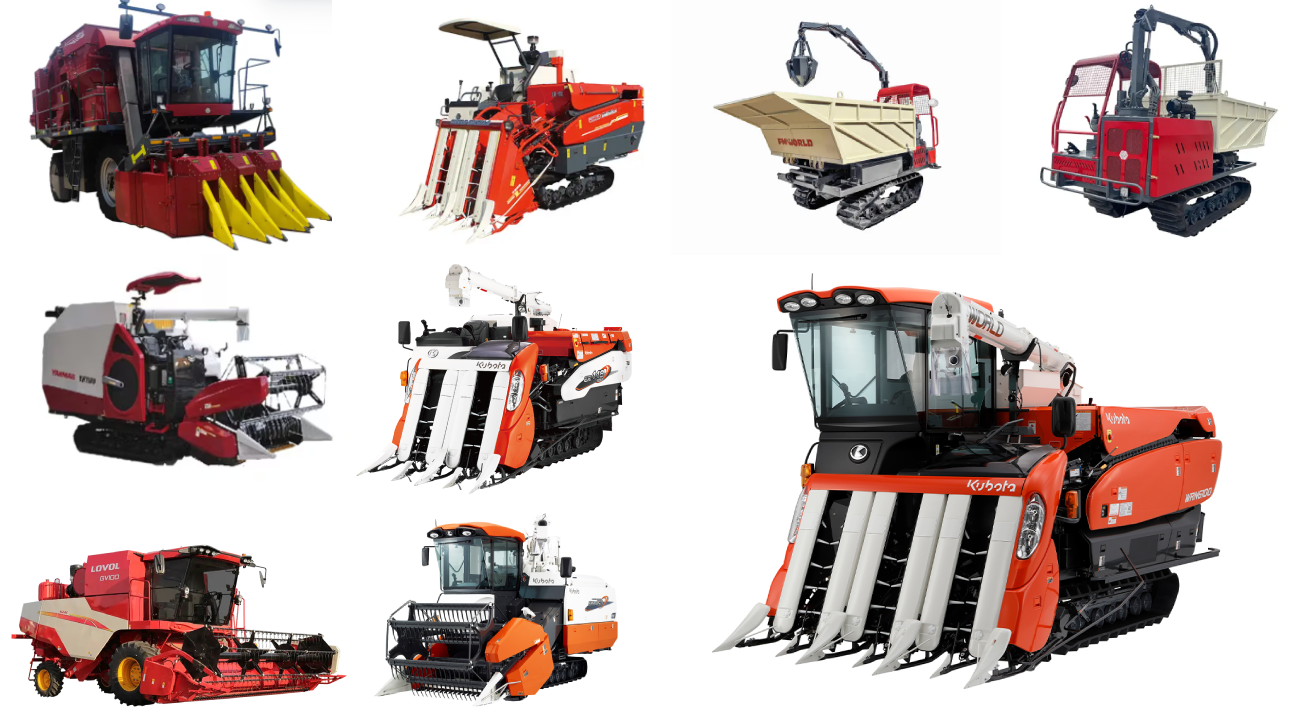
Classification of Kubota High-Frequency Replacement Aftermarket Parts
| Category | Included Products | Reason for Replacement |
| Forged wear-resistant parts | Cutter bar assemblies, blades, knife sections, blade holders, wear-resistant bushes, high-strength connectors, drive wear parts | Subject to long-term high-load friction and impact; highest replacement frequency. Inferior parts are prone to breakage, rapid wear, and deformation. |
| Sheet metal structural guards | Protective covers, guard plates, frame brackets, connecting plates, fixed shields, covering panels | Prone to impact deformation in the field; damaged guards lead to straw entanglement, exposed components, and safety hazards. |
| Cast structural components | Housings, support bases, casings, drive castings, cast-steel frame parts | Bear core structural loads; inferior castings may have porosity, cracks, or dimensional errors. |
| General supporting repair parts | CNC machined parts, stamped parts, welded parts, rubber parts, plastic parts, filter elements, fasteners, belts, chains | Routine maintenance replacement, covering all machine models and system repair needs. |
Aftermarket Parts Selection Guide
- Precise model matching: Different models have different part parameters, dimensions, and mounting hole positions. When selecting, verify the part number and model specifications to avoid mismatched, impossible-to-install, or excessive-clearance issues.
- Quality and process compliance: For critical load-bearing wear parts, forging is recommended to reduce repetitive replacement and frequent failures from the start.
- Cost-effective aftermarket solutions: For agricultural repair, bulk maintenance, and whole-machine refurbishment, there is no need to over-pursue expensive genuine parts. Choosing factory-direct parts that are original-equipment compatible, of equal quality, and highly cost-effective can significantly reduce maintenance costs.
Key Recommendations for Aftermarket Parts Replacement
- Before the peak harvest season, replace aging and nearing-wear-limit parts in batches to avoid operational downtime.
- For structural, load-bearing, and wear parts, prioritize high-quality process parts; stock general small parts as needed to balance maintenance cost and equipment stability.
- Combine daily maintenance with parts replacement – cleaning, lubrication, tightening, and parts replacement should be performed together to maximize equipment service life.
About Maikeyier Kubota Harvester Aftermarket Parts
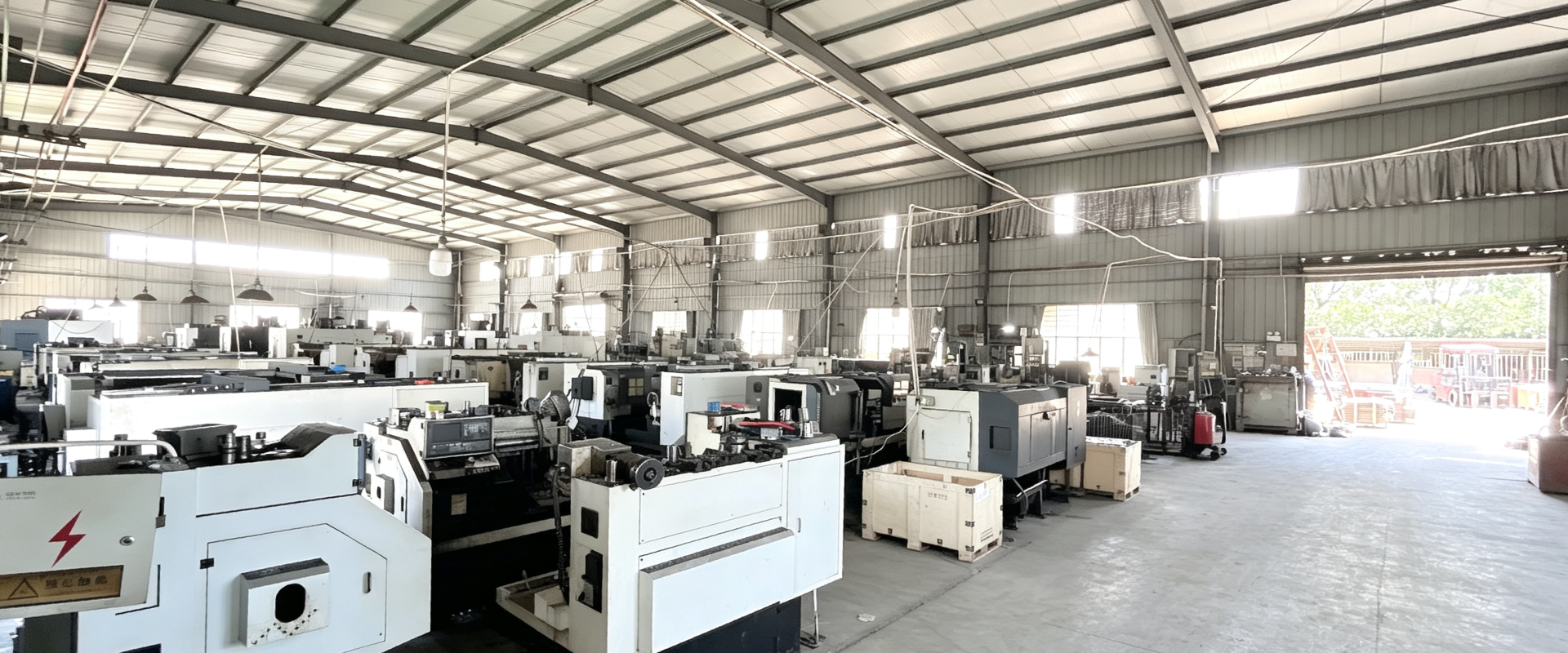
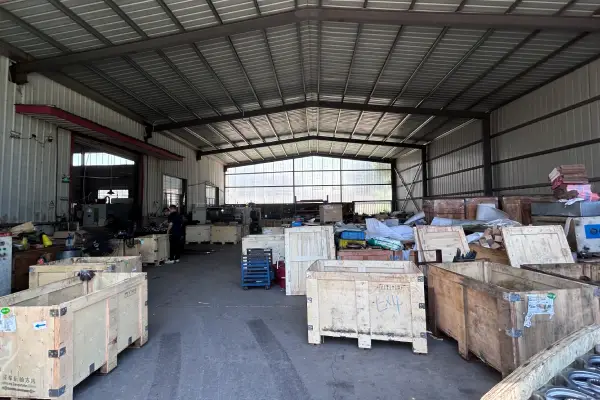
Maikeyier has deep expertise in Kubota harvester aftermarket parts, focusing on providing genuine-compatible, all-model, all-category aftermarket parts, including forged wear parts, precision sheet metal parts, structural castings, and machined supporting components. Leveraging our own forging factory and mature supply chain, we support small repair orders, bulk maintenance procurement, and full-container export shipments, with stable quality, strong compatibility, and high cost-effectiveness, helping the global agricultural aftermarket achieve efficient maintenance.

Core Advantages:
- In-house forging – independent production of high-strength components such as cutter bars, blades, gears, and connectors.
- Full category coverage – from forgings to non-metallic parts, one-stop supply.
- Quality control – incoming material spectrographic analysis, in-process dimensional inspections, and 100% final inspection; every batch is traceable.
- Flexible purchasing – support for mixed lots, small trial batches, and full-container exports.
If you need to replace Kubota harvester forged wear parts, blades and holders, sheet metal guards, cast support components, or machined parts, please contact Maikeyier. We provide one-stop supply of all Kubota agricultural parts, with original-equipment compatibility, high strength and wear resistance, and support for bulk export and complete machine matching.