
Maikeyier is an agricultural parts supplier from China, offering a wide range of harvester threshing tooth bars in multiple quality grades. The full product line supports various materials including ribbed steel, hot-rolled steel Q235, stainless steel, and diamond-enhanced materials, covering all series of harvesters from mainstream brands such as Kubota, Yanmar, Lovol, and World. These are core threshing system parts for agricultural repair, parts wholesale, and export, designed to address issues such as threshing tooth wear, tooth bar deformation, and fastener loosening under high-speed rotation and high-frequency impact conditions.
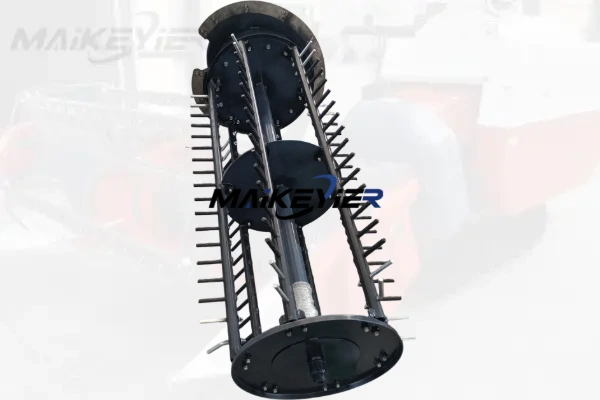
Components of the Combine Harvester Threshing Tooth Bar
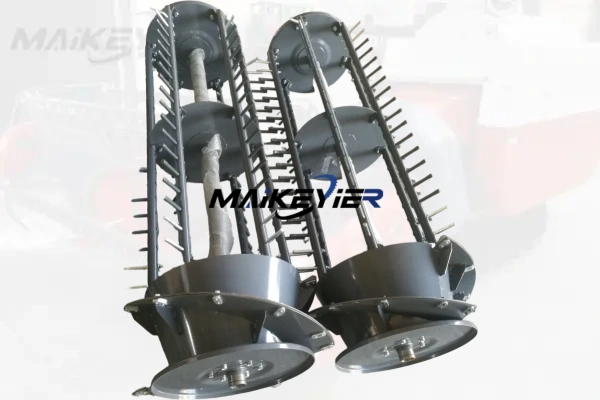
Maikeyier delivers threshing tooth bar assemblies as complete units consisting of “tooth bar + spike teeth + fasteners,” ensuring that customers receive them ready for installation without the need for additional parts procurement.
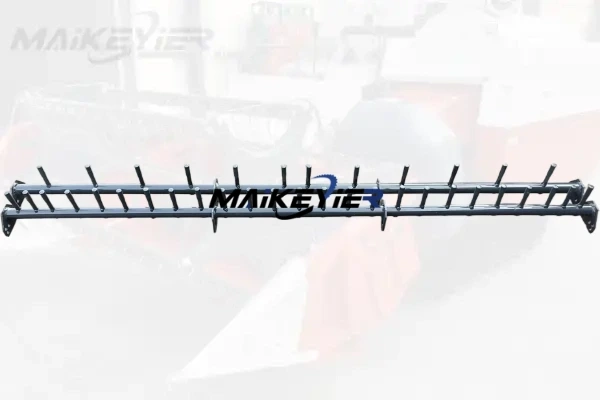
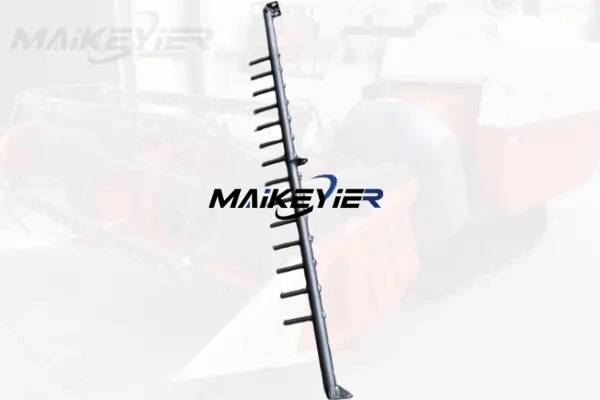
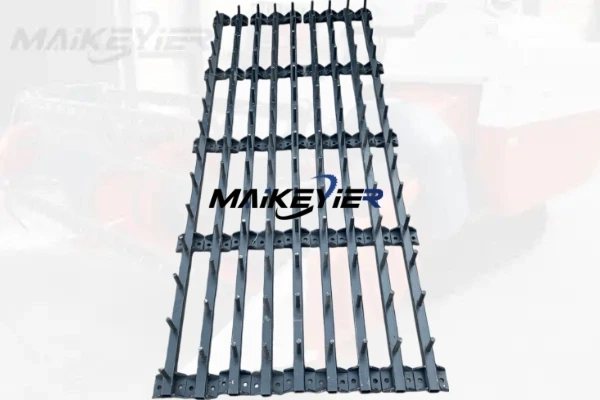
| Component Name | Function |
| Tooth Bar / Rod | The main structure of the threshing tooth bar, carrying the threshing teeth and transmitting rotational power; requires good rigidity and bending strength |
| Threshing Spike Tooth | The core working element that directly contacts the crop, applying impact and rubbing action; the fastest-wearing part |
| Tooth Seat / Mounting Holes | Used to secure the threshing teeth to the tooth bar, ensuring consistent tooth spacing and secure installation |
| Connecting Plate | Key structural component connecting the tooth bar to the threshing drum, ensuring reliable connection between the tooth bar assembly and the drum |
| Bolts / Nuts | Fasteners securing all connection points; must have anti-loosening properties to prevent loosening during high-speed rotation |
Working Principle of the Combine Harvester Threshing Tooth Bar
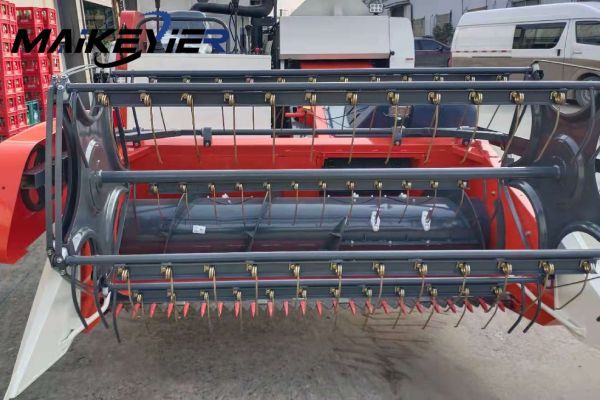
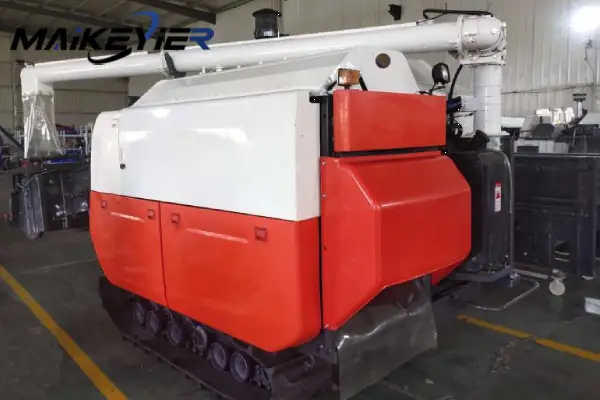
The Combine Harvester Threshing Tooth Bar is one of the core working components of the combine harvester’s threshing system, and is also a common wear part on harvesters. It performs the critical tasks of impact, rubbing, and combing on the crop. Installed on the threshing drum, its performance directly determines threshing cleanliness, grain loss rate, and overall operational efficiency.
| Operating Mode | Description |
| Impact threshing | The threshing teeth strike the crop ears at high speed, causing grain to detach from the ear by inertia |
| Rubbing threshing | As the crop passes between the threshing teeth and the concave, it undergoes repeated rubbing action, separating grain from the ear |
| Combing threshing | The threshing teeth apply combing and brushing action to the crop, aiding in grain-to-straw separation |
Combine Harvester Threshing Tooth Bar for Sale
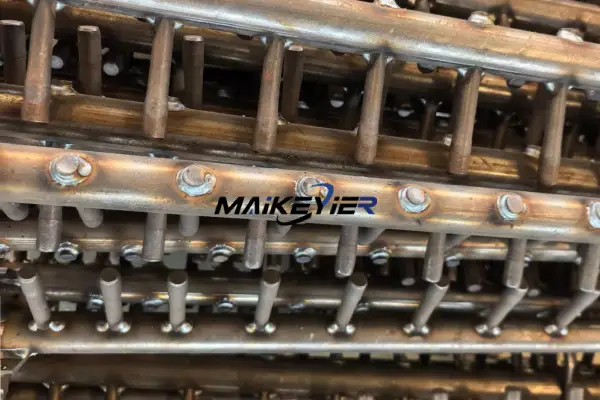
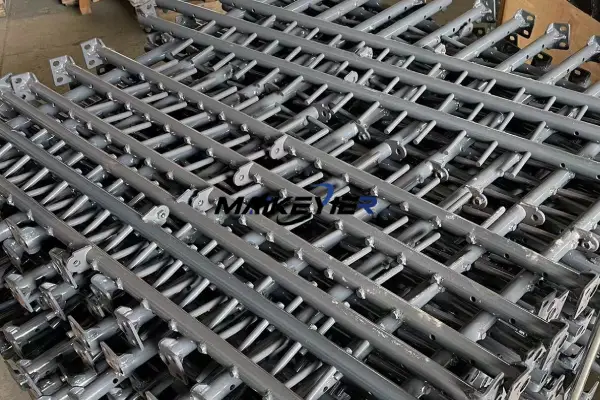
Maikeyier offers a variety of harvester threshing tooth bar options for different operating conditions and horsepower machines. Leave us a message with your requirements, machine horsepower, and operating environment – we will provide a free quotation.
Materials
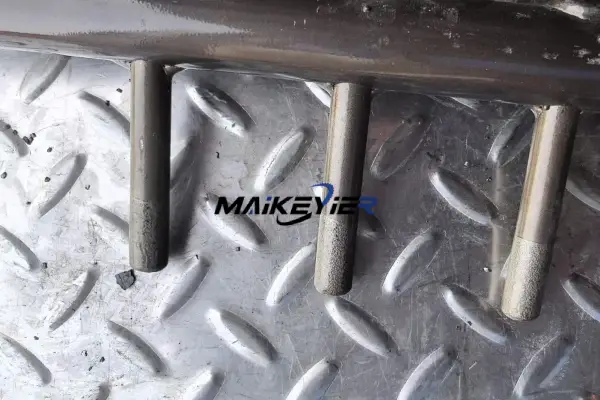
Maikeyier threshing tooth bars are available in multiple material options to suit different operating conditions and cost requirements.
| Material | Properties | Applicable Scenarios |
| Ribbed Steel | Surface with ribs for strong grip; moderate cost; good wear resistance | Conventional rice and wheat harvesting; the most widely used economical choice |
| Hot-Rolled Steel Q235 | Good plasticity, excellent weldability, low cost; suitable for standard conditions | Standard operating conditions; applications with low strength requirements |
| Stainless Steel | Rust-proof and corrosion-resistant; suitable for high-humidity environments; long service life | Paddy field operations, humid environments, coastal high-humidity markets |
| Diamond-Enhanced | Diamond particles embedded on the surface; super wear resistance; extremely long life | Sandy soils, high-wear fields, extreme abrasion environments |
Selection Recommendations:
| Operating Condition | Recommended Material |
| Conventional paddy and dryland harvesting | Ribbed steel (best cost-performance) |
| High-humidity, rainy areas | Stainless steel |
| Sandy soils, high-wear environments | Diamond-enhanced (longest life) |
| Standard conditions, cost priority | Hot-rolled steel Q235 |
Dimensions
| Parameter | Description | Typical Range |
| Tooth bar length | Matches different threshing drum widths | Customized by model |
| Spike tooth height | Effective working height of the threshing teeth | Typically 30-50mm |
| Tooth spacing | Center-to-center distance between adjacent threshing teeth | Per model design specifications |
| Bar cross-section | Cross-sectional shape and dimensions of the tooth bar | Per original drawings |
Manufacturing Process
Our Combine Harvester Threshing Tooth Bar is produced through eight process steps, with strict quality control at every stage. When you partner with Maikeyier, you receive durable, cost-effective, and reliable harvester parts.
| Process | Description | Quality Control Points |
| Tube cutting | Cutting steel tubes to specified lengths per drawings to prepare blanks for the tooth bar body | Accurate length; smooth, burr-free ends |
| Drilling | Drilling mounting holes / tooth seat holes in the tooth bar body as per drawings to ensure precise hole positions | Hole position, spacing, and diameter conform to drawing requirements |
| Tooth seat preparation | Preparing tooth seat positions per tooth design to ensure correct installation angle and spacing of threshing teeth | Accurate positioning to meet threshing tooth installation requirements |
| Assembly and positioning | Assembling tooth bar body, tooth seats, connecting plates, and other components per drawings; precisely positioning each component | Assembly dimensions conform to drawings; precise positioning to prepare for welding |
| Welding | Reliably welding tooth seats to the tooth bar body; ensuring strong welds. Tooth bars are available in solid and hollow structures; materials can be Q235, 45#, or stainless steel as required | Uniform welds, no cold lap, no cracks; welding deformation within allowable limits |
| Straightening | Straightening the tooth bar after welding to eliminate thermal deformation and ensure straightness | Straightness meets standards; ensures smooth operation after installation |
| Powder coating | Electrostatic powder coating on the finished tooth bar surface to form a uniform anti-corrosion coating | Uniform coating thickness, strong adhesion, neat appearance, corrosion-resistant |
| Packaging | After passing inspection, products are packed with moisture-proof and shock-proof packaging suitable for long-distance transport | Intact packaging, clear labeling, compliant with export requirements |
Brand Compatibility
Maikeyier threshing tooth bars are fully compatible with four major brands:
| Brand | Compatible Model Series |
| Kubota | DC70 / DC105 / PRO series / AR series / R series |
| Yanmar | AW70V / AW82V / AG series / C series / Y series |
| Lovol | RG series |
| World | 4LZ series |
Supplier of Combine Harvester Threshing Tooth Bar – Maikeyier
Maikeyier is a comprehensive agricultural parts supplier with forging, machining, and heat treatment capabilities at its core. In addition to forged parts, we also have supply chains for rubber and plastic parts, hardware parts, hydraulic parts, engine components, and other process parts, committed to providing the most comprehensive product range and the most convenient procurement channel for harvesters.
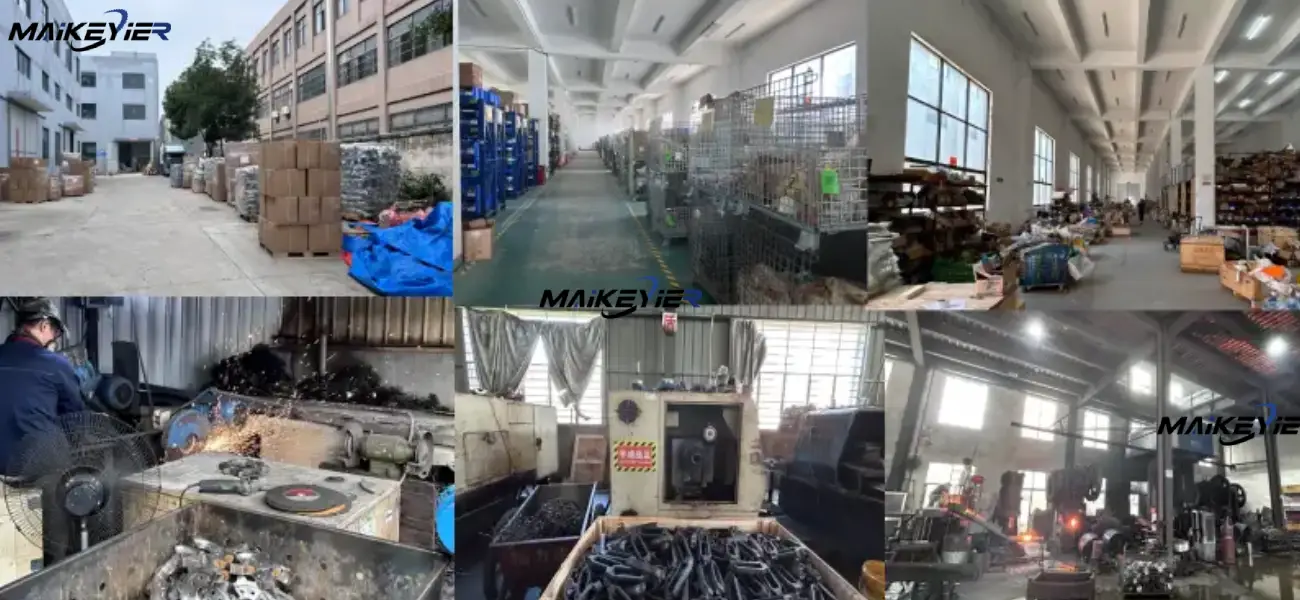
In the field of Combine Harvester Threshing Tooth Bar, we have established strict production standards with our partner factories, ensuring that every batch meets stable and reliable quality requirements in terms of material, dimensions, hardness, and assembly performance.
| Category | Standard Item | Standard Reference | Specific Requirements |
| Material standards | Tooth bar body material | GB/T 699 (High-quality carbon structural steel) or GB/T 3077 (Alloy structural steel) | Chemical composition of 45#, Q235, 40Cr, and other materials meets national standards |
| Threshing tooth material | Agricultural parts wear-resistant material standards | Ribbed steel, spring steel, or stainless steel, selected per customer requirements | |
| Fastener material | GB/T 3098.1 (Mechanical properties of fasteners) | Bolt performance grade not less than 8.8 | |
| Dimensional standards | Tooth bar length | Per OEM drawings or custom dimensions | Tolerance ±1.0mm |
| Tooth spacing | Per OEM drawing requirements | Tolerance ±0.5mm | |
| Mounting hole positions | Per OEM drawing requirements | Hole position deviation ±0.3mm | |
| Tooth bar straightness | Company standard | ≤1.0mm/m | |
| Process standards | Weld quality | GB/T 12467 (Welding quality requirements) | Uniform, full welds; no cold lap, no cracks, no porosity |
| Heat treatment hardness | Company standard (referencing OEM requirements) | Threshing tooth surface hardness HRC 40-52 (depending on material) | |
| Powder coating | GB/T 18593 (Powder coating standards) | Coating thickness ≥60μm; adhesion ≥ Grade 1 |
Advantages and Applications of Threshing Tooth Bar
Core Advantages
| Advantage | Description |
| High threshing efficiency | Optimized tooth design and reasonable spacing ensure thorough threshing and reduced losses |
| Long wear life | High-quality alloy steel + heat treatment process; surface hardness meets standards, core toughness is maintained |
| Strong compatibility | Covers all series of Kubota, Yanmar, Lovol, and World harvesters |
| Easy installation | Complete supply of tooth bar + spike teeth + fasteners; ready to install |
| Excellent cost-performance | High-quality aftermarket quality at significantly lower prices than OEM |
Application Scenarios
| Crop Type | Compatibility Notes |
| Rice | Rice threshing demands high wear resistance and impact toughness from tooth bars |
| Wheat | Wheat ear threshing requires high precision in tooth design and spacing |
| Corn | Corn threshing demands the highest strength and impact toughness from tooth bars |
| Soybeans | Soybean threshing requires a relatively gentle threshing method |
Coordination Between Threshing Tooth Bar and Concave
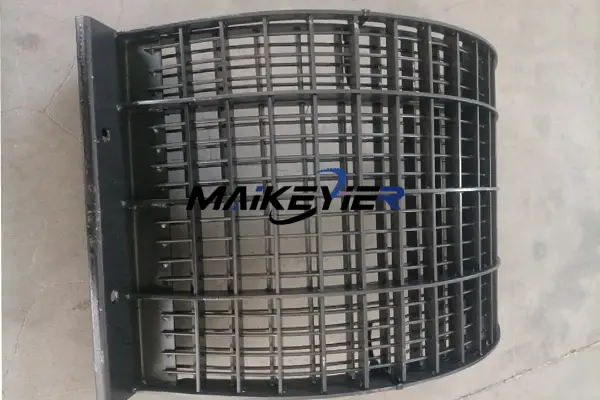
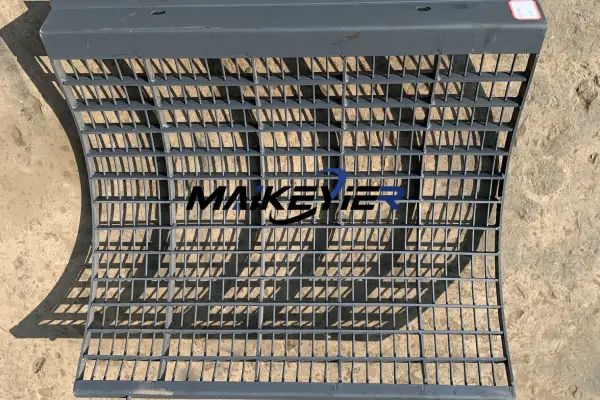
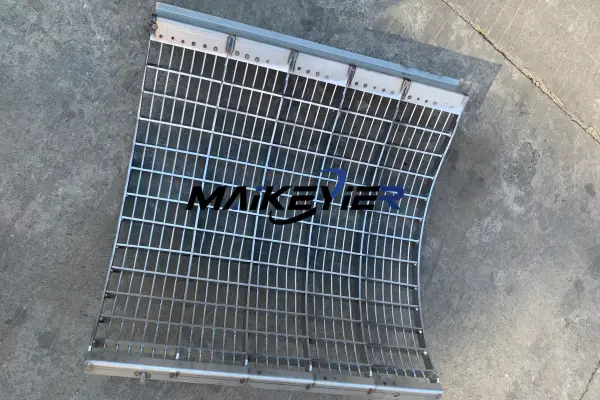
The Combine Harvester Threshing Tooth Bar and the Concave are the “golden partners” of the harvester threshing system, working together to complete the separation of grain from the ear. During procurement or maintenance, when replacing the threshing tooth bar, it is recommended to also inspect the wear condition of the concave. If the concave is severely worn, it should be replaced at the same time to ensure optimal threshing system performance.
| Coordination Aspect | Description |
| Threshing clearance | The clearance between the tooth bar and the concave directly affects threshing performance – too large causes incomplete threshing; too small causes blockage |
| Rubbing action | As the crop passes between the tooth bar and the concave, it is subjected to impact from the teeth and rubbing from the concave, causing grain to detach |
| Separation action | Detached grain passes through the concave openings into the cleaning system; straw is discharged from the rear |
Harvester Wear Parts – Threshing Tooth Bar Replacement Cycle
The Combine Harvester Threshing Tooth Bar is a high-frequency wear part on the harvester. Its replacement cycle depends on operating area, crop type, and field conditions. Consider replacement when: threshing tooth tips have worn beyond 1/3 of their original height; tooth tips show obvious breakage or loss; the tooth bar body is bent or deformed; threshing performance has noticeably declined; or fastening bolts are loose and cannot be tightened.
| Operating Condition | Expected Service Life | Replacement Recommendation |
| Conventional paddy field operations | 2-3 harvest seasons | Inspect tooth tip wear after each season |
| Sandy soils / high wear | 1-2 harvest seasons | Recommended replacement before each season |
| High-intensity continuous operation | Approximately 800-1,200 hours | Based on actual wear condition |
Common Harvester Wear Parts List
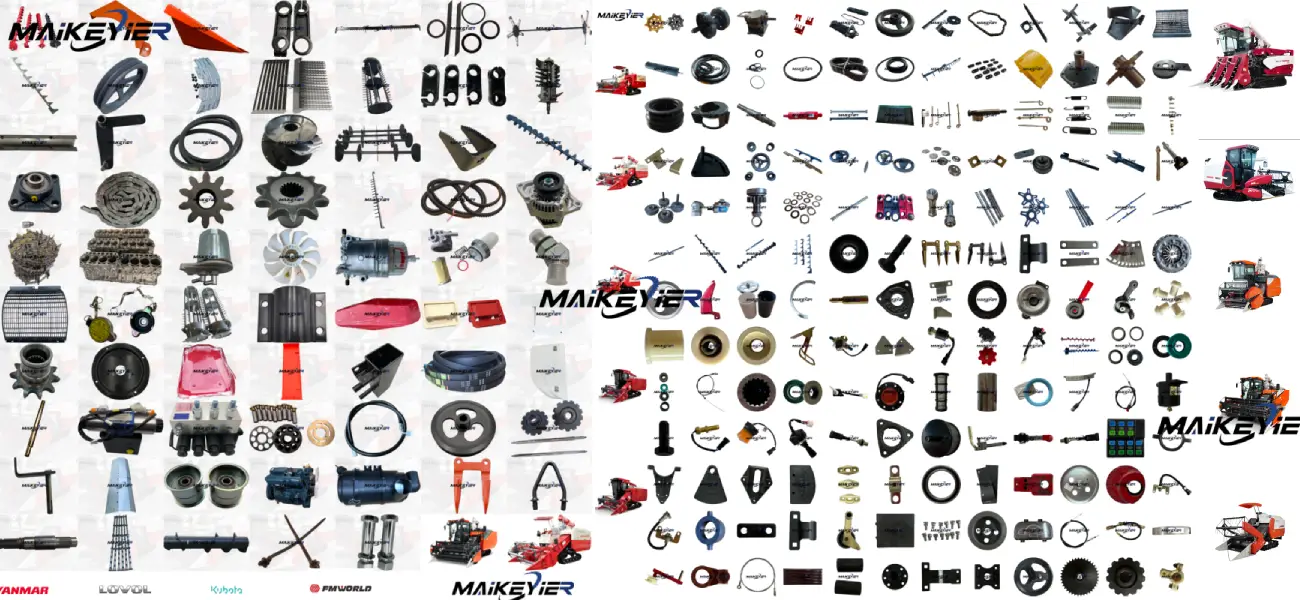
In the daily use and maintenance of combine harvesters, understanding the wear parts of each system and their replacement cycles allows for advance stocking and reduced downtime. In addition to the Combine Harvester Threshing Tooth Bar, we have compiled a wear parts list for your reference.
| System | Name | Main Wear Causes |
| Cutting System | Cutter Bar | Continuous friction when cutting crops; impact with stones and other hard objects |
| Knife Blade / Sections | High-frequency reciprocating motion; cutting edges wear and become blunt | |
| Knife Section | Same as blades | |
| Sickle Guard | Long-term friction with blades | |
| Reel Spring Finger | Continuous bending and impact during crop lifting; prone to deformation and breakage | |
| Threshing System | Threshing Tooth Bar | High-speed impact with crops; tooth tip wear |
| Threshing Spike Tooth | Same as threshing tooth bar | |
| Concave | Crop friction; reinforcing rib wear; enlarged openings | |
| Threshing Belt | High-load transmission; wear, elongation, slipping | |
| U-Shaped Knife | Auxiliary cutting; blade edge wear | |
| Cleaning System | Cleaning Sieve | Grain friction, corrosion |
| Fan Blade | High-speed rotation; dust wear | |
| Chaffer | Continuous vibration and friction | |
| Conveying System | Header Auger | Flight friction with crop; entanglement |
| Unloading Auger | Grain conveying; spiral flight wear | |
| Feeder Chain | Chain joint wear, elongation | |
| Sprocket | Meshing with chain; tooth surface wear | |
| Conveyor Belt | Long-term friction, aging, elongation | |
| Running Chassis System | Track Roller Assembly | Bearing full machine weight; bearing wear, seal failure |
| Idler | Tensioning and guiding; bearing wear | |
| Drive Sprocket | Meshing with track; tooth surface wear | |
| Rubber Track | Ground friction; aging, cracking | |
| Track Guide | Friction with track guide lugs | |
| Engine System | Oil Filter | Filtering impurities; must be replaced during routine maintenance |
| Fuel Filter | Filtering fuel impurities and water | |
| Air Filter | Filtering air dust; increased resistance when clogged | |
| Fan Belt | Heat, friction, aging | |
| Hydraulic System | Hydraulic Filter | Filtering hydraulic oil impurities |
| Hydraulic Seal | Long-term pressure, aging, wear | |
| Hydraulic Hose | Aging cracking, joint wear | |
| General Parts | Bearing | High-speed rotation; mud and water ingress |
| Oil Seal | Aging, wear | |
| Fasteners | Vibration loosening, corrosion |
Combine Harvester Threshing Tooth Bar FAQ
Whether you need ribbed steel threshing tooth bars, Q235 standard models, stainless steel rust-proof models, or diamond-enhanced wear-resistant models; whether you face rice, wheat, corn, or soybean harvesting; whether you are an agricultural repair shop, parts wholesaler, or cross-border trader – Maikeyier can provide you with high-quality, cost-effective threshing tooth bar solutions.
Contact us for a complete threshing tooth bar product catalog and targeted quotation!
Maikeyier – Professional Combine Harvester Threshing Tooth Bar Manufacturer and Supplier, Your Reliable Partner for the Threshing System.